Dayu Electronics: Ultrasonic Underwater Communication Applied to Downhole Oil Well Communication – Applications and Expansion
Ultrasonic communication has mature applications in underwater environments, but transplanting it downhole into oil wells means facing not "water"—a relatively uniform medium—but an extremely complex channel composed of steel tubing strings, couplings, fluids, and multiphase formations. Current exploration is generally in the transition stage from "principle verification to engineering pilot testing," and has not yet formed large-scale commercial application. The following expands from four aspects: motivation, technical routes, key progress, and core bottlenecks.
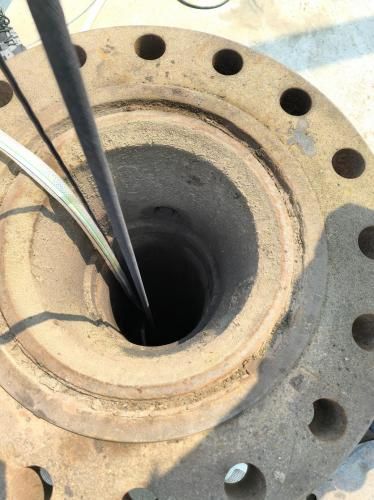
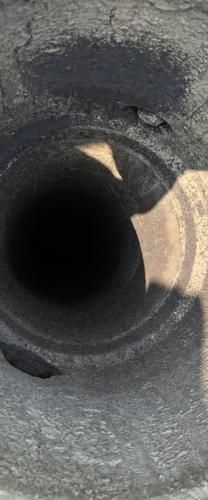
Why Explore Ultrasonic Communication in Oil Wells
Traditional downhole communication methods each have obvious shortcomings, which constitutes the practical driving force for exploring ultrasonic communication. Cable communication is reliable but costly and complex to deploy, and easily damaged in complex well conditions; mud pulse transmission rates are low (typically below 5 bit/s) and depend on drilling fluid circulation, making it unusable in air drilling or underbalanced drilling; electromagnetic wave transmission does not depend on medium circulation but attenuates rapidly in formations, limiting transmission distance in deep wells. The appeal of ultrasonic communication lies in: it uses the tubing string wall or wellbore fluid as the propagation medium, does not depend on drilling fluid circulation, and therefore has principle-level applicability in special conditions such as air drilling and foam drilling; meanwhile, if the tubing string serves as the channel, signals propagate along the metal structure, theoretically avoiding the strong absorption of electromagnetic waves by formation media. Practice at Liaohe Oilfield also shows that one of its core driving forces is breaking the industry bottleneck of "high cable-controlled operation costs, low efficiency and success rate of cable-free testing."
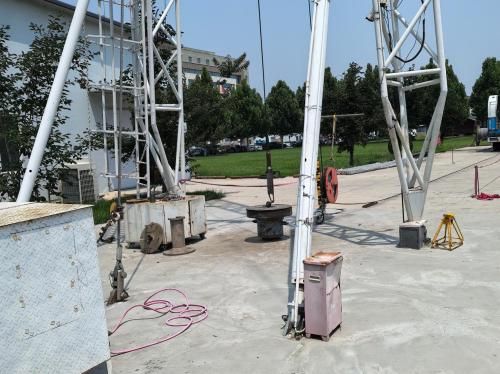
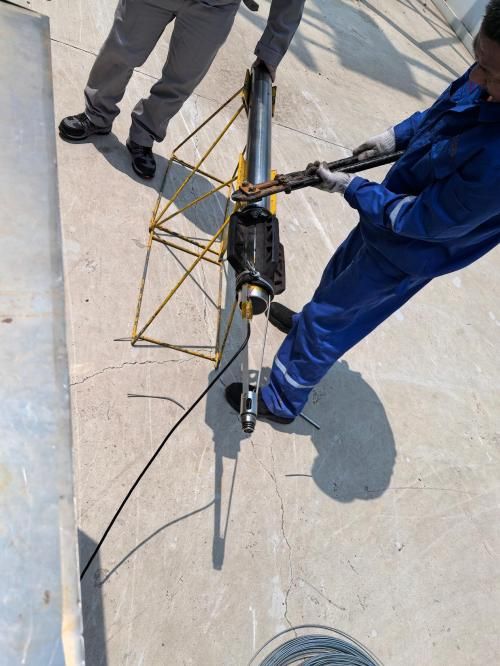
Two Branches of the Technical Route
"Ultrasonic communication" downhole in oil wells actually encompasses two distinct paths, whose channel characteristics and applicable scenarios differ.
First, structural acoustic telemetry along steel tubing strings (drill pipe, tubing, casing). This is currently the most concentrated research direction. Acoustic waves propagate along the pipe wall in the form of compressional or torsional waves; transducers (usually piezoelectric) are mounted on the tubing string, and signals are transmitted to the surface via the string structure. Its advantage is that it does not occupy the wellbore fluid channel, but the cost is an extremely complex channel (detailed below).
Second, liquid-medium acoustic communication using wellbore fluid as the medium. In water injection wells or fluid-filled tubing, underwater acoustic communication principles can be used for transmission. Some research specifically targets "long-distance wireless communication in water-injection oil and gas well tubing strings" using underwater acoustic communication technology. The channel characteristics of this path are closer to underwater acoustic communication, but are significantly affected by fluid properties in the wellbore, bubbles, solid particles, and pipe wall reflections.
Engineering Progress Achieved and Signal Processing Exploration
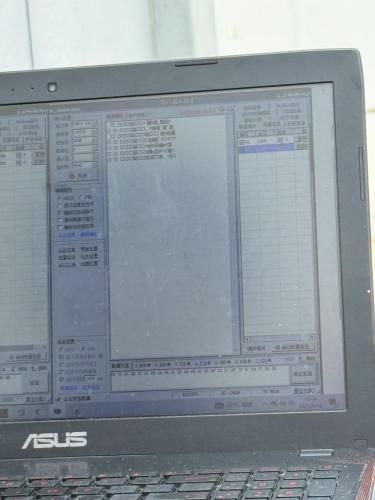
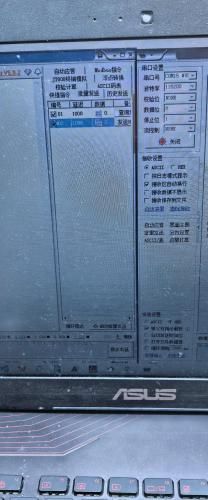
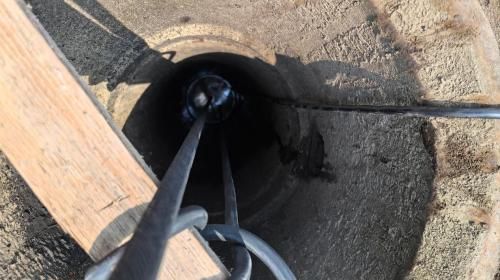
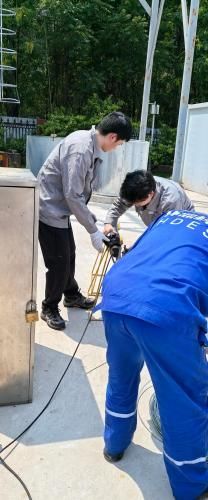
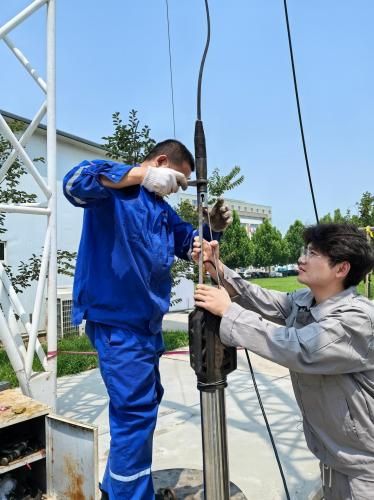
At the engineering verification level, the most concrete progress comes from PetroChina Liaohe Oilfield. Its independently developed downhole acoustic bidirectional wireless transmission technology achieved stable communication at a well depth of 630 meters under low power consumption, with communication time reduced to the second level. The team completed progressive verification from 20-meter channel pattern exploration, 200-meter tubing transmission attenuation analysis, to 500-meter noise acquisition and analysis, and has launched efforts toward 2000-meter well depths; pressure and temperature resistance testing of engineering prototypes and real-time optimization are advancing. The significance of this progress is that it demonstrates acoustic bidirectional communication is already engineering-feasible within medium well depths, but remains significantly distant from deep well (several thousand meters) applications.
At the signal processing and channel adaptation level, exploration mainly revolves around how to combat distortion of the tubing string channel. Laboratory studies show that the impulse response of drill string acoustic channels below 6000 Hz exhibits a dense "comb-like" alternating passband-stopband structure, and passband positions vary with accelerometer axis direction and receiving position; meanwhile, the channel is highly dispersive, with different frequency components of the same mode arriving at different times. For such channels, researchers explored trellis-coded modulation combined with multi-carrier modulation schemes, achieving a symbol rate of 400 bit/s under a 1 km drill string channel model; other work applied OFDM schemes to rotating drill string channels, achieving error-free transmission at a rotation speed of 90 r/min. Additionally, multi-receiver diversity reception (e.g., triaxial accelerometers plus strain sensors forming four channels) has been used to combat multipath fading; experiments show low correlation between channels, bringing improvements in SNR and BER performance. Regarding relay transmission, research has established a bidirectional relay transmission model based on amplify-and-forward, exploring time-division bidirectional relay methods to extend communication distance.
At the hardware level, high-temperature transducers are the enabling technology. Downhole oil well temperatures often exceed 200°C, making it difficult for ordinary piezoelectric materials to work stably. Exploration directions include PZT 1–3 type piezoelectric composites packaged in PI/PEEK hybrid matrix, piezoelectric ultrasonic transducers based on high-temperature glass substrates (operable above 250°C), and PT-PSN series high-temperature ceramics. Domestically, there are achievements in high-sensitivity acoustic logging transducers resistant to 175°C and 140 MPa, but such devices are mainly used for acoustic logging imaging; their design goals differ from communication transducers (which emphasize bandwidth, efficiency, and bidirectionality), and the maturity of communication-specific high-temperature transducers still needs to be accumulated.
Core Bottleneck: Why Oil Well Channels Are More Challenging Than Ocean Channels
The fundamental difficulty in directly transferring underwater ultrasonic communication experience to oil wells lies in the change of channel properties. Although ocean acoustic channels also have multipath and noise, the medium is relatively continuous and uniform; oil well tubing strings are periodic metal structures containing couplings and threads, in which acoustic waves produce strong multipath propagation and mode coupling, and the channel impulse response is severely broadened. Some research directly points out that the fundamental complexity of drill string channels makes downhole communication along drill strings "more challenging than in the ocean."
The noise environment is equally harsh. During drilling operations, rock breaking by the drill bit, drill string rotation and vibration, fluid flow, etc., generate in-band acoustic noise comparable in strength to the transmitted signal, and noise sources are distributed across multiple locations. In full-duplex communication scenarios, near-end self-interference can severely mask far-end weak signals. Furthermore, downhole acoustic conditions change unpredictably and dynamically with formation, cementing quality, and fluid composition (gas/water/oil); pre-selected fixed frequency bands may fail downhole. This means the communication system must have online channel sensing and adaptive frequency/coding capabilities, which in turn are constrained by strict power budgets and limited computing resources of downhole tools.
Compared with mature mud pulse or cable solutions, acoustic telemetry does not have an advantage in data rate ceiling. Some reviews point out that achievable data rates for acoustic telemetry are about 50–100 bit/s, limiting its use in measurement while drilling. The potential value of ultrasonic communication lies not in replacing high-bandwidth wired solutions, but in filling the specific niche of "cable-free, independent of circulating medium, medium distance, low power consumption."
Staged Assessment
The exploration direction of ultrasonic/acoustic downhole communication is clear: in principle, it provides a supplementary wireless channel beyond cable and mud pulse, especially suitable for scenarios without circulating media or where cable-controlled costs are too high. Liaohe Oilfield's 630-meter pilot test and plans to tackle 2000 meters show that engineering feasibility is being gradually verified. But the reality of technology maturity is: key links such as channel modeling and equalization, high-temperature transducers, adaptive anti-noise coding, and relay networking are still in the laboratory or prototype stage; the balance between long-term reliability and data rate in deep well high-temperature environments remains unresolved. At the current stage, a more accurate positioning is as a supplementary communication means for specific well conditions and specific data volume requirements, rather than a comprehensive replacement of the existing mainstream downhole communication system.