Dayu Electronics Integrated Eight-Beam Ranging Sensor: Lower Frequency Leads to Larger Size
Dayu Electronics integrated eight-beam ranging sensor cannot directly reduce its operating frequency while keeping its current external dimensions unchanged. For piezoelectric ceramic ultrasonic transducers, there is a clear physical constraint between frequency and ceramic element size; lowering the frequency usually means the ceramic element's diameter or thickness must increase, which in turn enlarges the overall probe size.
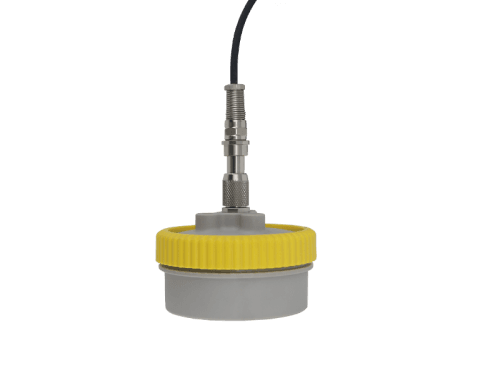
Lowering the frequency directly increases ceramic element size
The resonant frequency of a piezoelectric ceramic transducer mainly depends on the thickness, diameter, and vibration mode of the ceramic element. Generally speaking, the larger the ceramic element, the lower the resonant frequency; the smaller the element, the higher the resonant frequency. To achieve a lower frequency, the ceramic element usually needs to be made thicker or larger, increasing the space occupied by each individual transducer.
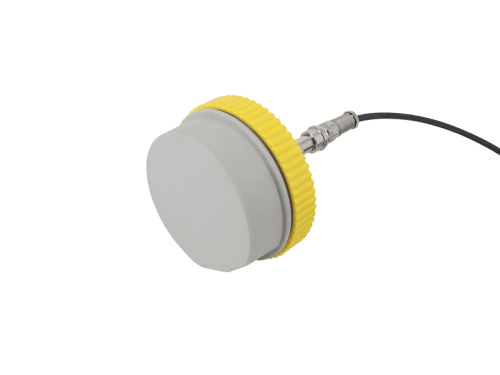
The eight-beam structure further amplifies the size change
The integrated eight-beam sensor consists of an array of multiple transducers. Once each transducer increases in size, the array spacing, mounting space, and housing dimensions all change accordingly. Even if each ceramic element only grows slightly, the combined enlargement of all eight elements makes it much harder to maintain the original form factor. Low-frequency transducers also often come with longer ringing times and extended near-field zones, requiring additional structural space for isolation and optimization.
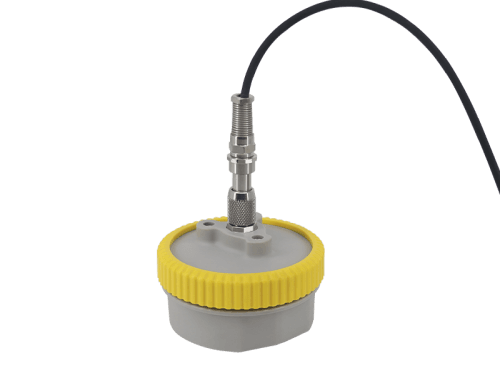
The advantages and trade-offs of lower frequency require comprehensive evaluation
Lowering the frequency typically delivers better penetration, reduced medium attenuation, and stronger anti-interference capability, making it suitable for complex operating conditions or long-distance measurement. However, the sensor's volume increases accordingly, and beam characteristics and blind zones may also change. Therefore, the decision to lower the frequency should not be based on frequency alone; it must be evaluated together with installation space, measurement distance, medium conditions, and blind zone requirements.
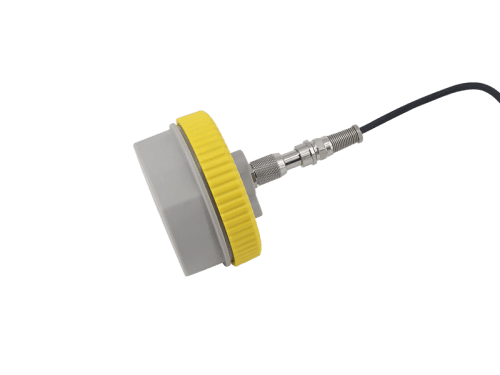
We recommend providing operating conditions for a customized evaluation by Dayu Electronics
If a customer genuinely needs a lower frequency, we recommend providing the target frequency, installation space, measurement distance, medium type, and blind zone requirements. The Dayu Electronics engineering team can use these parameters to determine whether customization is feasible within an acceptable size range, or recommend a more suitable existing frequency solution.