Signal Characteristics of Dayu Electronics Hydrophones with Preamplifier Circuits
In acoustic monitoring and underwater communication systems, accurate signal acquisition and transmission are critical. When selecting or calibrating Dayu Electronics hydrophones, users often focus on output voltage characteristics, particularly whether the signal is a ±3.3V symmetrical voltage.
To clarify this technical detail: when equipped with a preamplifier circuit, the hydrophone outputs a single-ended DC-biased AC signal, not a symmetrical bipolar voltage, with a stable voltage range of 0–3.3V.
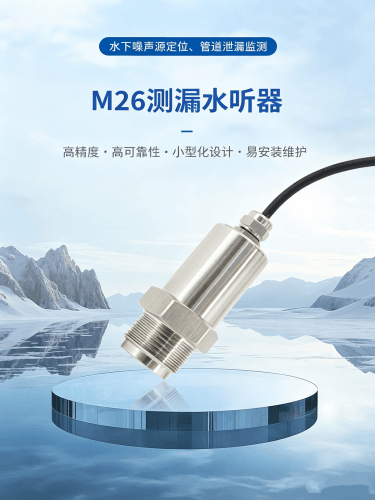
This signal design is based on practical engineering considerations. The preamplifier circuit initially amplifies the weak acoustic signals captured by the hydrophone while superimposing a DC bias voltage, shifting the AC signal to the 0–3.3V range to facilitate subsequent ADC acquisition or transmission processing.
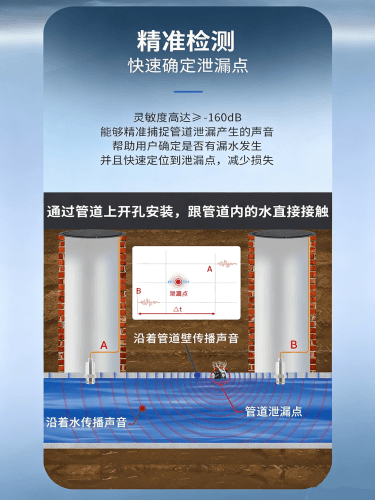
The frequency characteristics of this signal depend entirely on the actual acoustic frequencies received in water, not on device settings. Dayu Electronics hydrophones support a measurement frequency range of 20Hz to 20000Hz, covering a broad spectrum from low-frequency underwater noise to high-frequency sonar signals, ensuring accurate reproduction of acoustic information across various application scenarios.
It is important to emphasize that the 0–3.3V output range is strictly calibrated, avoiding signal clipping distortion while remaining compatible with the input level requirements of mainstream data acquisition systems.
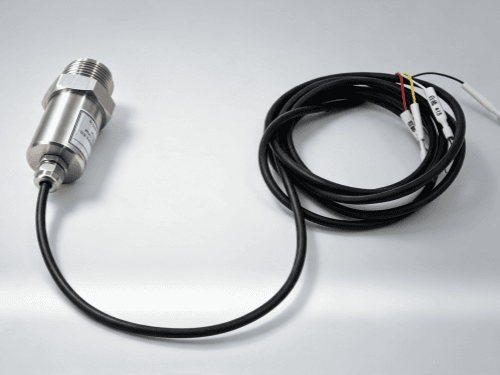
This design not only improves the signal-to-noise ratio but also simplifies backend circuit complexity, allowing users to connect directly to systems without additional level-shifting modules. For underwater acoustic monitoring projects pursuing high precision and stability, this signal characteristic of Dayu Electronics hydrophones directly reflects their reliability and ease of use.