Dayu Electronics Ultrasonic Sound Velocity Sensor Measures Alcohol Concentration via Sound Velocity Method
Dayu Electronics'sound velocity sensor can indeed measure alcohol concentration. The core principle is that at the same temperature, sound travels at different speeds through liquids of different alcohol concentrations. By measuring the time it takes for sound waves to pass through the liquid, the alcohol concentration can be calculated.
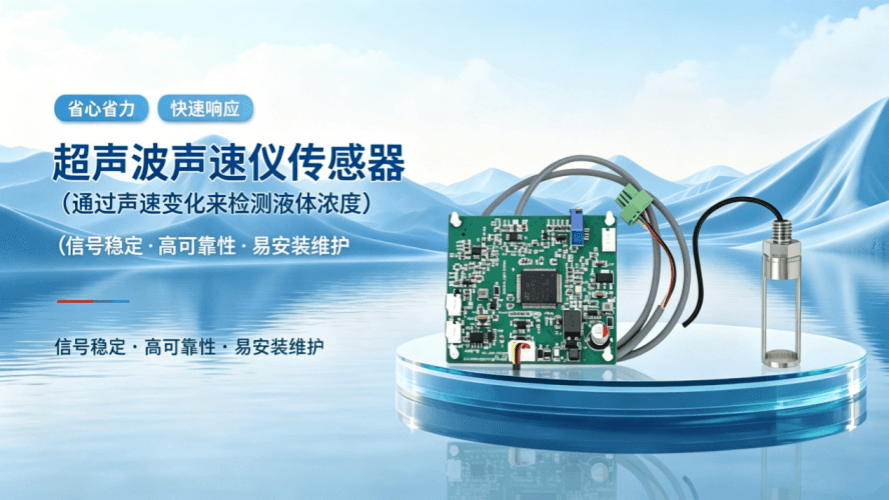
Basic Principle of Sound Velocity Method for Alcohol Concentration
Ethanol and water have different molecular structures. When mixed, the liquid's density, elastic modulus, and acoustic properties change, causing sound velocity to vary with alcohol concentration. The instrument emits ultrasonic waves and precisely measures propagation time, calculates actual sound velocity using the sound path, then applies a pre-established mathematical model of concentration versus sound velocity to determine alcohol content. Dayu Electronics' ultrasonic sound velocity sensor detects liquid concentration through acoustic changes, suitable for uniform clean liquids such as clear water and pure solutions. As long as concentration changes produce noticeable sound velocity variations, continuous monitoring can be achieved.
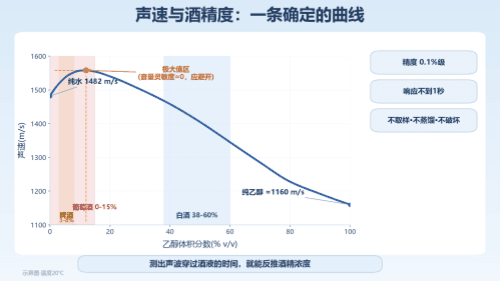
Temperature Compensation Is Key to Accuracy
Temperature significantly affects sound velocity. Measuring only sound velocity without temperature will cause data drift. Pure water and alcohol also exhibit different sound velocity trends with temperature—alcohol's sound velocity typically decreases as temperature rises. Therefore, actual products must incorporate temperature sensors to simultaneously collect liquid temperature and perform temperature compensation. Research has shown that by establishing a concentration model based on sound velocity and temperature, and introducing acoustic attenuation coefficient compensation, ethanol concentration measurement accuracy can be improved to 0.1%.
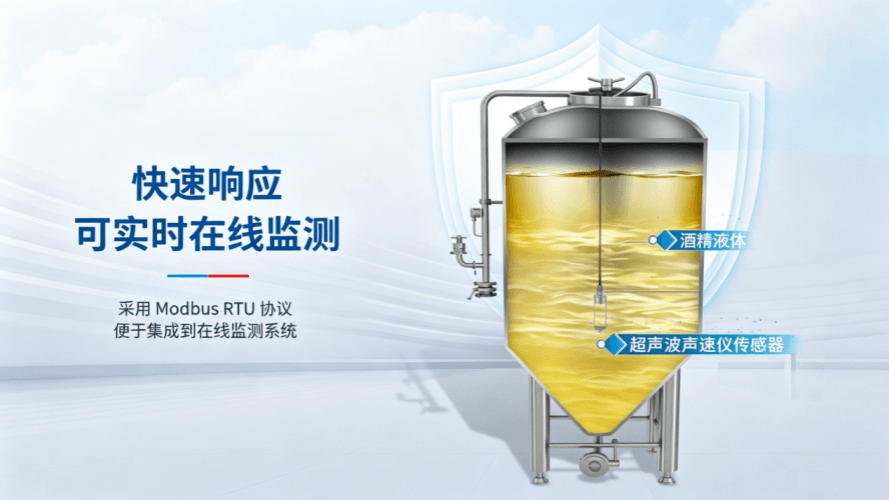
Turbidity and Bubbles Affect the Acoustic Attenuation Method
Besides the sound velocity method, there is also the acoustic attenuation method, which determines concentration through sound wave energy attenuation. However, its accuracy is weaker and easily affected by probe scaling, liquid bubbles, water turbulence, and particle size. It is more suitable for clean working conditions where extreme precision is not required. If the liquid contains large amounts of bubbles, suspended solids, or severe grease adhesion, cleaning methods and installation positions need careful evaluation.
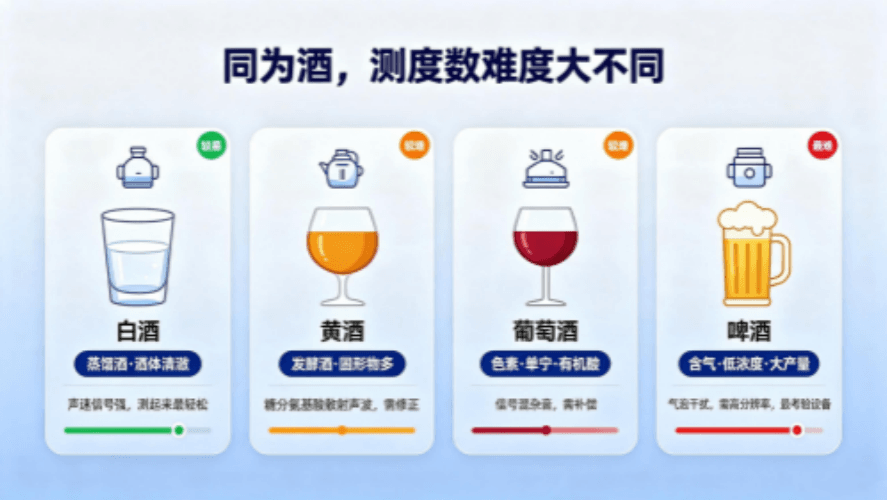
Dayu Electronics Selection Recommendations
For ethanol-water solutions and online process monitoring, Dayu Electronics' ultrasonic sound velocity meter is a viable solution, covering detection needs for alcohol concentration, automotive urea, food, and laboratory liquid concentrations. For complex formulated wines or medicinal wines containing sugar, spices, colorants, etc., both sound velocity and density will be interfered with. Laboratory methods such as gas chromatography are recommended for verification. You can provide the medium composition, concentration range, temperature fluctuations, bubble content, and installation method to Dayu Electronics' technical team. We will help confirm whether to use the sound velocity method or acoustic attenuation method and match the appropriate sensor.