
Core Factors Affecting the Performance of Ultrasonic Anemometer Transducers | Dayu Electronics
The ultrasonic anemometer transducer is the core component for transmitting and receiving acoustic signals. Its performance directly determines the measurement accuracy and stability of the instrument, influenced by multiple dimensions including the transducer's own characteristics, external environment, and system matching. Key points are as follows:
The transducer's own structure and material properties form the performance foundation. First, piezoelectric material performance—the piezoelectric constant, dielectric constant, and mechanical quality factor of commonly used piezoelectric ceramics (such as PZT) directly affect energy conversion efficiency. A higher piezoelectric constant enhances acoustic signal emission intensity and reception sensitivity, while an excessively low mechanical quality factor leads to rapid signal attenuation. Second, structural design—the thickness-to-diameter ratio of the transducer element must match the operating frequency (typically 40kHz–100kHz). If the element is too thin, resonance distortion is likely; if too thick, acoustic propagation efficiency decreases. Meanwhile, the probe encapsulation process must ensure sealing to prevent internal moisture from affecting piezoelectric performance. Third, impedance characteristics—the transducer's input impedance must remain stable. If impedance drifts significantly with temperature, energy transmission losses in the driving circuit increase, reducing the signal-to-noise ratio.
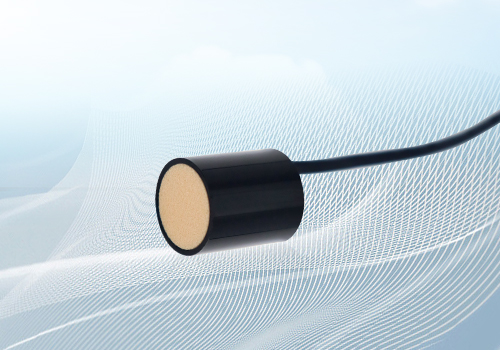
External environmental factors directly interfere with transducer performance. First, temperature and humidity—temperature changes alter piezoelectric material parameters and the speed of sound in air (an increase of 1°C raises the speed of sound by approximately 0.6 m/s), causing measurement baseline shifts. High-humidity environments can easily cause condensation on the probe surface or internal moisture ingress, leading to signal attenuation or even short circuits. Second, atmospheric medium—dust, moisture, and corrosive gases (such as sulfides in industrial environments) can adhere to the probe surface, hindering acoustic signal propagation. Over time, they can also corrode the piezoelectric material, reducing transducer lifespan. Third, airflow interference—extreme wind speeds (e.g., strong winds exceeding 30 m/s) can cause probe vibration, generating mechanical noise. Turbulence effects can also deflect the acoustic signal propagation path, affecting measurement accuracy.
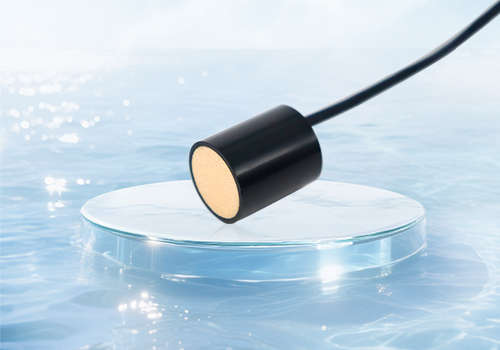
System matching and installation practices are critical to achieving optimal performance. First, driving circuit matching—the output power and frequency stability of the driving circuit must align with the transducer's resonant frequency. A frequency deviation exceeding 1% can reduce transducer efficiency by more than 30%. Additionally, the circuit must have anti-interference capability to prevent electromagnetic noise (such as electromagnetic radiation from nearby equipment) from entering the signal loop. Second, installation angle and position—the transducer must be installed at the instrument's designed angle (typically orthogonal in pairs). An angle deviation exceeding 2° can increase wind direction measurement errors, and the installation position must avoid obstructions (such as brackets or buildings) to prevent acoustic signal reflection or blockage. Third, calibration and maintenance—over time, transducer performance degrades, so regular calibration using a standard wind tunnel is necessary to correct sensitivity drift. Additionally, cleaning the probe surface of contaminants ensures unobstructed acoustic signal transmission.
In summary, the performance of ultrasonic anemometer transducers must be controlled through material selection, structural design, environmental adaptation, and system matching. By optimizing processes and performing regular maintenance, interference from various factors can be minimized, ensuring long-term stable signal conversion and providing support for accurate wind speed and direction measurement.