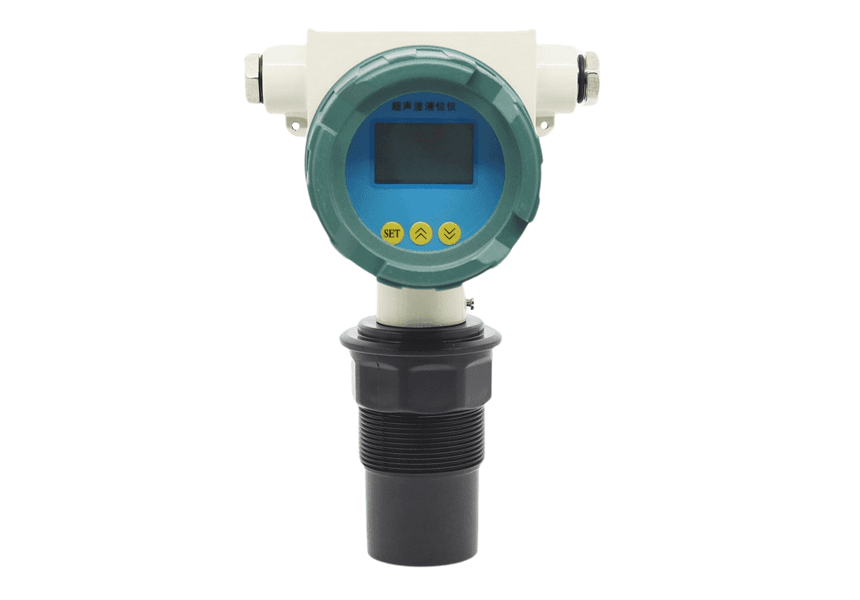
Model: Explosion-proof integral Ultrasonic Level Meter
💬 Online 9:00-18:00 (Mon-Fri) · 📋 Reply within 24h
Dayu Electronics integrated explosion-proof Ultrasonic Level Meter is a non-contact, easy-to-install and maintain liquid level measuring instrument. It is used to measure flammable and explosive liquids such as diesel and crude oil, or to measure liquid height in explosion-proof environments. It is widely used in explosive environments such as oil extraction, refining, chemical, and pharmaceutical industries.
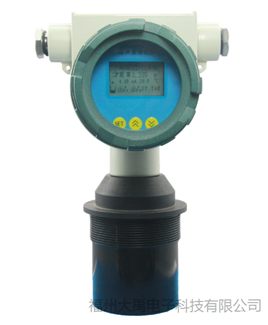
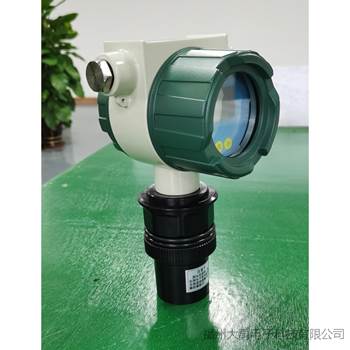
Standard explosion-proof ultrasonic level meter
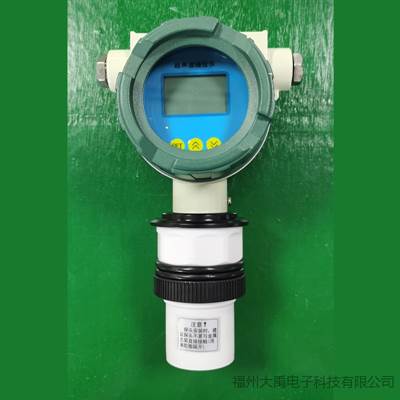
Corrosion-resistant ultrasonic level meter
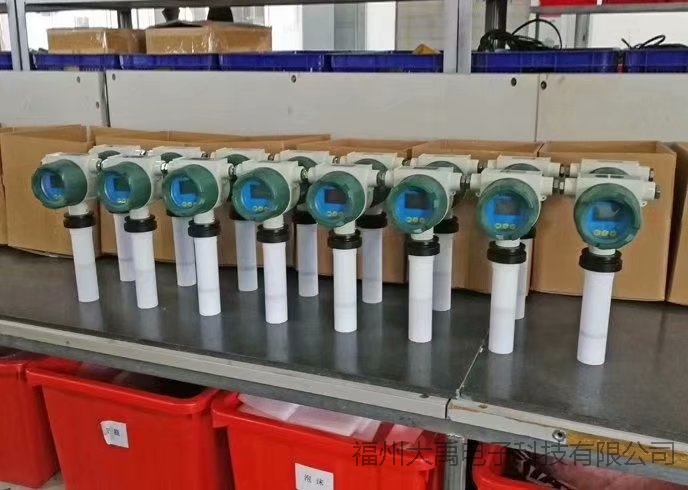
Extended probe type, corrosion-resistant explosion-proof: integrated ultrasonic level meter
Since the on-site installation environments of instruments vary, the ultrasonic level meter must know the basic measurement conditions before operation, such as measuring range, zero point, full scale, and on-site working conditions. Therefore, the instrument must be configured before measurement.
1. Product technical parameters
Range: 0~10m Product Blind Zone: 0.25m~0.50m Measurement Accuracy: ±0.25~0.5% ; Resolution: 3mm or 0.1% (whichever is greater)
Output: 4~20mA/750Ω load; Display output: English LCD displaying level measurement value, distance measurement value, and ambient temperature value.
Power supply: 95~275VAC 50Hz/60Hz or 24VDC 120mA optional Operating Temp: Instrument: -20~+60℃, Probe: -40~+70℃
Ambient pressure: standard probe is 3 kg, i.e., 0.3MPa. Probe withstand pressure up to 16 kg, i.e., 1.6MPa Beam angle: half-power angle: 11°, directivity angle: 27°
Corrosion resistance: can be used in weak acid and weak alkali environments (if used under strong acid or strong alkali conditions such as sulfuric acid, hydrochloric acid, hydrofluoric acid, caustic soda, please choose the Corrosion-resistant series of this model)
Main unit Protection Rating: IP66; Probe Protection Rating: IP68 Mounting dimensions: thread M78×2mm
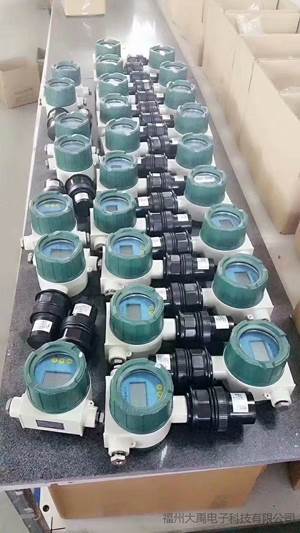
Integrated ultrasonic level meter, preparation before packaging
2. Product Advantages
The circuit design uses high-quality power modules from the power supply section onwards, and Components are imported, highly stable, and reliable devices, making the quality superior to similar instruments.
● The patented intelligent acoustic wave technology software can perform intelligent echo analysis without any debugging or other special steps. This technology features dynamic thinking and dynamic analysis functions.
● The proprietary intelligent acoustic wave patent technology greatly improves the instrument accuracy, achieving liquid level accuracy of 0.3% and resisting various interference waves.
● This instrument is a non-contact type that does not directly contact the liquid, so it has a low failure rate. It provides multiple installation methods, and users can perform instrument calibration entirely by following this manual.
● All input and output lines of the instrument have lightning and short-circuit protection.
3. Application Scope
Used for measuring flammable and explosive liquids such as diesel, crude oil, or for measuring liquid height in explosion-proof environments. Widely used in petroleum extraction, oil refining, chemical, pharmaceutical, and other explosion-proof environments.
IV. Precautions
1. When the instrument is used outdoors, install a sunshade or protective box to prevent the LCD screen from aging due to prolonged sunlight exposure. If used in an environment with corrosive gases, a Corrosion-resistant outer cover should be installed, and the outer shell and inlet/outlet terminals of the instrument should be tightened. When used in places with corrosive gases or liquids, or near the sea or at sea, a Corrosion-resistant type should be selected.
2. For wire and cable protection conduits, pay attention to sealing to prevent water accumulation and to prevent gnawing by rodents such as rats.
3. Although the instrument itself has lightning protection devices, when used in lightning-prone areas, it is recommended to install a dedicated lightning protection device at the instrument's wiring terminals.
4. When the instrument is used in extremely hot or cold places, that is, when the ambient temperature may exceed the instrument's operating temperature range, it is recommended to install high- and low-temperature protection devices around the level meter.
5. The ultrasonic transducer should be perpendicular to the measured liquid surface. No other obstacles are allowed within the conical range of the ultrasonic emission.
6. If used at a temperature of <-20℃ or >+60℃, please contact the local technical service department in advance.
7. If the operating environment has dust, steam, or mist, or the liquid surface has foam or floating debris, or the liquid is agitated or has waves, please contact the local technical service department in advance, as these conditions require special handling.
V. Parameters Required for Model Selection
1. Type of medium to be measured (liquid or solid; specific Name: clean water, sewage, mud, gasoline, diesel, toluene, sulfur dioxide, etc.) If liquid: whether the liquid surface has steam, mist, foam, waves, agitation, or floating debris; If solid: whether there is dust.
2. Minimum~maximum temperature of the medium, minimum~maximum voltage.
3. Corrosiveness of the medium. If it is placed in a tank, the tank material and whether there is a Corrosion-resistant lining need to be known.
4. Whether explosion-proof or Corrosion-resistant is required.
5. What is the measuring range in meters, and what is the required blind zone?
6. Working environment: e.g., open pool, covered pool, horizontal tank, vertical tank, spherical tank, and whether the tank is at atmospheric pressure, etc.
7.Operating Voltage: 24VDC or 220VAC
8.Output Signal:4~20mA current 485 communication output relay output
9. Device form: integrated type.
6. Installation Guide
6.1 Understanding Terminology
①Range: When selecting an instrument, the meaning of measuring range is very important. Please see the schematic diagram below.
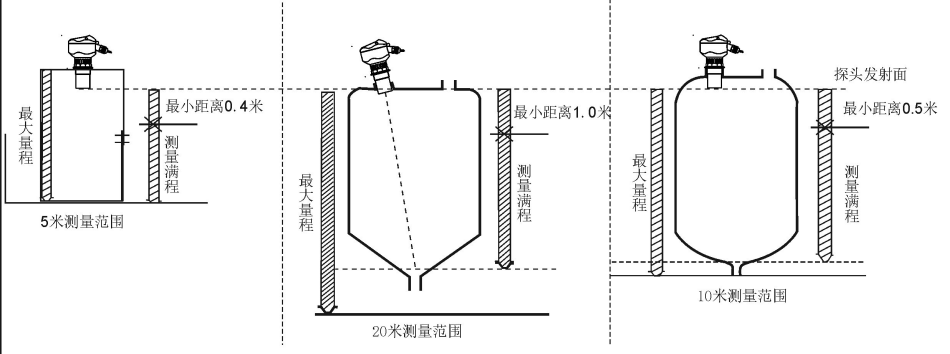
② Beam angle and false echoes
The ultrasonic beam is focused by the transducer. The pulse beam is emitted like the beam of a flashlight; the farther away from the transducer, the larger the spread area.
Any object within the beam angle, such as pipes, brackets, welds, reinforcing ribs, stirring propellers, or wall-attached objects, will cause strong false echoes, especially objects closer to the transducer within the beam angle.
For example, a pipe 6 m from the transducer produces a false echo 9 times stronger than the same pipe 18 m from the transducer.
★ Try to keep the sensor axis perpendicular to the medium surface, and avoid any other objects (such as pipes and brackets) within the beam angle.
6.2 Measuring Range Selection
The measuring range depends on the range of the ultrasonic probe. The range of the ultrasonic probe depends on the on-site working environment, the measured target, temperature, etc. According to the table below, you can select the measuring range in meters you need.
Liquid surface | Attenuation multiple | Attenuation percentage | Measuring range increase multiple |
Calm | 0dB | 0% | No increase required |
Ripples | 5...10dB | 50~67% | 1x measuring range |
Large fluctuation(e.g. with stirring blades) | 10...20dB | 90% | 3x measuring range |
Solid material surface | Attenuation multiple | Attenuation percentage | Measuring range increase multiple |
Hard, rough(e.g. granular rubber) | 40dB | 99% | 10x measuring range |
Soft(e.g. coal powder, cement, fly ash) | 40...60dB | 99~99.9% | Not recommended |
With dust | Attenuation multiple | Attenuation percentage | Measuring range increase multiple |
None | 0dB | 0% | No increase required |
Small amount | 5dB | 50% | 1x measuring range |
Large amount | 5...20dB | 50~90% | 3x measuring range |
With feeding | Attenuation multiple | Attenuation percentage | Measuring range increase multiple |
None | 0dB | 0% | No increase required |
Small amount | 5...10dB | 50~67% | 1x measuring range |
Large amount | 10...40dB | 67~99% | 3x measuring range |
With mist | Attenuation multiple | Attenuation percentage | Measuring range increase multiple |
None | 0dB | 0% | No increase required |
Small amount | 5...10dB | 50~67% | 1x measuring range |
Large amount | 10...20dB | 67~90% | 3x measuring range |
With steam | Attenuation multiple | Attenuation percentage | Measuring range increase multiple |
None | 0dB | 0% | No increase required |
Small amount | 5...10dB | 50~67% | 1x measuring range |
Large amount | 10...20dB | 67~90% | 3x measuring range |
Temperature difference between probe and medium surface | Attenuation multiple | Attenuation percentage | Measuring range increase multiple |
≤20℃ | 0dB | 0% | No increase required |
≤40℃ | 5...10dB | 50~67% | 1x measuring range |
≤80℃ | 10...20dB | 67~90% | 3x measuring range |
Signal attenuation calculation: if multiple conditions exist on-site, add up all these conditions to calculate the amount of signal attenuation.
· Slight feed addition 5...10dB
· Slight steam 5...20dB
· Temperature difference between probe and medium surface ≤40℃ 5...10dB
Total minimum 15dB, maximum 40dB.
In this case, if the actual maximum measuring range is 5m, then an ultrasonic level meter with a 50m range needs to be selected for measurement.
Liquid measurement
Flat-top tank
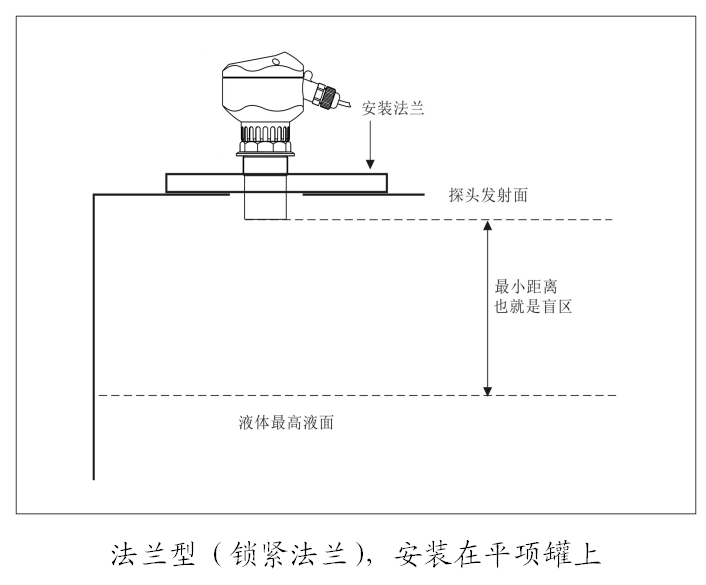
Flat-top tanks generally have a very short nozzle. The reference surface of the nozzle is the lower face of the flange. Provided that the nozzle length is ≤60mm, the nozzle inner diameter is ≥100mm, and the inner wall of the nozzle is smooth without burrs or protrusions, measurement is possible after installation when the probe's transmitting surface is 3cm below the lower face of the flange.
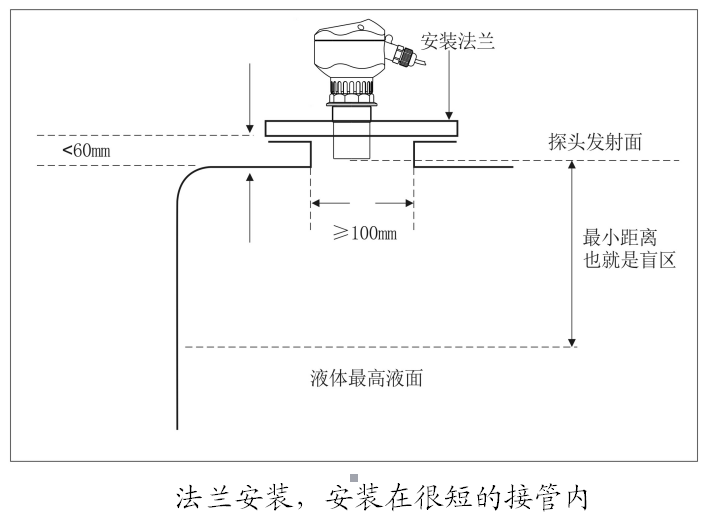
The ideal installation is to mount the instrument directly on a flat-top container without using a nozzle; the circular opening on the container is sufficient to fix a flange or universal joint for installation. The transducer emitting surface is below the reference plane.
Arched tank roof
For arched tanks, the instrument should preferably not be installed at the center of the tank roof, but rather at 1/2 or 2/3 of the roof radius (provided that a certain distance from the tank wall is maintained). For ultrasonic pulses, the arched tank roof acts like a convex lens. If the probe is installed at the focal point of the convex lens, it will receive all false echoes. Therefore, installation of the sensor probe at the center of the arched tank roof should be avoided as much as possible.
Fuzhou Dayu Electronics——Ultrasonic Level Meter、Ultrasonic level meter、ultrasonic Doppler Flow MeterThe manufacturer is your considerate product consultant.
For more detailed information, please call the hotline: 0591-28082552 or add Enterprise QQ: 2187169532
Fuzhou Dayu Electronic Technology Co., Ltd. will serve you sincerely.
| 环境参数 | |
|---|---|
| 防护等级 | IP66 |
Send us your working conditions — engineers reply with selection advice and pricing within 24 hours.
Online 9:00-18:00 (Mon-Fri)
