
The Mystery of Transducer Power: From Instantaneous Peak to Average Power [Dayu Electronics]
Customers often ask us, what is the power of the transducer?
The power of our transducers includes instantaneous peak power and average power.
The instantaneous peak power of an ultrasonic transducer = voltage squared X the impedance of the transducer at that frequency point.
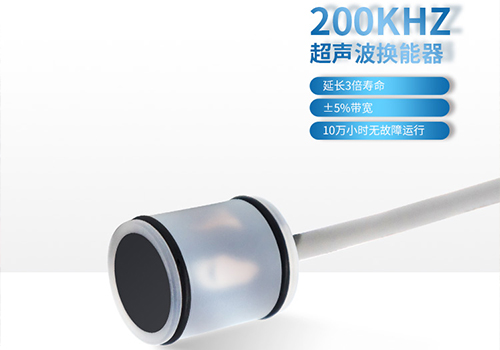
Take the following transducer model: DYACTY-200-01DJ as an example:

Assuming the transmit voltage is 200VPP and the transducer impedance at 200K is 750Ω,
The instantaneous peak power of the transducer = 200X200/750 = 53.333W.
Our transducers are generally operated in pulse mode. For such pulse operation, the average power of the transducer is calculated as follows:
Average power of the transducer = instantaneous peak power of the transducer * duty cycle.
The duty cycle refers to the proportion of the on-time to the total time within one pulse cycle.
Duty cycle = (active time / cycle time) × 100%
For example, for a 200K transducer, transmitting 10 pulses equals 50uS. Assuming it transmits once every 1 second,
The duty cycle is 50/1,000,000 x 100% = 0.005%.
From the calculation above: the instantaneous peak power of this transducer is 53.33W,
Average power of the transducer = instantaneous peak power of the transducer * duty cycle
Average power of the transducer = 53.33W x 0.00005 = 0.267mW

Note:
Ultrasonic level meters, anemometers, and flow meters generally require only 24V, 1mA current, and within 20mW.
Fuzhou Dayu Electronics has been engaged in the R&D and production of ultrasonic transducers for 16 years. If you have any questions about transducers, we may be able to help you!