
Dayu Ultrasonic Anemometer Transducer: Precisely Leading a New Era of Meteorological Detection
A pioneering wind speed and direction detection device led by innovative technology – Ultrasonic Anemometer Transducer
On the vast stage of meteorological detection, the ultrasonic anemometer transducer, with its cutting-edge technology, is increasingly becoming an indispensable key player.
1. Unveiling the Working Principle of the Ultrasonic Anemometer Transducer
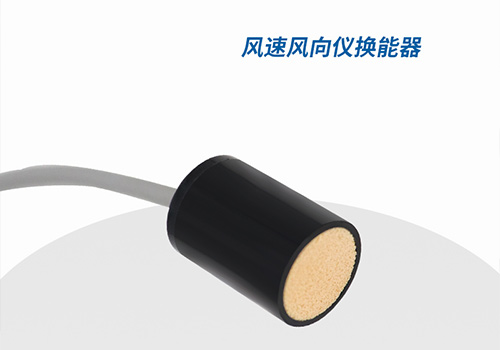
The ultrasonic anemometer transducer cleverly utilizes the physical properties of ultrasound to achieve precise measurement of wind speed and direction. The device periodically emits ultrasonic pulses and accurately records their round-trip time, calculating wind speed based on this; at the same time, it precisely captures wind direction information by leveraging the Doppler effect. The transducer first emits ultrasonic pulses in a specific direction, then captures and analyzes the reflected waves of these pulses. Given that the propagation speed of ultrasound in still air is constant, by calculating the time difference of pulse transmission, wind speed and direction can be precisely inferred.
2. Diverse Application Scenarios of the Ultrasonic Anemometer Transducer
Meteorological Monitoring: In the field of meteorological observation, the ultrasonic anemometer transducer demonstrates significant application value. It can continuously monitor wind speed and direction, providing valuable data for weather prediction and climate science research. With accurate wind information, meteorological experts can gain deeper insights into the dynamic changes of weather systems, thereby enhancing the accuracy and timeliness of forecasts.
Environmental Protection: This transducer is also an important tool for environmental monitoring. It can assist in monitoring the diffusion trends of air pollutants and provide scientific evidence for environmental decision-making. By accurately capturing wind speed and direction, it can clearly depict the trajectory and speed of pollutant propagation in the air, offering strong support for formulating effective pollution prevention and control strategies.
Marine and Aviation: In the marine and aviation sectors, accurate wind information is crucial for ensuring navigation safety. The ultrasonic anemometer transducer can provide real-time wind speed and direction data, helping navigators formulate safer and more efficient navigation plans to reduce navigation risks.
3. Significant Advantages of the Ultrasonic Anemometer Transducer
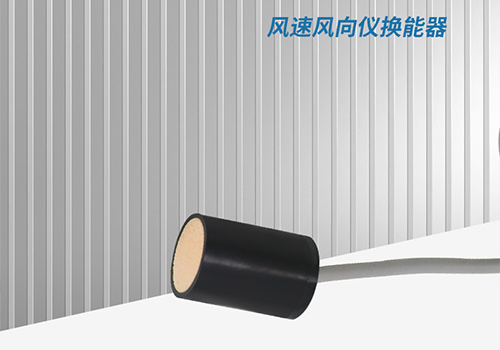
High Precision: The transducer possesses excellent measurement accuracy, providing accurate and error-free wind speed and direction information, laying a solid foundation for research and decision-making in related fields.
Broad Adaptability: Its measurement range is extensive, capable of meeting wind measurement requirements under various complex environmental conditions. Whether in oceans, plateaus, or urban areas with diverse terrains, it ensures accurate measurement results.
Real-time Performance: The transducer can instantly capture subtle changes in wind speed and direction, providing strong support for rapid response and decision-making in related fields.
High Reliability: Due to the absence of internal moving parts, the transducer has extremely high operational stability and durability, maintaining stable operation over extended periods even in harsh environments.
Energy Efficiency and Environmental Friendliness: Its low-power design aligns with modern energy-saving and environmental protection concepts, contributing to reduced energy consumption and environmental preservation.
4. Summary and Outlook
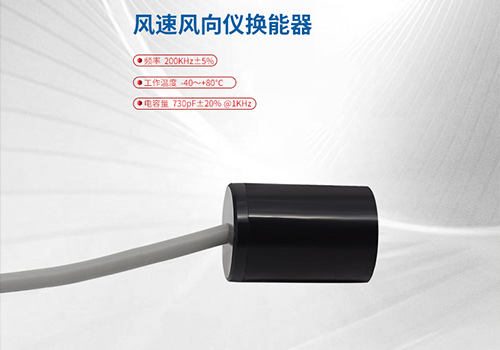
Ultrasonic Anemometer Transducer, as an exemplary innovative technology in the field of meteorological monitoring, continues to play a vital role. Its numerous advantages, such as high precision, broad adaptability, real-time performance, high reliability, and energy efficiency, provide strong technical support for weather forecasting, environmental protection, marine and aviation, and many other sectors. Looking ahead, with the continuous advancement of technology, the performance of ultrasonic anemometer transducers will be further enhanced, opening up even broader development prospects for the field of weather monitoring.