
Tailing Dam Safety Guardian: Unveiling the Secrets of Dry Beach Monitoring![Dayu Electronics]
In the mining industry, the safety management of tailings dams is of utmost importance, and the dry beach length, as one of the key indicators for assessing tailings dam safety, makes its monitoring particularly crucial. Below, we will provide detailed answers to questions about dry beaches and their monitoring.
What is a dry beach?
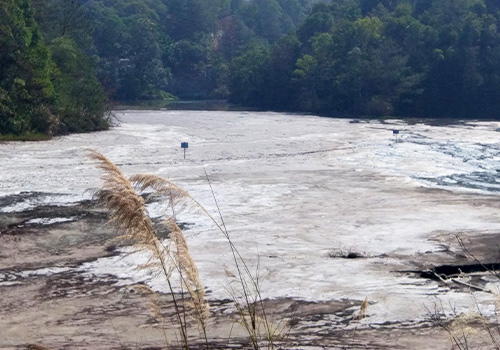
A dry beach, as the name suggests, is a specific area within a tailings dam, located between the water surface and the dam body. This area gradually forms during the tailings deposition process and is primarily composed of solid waste materials such as tailings sand and crushed stone. It is worth noting that the dry beach is not always completely dry; it may contain some moisture due to rainfall, seepage, or other reasons, but overall it is predominantly solid material.
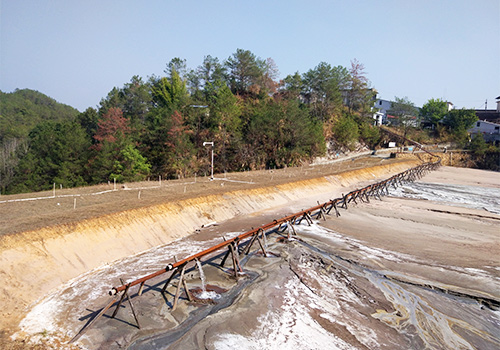
Why monitor the dry beach?
Monitoring the dry beach length is essential for the safety management of tailings dams, mainly for the following reasons:
Preventing dam breach accidents: The dry beach length is one of the key parameters for evaluating the stability of a tailings dam. An adequate dry beach length increases the dam's flood regulation capacity, reduces the risk of water overtopping, and effectively prevents dam breach accidents.
Ensuring safe operation: By regularly monitoring the dry beach length, problems in the tailings dam operation, such as excessively rapid sedimentation or poor drainage, can be detected promptly, providing a basis for taking appropriate measures to ensure the safe operation of the tailings dam.
Meeting regulatory requirements: Many countries and regions have enacted laws and regulations regarding the safety management of tailings dams, which specify minimum requirements for dry beach length. Therefore, monitoring the dry beach length is also necessary to comply with these regulations and avoid violations.
Working principle of the Dry Beach Ultrasonic Monitor
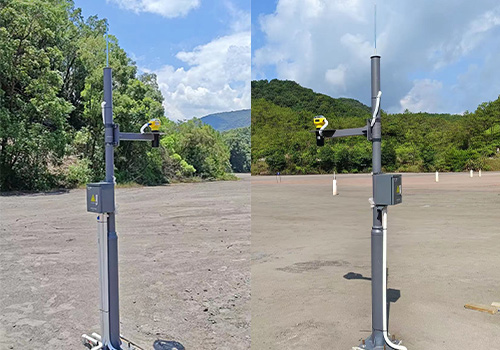
The Dry Beach Ultrasonic Monitor is a device that uses ultrasonic technology to measure the dry beach length. It is typically installed at a designated monitoring point, where it measures the distance from the monitoring point to the water surface (i.e., the water depth) by emitting ultrasonic waves and receiving their echoes. Then, combined with the reservoir's water level data (usually measured by other means), the dry beach length can be calculated.
Range considerations during selection
When selecting a Dry Beach Ultrasonic Monitor, determining the range is a critical step. Since the water level and dry beach length of a tailings dam can change over time and with weather conditions, the selected device's range should include a certain margin to ensure measurement accuracy and reliability.
Maximum measurement range and range selection: Using the example given in the question, if the maximum measurement range is 5 meters, to ensure measurement accuracy, a device with double the range, i.e., 10 meters, should be selected. Similarly, if the maximum measurement range is 8 meters, a device with a range close to 16 meters (e.g., 15 meters) should be chosen to accommodate potential variations in the measurement range.
In summary, monitoring the dry beach length is of great significance for the safety management of tailings dams. By reasonably selecting and using monitoring equipment, the safe operation of tailings dams can be ensured, and regulatory requirements can be met.