
Dayu Ultrasonic Doppler Flowmeter Solves Sewage Flow Measurement Challenges in Underground Pipe Networks
In river flow monitoring projects, particularly in special cases involving sewage flow measurement in small underground pipe networks, the application of ultrasonic Doppler flowmeters is especially critical and challenging. Below is a detailed analysis of this special case and its solution strategy:
1. Environmental Analysis and Challenges
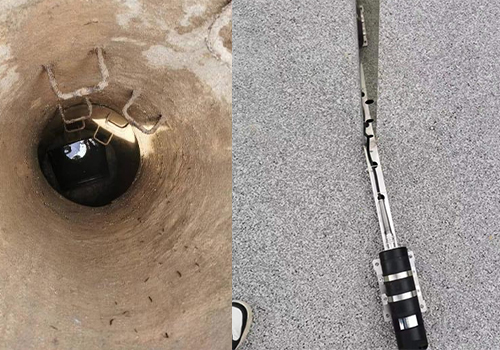
Downhole operation limitations: Underground pipe network environments are typically narrow and complex, restricting the operational space for installers and increasing operational difficulty and safety risks.
Measurement depth requirements: Since sewage pipe networks are often buried deep, it is necessary to ensure that the flowmeter can reach deep downhole to accurately measure sewage flow.
Sewage characteristics: Sewage may contain solid particles, grease, and other impurities, imposing higher requirements on measurement accuracy and sensor stability.
2. Solution Design
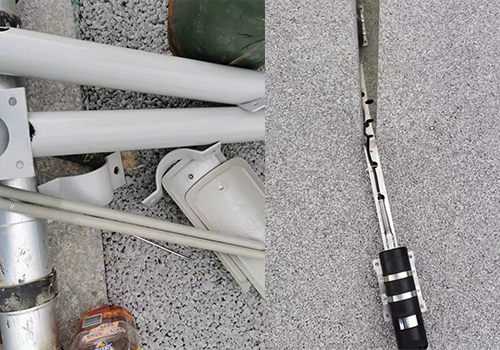
Custom extended bracket: Based on the actual site conditions, an extended bracket is designed and fabricated to ensure that the ultrasonic Doppler flowmeter can reach the appropriate position in the sewage pipe network for measurement. The bracket design must consider stability, corrosion resistance, and ease of installation.
On-site installation guidance: Professional technical personnel are dispatched to the site to guide installation, ensuring that the bracket is positioned accurately and that the flowmeter is securely connected to the bracket. Additionally, safety training is provided to installation personnel to enhance operational safety.
Commissioning and optimization: After installation, meticulous commissioning is carried out, including sensor calibration and measurement parameter configuration, to ensure that the flowmeter accurately measures sewage flow. Furthermore, based on actual site conditions, measurement results are validated and optimized to ensure data accuracy and reliability.
3. Key Technical Points
Ultrasonic Doppler technology: Utilizes the Doppler effect of ultrasonic waves in fluids to measure flow velocity, offering advantages such as non-contact measurement, high accuracy, and strong adaptability, making it suitable for use in complex environments like sewage pipe networks.
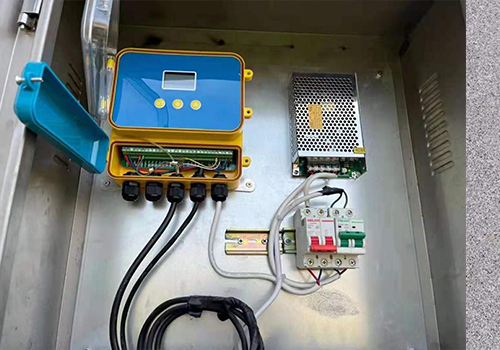
Data processing and transmission: Flow data is collected in real time, processed, and analyzed, and then transmitted via wired or wireless methods to a monitoring center for remote monitoring and management.
Safety protection measures: During downhole operations, strict safety measures must be implemented, such as wearing protective equipment and setting up safety warning signs, to ensure personnel safety.
4. Expected Results and Benefits
Improved measurement accuracy: Through the use of custom extended brackets and on-site commissioning, the ultrasonic Doppler flowmeter can accurately measure sewage flow, providing reliable data support for river flow monitoring.
Enhanced monitoring capability: Enables real-time monitoring of sewage flow in small underground pipe networks, improving the management level and operational efficiency of urban drainage systems.
Environmental safety assurance: Timely detection and handling of issues such as excessive sewage discharge prevent environmental pollution incidents and ensure the safety of the urban ecological environment.
In summary, for the special case of sewage flow measurement in small underground pipe networks within river flow monitoring, the challenges of inconvenient downhole operations and insufficient measurement depth can be effectively addressed through measures such as custom extended brackets, on-site installation guidance, and commissioning, thereby achieving accurate sewage flow monitoring.