
Split-Type Ultrasonic Level Meter Precisely Safeguards Factory Safety Line [Dayu Electronics]
Project Implementation Plan
1. Project Background and Objectives
With the expansion of a factory's production scale in Guiyang City, the safety management of water storage tanks has become increasingly important. To avoid overflow accidents caused by excessive water levels that could affect plant safety and production operations, this level monitoring project is implemented. The project aims to achieve real-time, precise monitoring of the water level in enclosed storage tanks by installing split-type ultrasonic level meters, and to automatically trigger an alarm when a preset high level is reached, enabling plant staff to take timely drainage measures to ensure production safety and environmental protection.
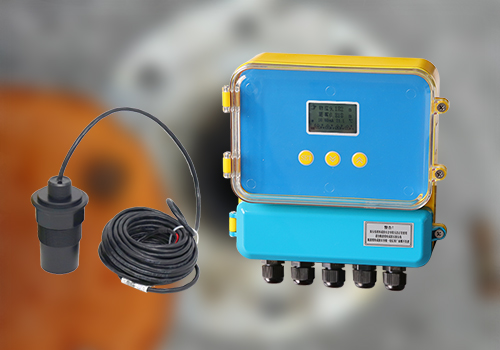
2. Product Selection and Features
Product Name: Split-Type Ultrasonic Level Meter
Manufacturer: Fuzhou Dayu Electronics Technology Co., Ltd.
Features:
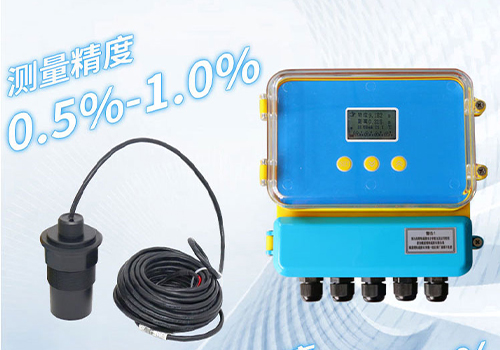
High Precision: Utilizes ultrasonic technology, offering high measurement accuracy and low error, suitable for various liquid environments.
Non-Contact Measurement: The sensor does not come into direct contact with the liquid, avoiding issues such as corrosion and contamination, thus extending service life.
Multi-Parameter Acquisition: In addition to liquid level, it can also measure empty height and ambient temperature, providing comprehensive data support.
Remote Transmission: Supports remote data transmission to the transmitter in the gatehouse, facilitating centralized monitoring and management.
Alarm Function: Built-in high-level alarm contact switch, which can be connected to an external audible and visual alarm for automatic alerting.
3. Installation Plan
Installation Location Selection:
The sensor is installed at the observation hole on the top plate of the enclosed storage tank, with priority given to the observation hole near the center of the tank to ensure the representativeness of the measurement data.
The inner wall of the hole must be cleaned and polished smooth to avoid any obstructions that could interfere with the transmission and reception of ultrasonic waves.
Installation Steps:
Confirm the location and dimensions of the observation hole, and prepare the mounting bracket and fastening materials.
Secure the sensor to the bracket and adjust it to an appropriate angle to ensure an unobstructed ultrasonic transmission path.
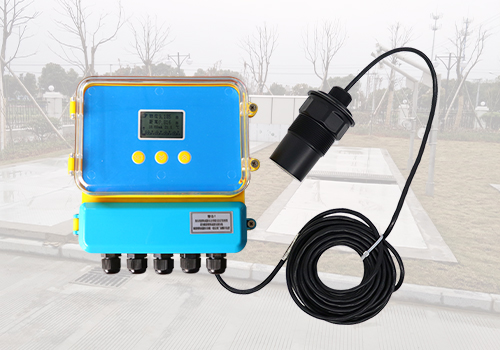
Connect the signal cable between the sensor and the transmitter to ensure stable and reliable signal transmission.
Install the audible and visual alarm and connect it to the high-level alarm contact switch output of the transmitter.
Commissioning and Testing:
Start the system and perform initial commissioning to check that all components are correctly connected and signal transmission is smooth.
Simulate different water levels to verify the measurement accuracy of the level meter and the proper functioning of the alarm.
Adjust the alarm threshold to an appropriate range to ensure it is neither too sensitive nor too sluggish.
4. Operation and Maintenance
Regular Inspection: Periodically inspect the sensor and connecting cables to ensure there is no looseness or corrosion.
Cleaning and Maintenance: Regularly clean the observation hole and sensor surface to keep them clean and unobstructed.
Data Backup: Regularly back up monitoring data to prevent data loss or damage.
Training and Guidance: Provide equipment operation and maintenance training to plant staff to improve overall operational and maintenance levels.
5. Expected Project Outcomes
Through the implementation of this project, real-time monitoring and automatic alarm for the water level of the storage tank in a factory area in Guiyang City will be achieved, effectively preventing overflow accidents caused by excessive water levels and ensuring plant safety and production operations. Additionally, the successful implementation of the project will provide a valuable reference for level monitoring in similar environments.