
Non-Contact Measurement Game Changer! You Won't Believe the Accuracy of Dayu Radar Level Meters
The beam angle of a radar level meter generally refers to the spread angle of the radar beam, typically between 4° and 10°.
Radar level meter works by utilizing the different propagation speeds of radar waves in different media to measure the reflected radar wave signal and its travel distance, thereby calculating the liquid level height in the medium. This non-contact measurement technology features high accuracy, good stability, strong reliability, and maintenance-free operation, making it widely used in industrial production processes.
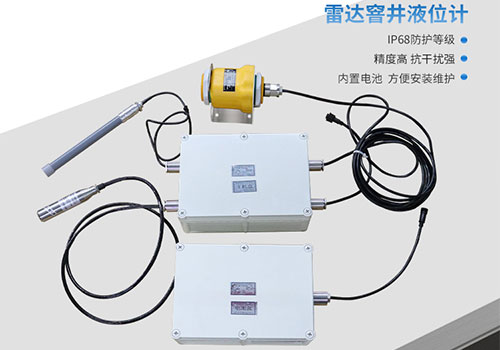
A radar level meter mainly consists of an antenna, probe, measurement cable, and controller. Among these, the probe acts as the "eyes" of the radar, receiving the radar waves reflected from the target and analyzing the signal's frequency and amplitude to determine the target height. The antenna, on the other hand, serves as the "ears" of the radar, receiving various reflected waves from the antenna, which are then processed by the processor and displayed as results. The probe also contains an antenna direction indicator plate. The distance between the probe and the antenna has a certain impact on measurement accuracy; generally, the farther the distance, the higher the measurement accuracy.
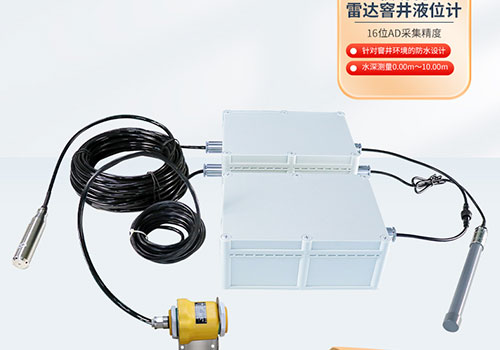
Radar level meters are divided into two types: pulse type and continuous type. Pulse-type radar level meters use the antenna to transmit electromagnetic waves and calculate the liquid level by measuring the round-trip time of the signal; continuous-type radar level meters calculate the liquid level by measuring the echo strength of the signal. Each method has its own characteristics. The pulse type offers advantages such as a wide measurement range, high measurement accuracy, and suitability for various media, while the continuous type features minimal impact on the medium and is suitable for high-temperature, high-pressure, and other demanding conditions.
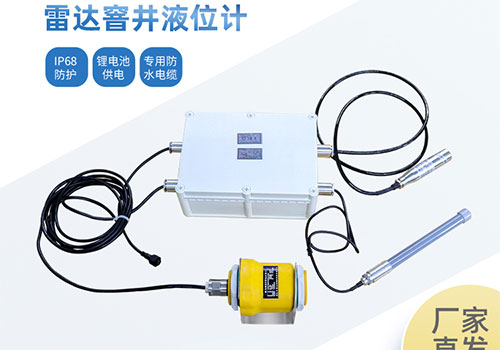
The probe of a radar level meter adopts a non-contact measurement method, enabling normal operation in harsh environments such as high temperature, high pressure, flammable, and explosive conditions. Therefore, it is widely used in various industrial fields. Whether in petrochemical, food processing, water treatment, wastewater treatment, pharmaceuticals, agriculture, textiles, papermaking, printing, or automobile manufacturing, radar level meters play a vital role.