
Say Goodbye to Printing Waste! The Secret Weapon of Dayu Ultrasonic Double-Sheet Sensors for Precise Measurement
When measuring 80g coated paper, the ultrasonic double-sheet sensor primarily uses the penetration and reflection characteristics of ultrasonic waves to determine the number of sheets. Here are the specific measurement methods and steps:
Equipment preparation: Use a small ultrasonic double-sheet sensor with a diameter of 18 mm, which is suitable for measuring thinner paper.
Single-sheet measurement:
Place one sheet of 80g coated paper between the sensor.
If the sensor's indicator light turns green, it means there is only one sheet between the sensor.
After removing the paper, the indicator light should turn blue, indicating no paper.
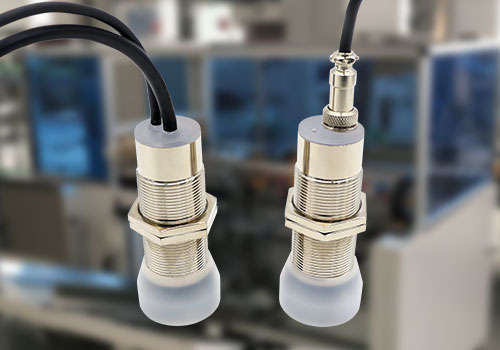
Multi-sheet measurement:
When testing with two sheets, regardless of whether the sheets are close together, the sensor's indicator light should turn red, indicating multiple sheets are detected.
Similarly, after removing the paper, the indicator light should return to blue.
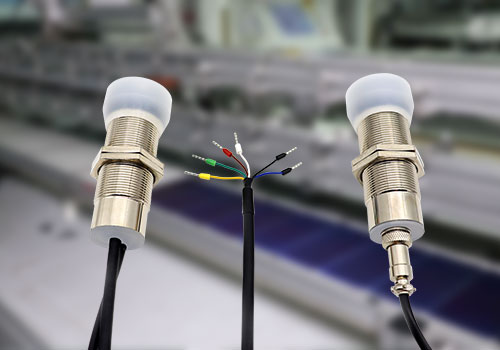
Working principle:
The ultrasonic double-sheet sensor consists of a transmitter and a receiver. When the transmitter emits ultrasonic pulses, if there is paper between the receiver, the ultrasonic energy will be reduced accordingly, because part of the energy is absorbed when the ultrasonic waves pass through the paper. Based on the change in the received ultrasonic energy value, the sensor can accurately determine whether a single sheet, double sheets, or air is being fed.
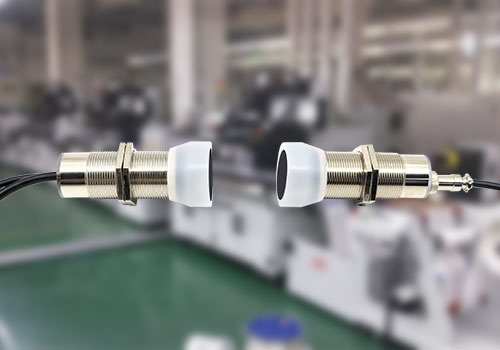
Application scenarios:
This ultrasonic double-sheet sensor is particularly useful in printing presses because it can detect in real time whether multiple sheets have passed through. If multiple sheets are detected, the printing press can stop immediately, avoiding waste and damage. For companies that repair and produce printing machinery, this sensor is an important auxiliary tool that can help them improve production efficiency and product quality.