
Ultrasonic Level Meter No Echo: The Full Guide and Professional Solutions
Why does an ultrasonic level meter have no echo?
An ultrasonic level meter is a level instrument that determines the liquid level height by calculating the time difference between the transmission and reception of ultrasonic waves, representing non-contact measurement. Recently, we have received several inquiries about ultrasonic level meters having no echo, resulting in the inability to measure. In response to this issue, we will provide a unified explanation today.
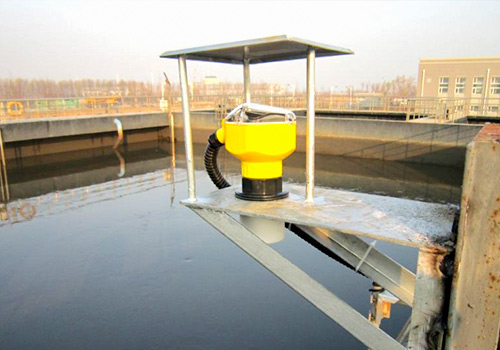
Probe surface deposits:
Problem: Dust, oil, and medium residues attach to the probe, obstructing ultrasonic emission.
Solution: Regularly clean the probe surface to ensure it is clean and free of contaminants.
Gas-phase medium concentration:
Problem: Excessive gas-phase medium concentration increases signal loss during ultrasonic propagation.
Solution: Control the gas-phase content in the medium to reduce the generation of water vapor, smoke, and dust.
Liquid surface foam:
Problem: Foam reflects ultrasonic waves in all directions, resulting in insufficient or no receivable echo.
Solution: Consider using an ultrasonic level meter with better foam suppression capability or installing a foam suppression device.
Installation position and angle:
Problem: Installing too close to the container wall or not perpendicular to the measured liquid surface increases the measurement blind zone.
Solution: Perform precise measurement and calculation before installation to ensure the appropriate installation position and angle.
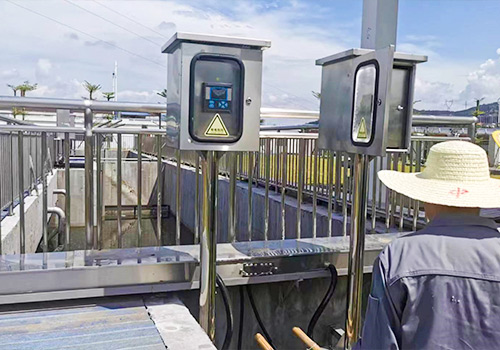
Obstructions in front of the probe:
Problem: Obstructions in front of the probe cause erroneous echoes.
Solution: Ensure there are no obstructions in front of the probe and regularly inspect the surrounding environment to prevent future obstructions.
Ultrasonic level meter parameter settings:
Problem: Incorrect parameter settings, such as ultrasonic frequency and transmission power.
Solution: Adjust the parameter settings of the ultrasonic level meter according to the actual application scenario.
Hardware failures:
Problem: Internal hardware failures in the ultrasonic level meter, such as damaged circuit boards or sensor failure.
Solution: Contact the manufacturer for repair or replacement.
Environmental factors:
Problem: Environmental factors such as temperature and pressure affect ultrasonic propagation.
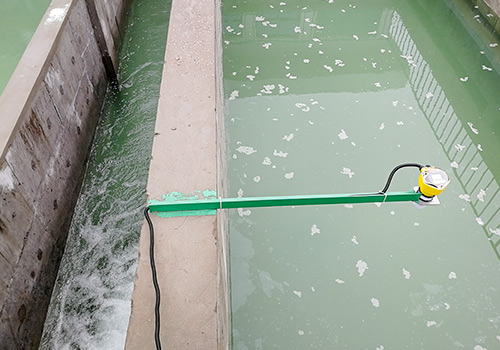
Solution: Perform calibration and compensation based on the actual application environment.
Finally, we recommend performing regular maintenance and inspection on ultrasonic level meters to ensure proper operation and measurement accuracy.