
Ultrasonic Transducer Anemometer Problem Decoded! Signal Pointing Downward Because of This? [Dayu Electronics]
A customer used our ultrasonic transducers to build an anemometer/wind vane, with transducer model KDYA-300-050AB-CTY.
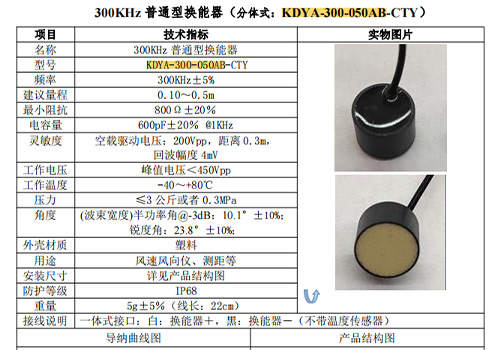
After connecting the transducer, the transmit voltage is 300VPP, with 5 pulses per burst. The ultrasonic distance between the two opposing transducers is 11 mm.
Customer: The first transducer pair transmits this signal (as shown below).
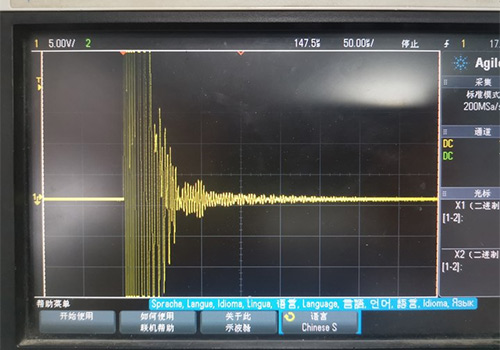
The first transducer pair receives this signal, as shown below:
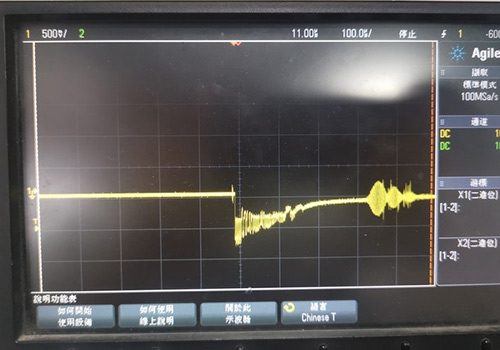
The second transducer pair transmits this signal (as shown below).
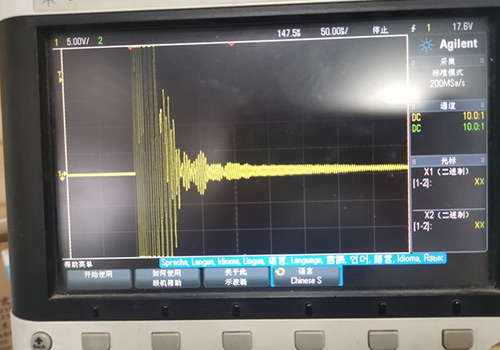
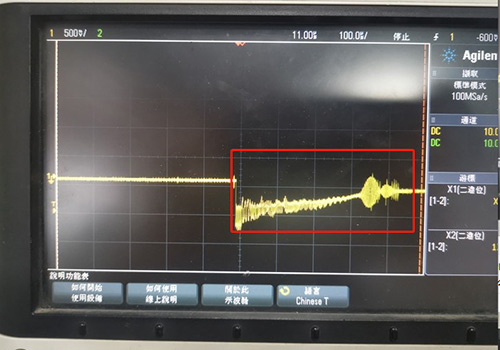
The second transducer pair now receives this signal:
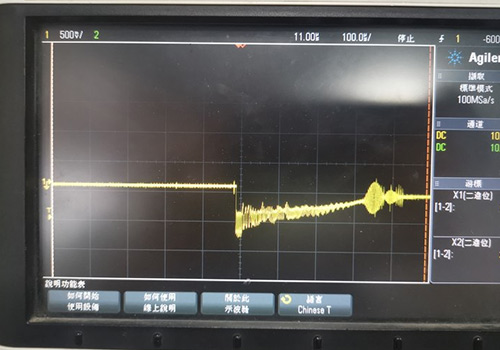
The customer's questions are:
1. Why is the received signal pointing downward?
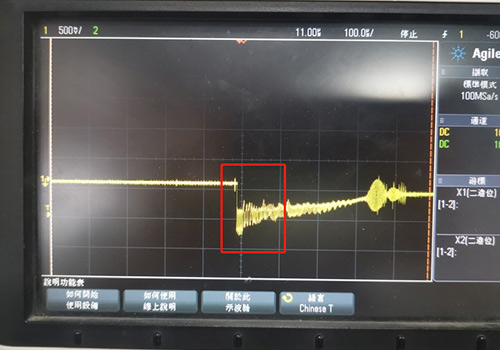
2. Why are there so many pulse trains?
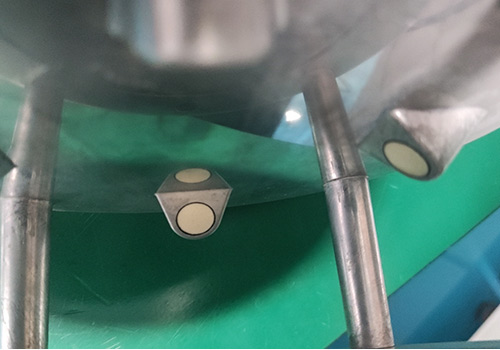
3. The transducers in the ultrasonic anemometer/wind vane are installed like this:
Customer: Why does this problem occur? How can it be solved?
This is mainly interference transmitted through the housing, which can be solved from the following aspects:
1. Add a rubber sleeve around the transducer, with a single-piece thickness of 2 mm and hardness of 50-60. Wrap the entire transducer except for the radiating surface.
Disadvantage: The rubber sleeve is somewhat soft; when inserted into the housing during production, it may not sit flat.
2. Add a groove on the outside of the transducer and install an O-ring. The O-ring diameter is typically 0.5-0.6 mm, with hardness of 50-70. Also make a groove for an O-ring at the contact point between the transducer bottom and the anemometer housing, or use a flat washer if no groove is made.
Disadvantages:
Most ultrasonic anemometer transducer housings do not have grooves and need to be custom-made.
3. Modify the circuit. Because the ultrasonic wave travels from the transmitting element through the air to the receiving element faster than it travels through the housing to the receiving element.
Since the distance between the two opposing transducers is fixed, you can determine which ultrasonic wave came through the air, and filter out all other signals that arrive at different times.
Solving it with circuitry or software is the "king" approach.
Fuzhou Dayu Electronics has been researching and customizing ultrasonic transducers for 16 years. If you have any questions about transducers, feel free to contact us—we may be able to help!