
Doppler Flowmeter: The Secret to Accurately Measuring Flow at Low Water Levels! [DaYu Electronics]
For monitoring water flow resources in farmland irrigation channels, devices such as Doppler flowmeters can be used. By applying the acoustic Doppler effect principle, the Doppler flowmeter uses ultrasonic transducers to detect flow velocity, offering advantages such as high measurement accuracy, wide range, capability to measure both weak and strong currents, high resolution, and fast response. Notably, the DaYu Doppler flowmeter features the ability to measure average flow velocity, water depth, and water temperature, and comes with a built-in temperature sensor to compensate for the effect of water temperature on sound speed.
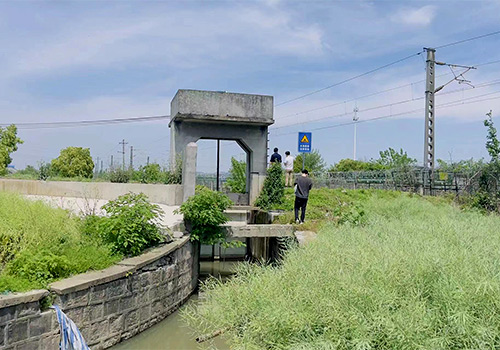
For a drainage channel in Ningbo, given that the site channel is a regular rectangle and the customer needs to measure flow at low water levels (e.g., 6 cm), the DaYu Doppler flowmeter is a suitable choice. The installation of this flowmeter should ensure that the sensor is placed at the center of the fluid pipeline, avoiding installation at bends or branches, to ensure measurement accuracy. After installation, parameter adjustments for the flowmeter are required, including the sensor's position, angle, and emission frequency.
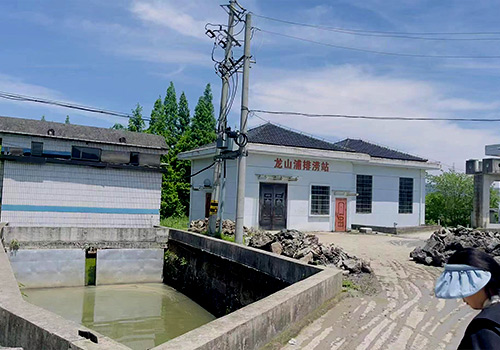
When using a Doppler flowmeter to monitor water flow resources, regular maintenance and calibration of the device are necessary to ensure its accuracy and reliability. Additionally, other flow instruments (such as radar flowmeters and acoustic wave flowmeters) can be combined for flow measurement to enhance monitoring accuracy and reliability.
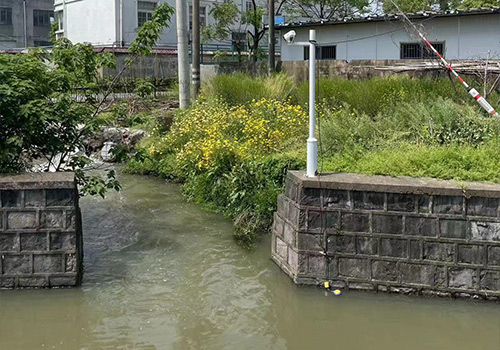
In summary, the Doppler flowmeter is an effective tool for monitoring water flow resources in farmland irrigation channels, with advantages including high measurement accuracy, wide range, and the ability to measure both weak and strong currents. In the drainage channel in Ningbo, the DaYu Doppler flowmeter can meet the customer's need for measuring flow at low water levels.