
New Choice for Sewage Well Monitoring: Dayu Doppler Flowmeter, Combining Accuracy and Convenience
The Doppler flowmeter, with its unique working principle and wide range of applications, is gradually becoming an important tool for sewage well flow monitoring. This flowmeter utilizes the Doppler effect principle, emitting ultrasonic signals and receiving echo signals to calculate the fluid velocity, thereby deriving flow data.
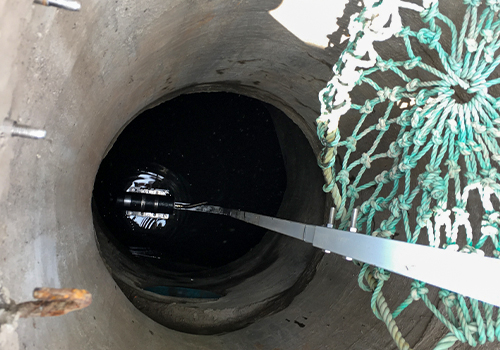
In sewage well flow monitoring, the application of the Doppler flowmeter has significant advantages. First, it does not require cutting open pipes to install inline sensors like electromagnetic flowmeters, nor does it need flow diversion devices or fixed weirs and flumes to control water flow. This non-invasive measurement method not only simplifies the installation process but also reduces the risk of damage to the sewage well structure.
Second, the Doppler flowmeter can measure in both clean and turbid water and can also measure reverse flow velocity. This is a huge advantage for the various fluid conditions that may occur in sewage wells. Whether it is clean water discharge or sewage discharge, whether it is forward flow or reverse flow, the Doppler flowmeter can provide accurate measurement data.
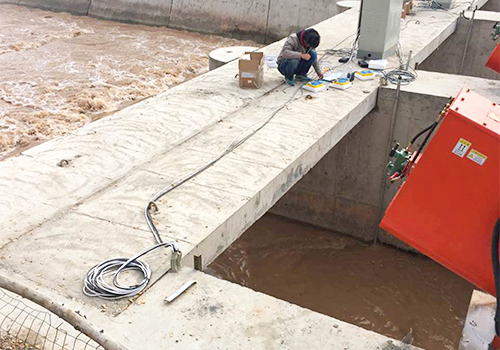
In addition, the Doppler flowmeter also has significant advantages such as easy installation and maintenance, high reliability, and high accuracy. It can operate stably in environments requiring continuous and precise measurement of flow velocity and flow rate, providing reliable data support for sewage well flow monitoring.
However, it should be noted that the application of the Doppler flowmeter in sewage well flow monitoring also faces some challenges. For example, there may be a large amount of debris and garbage in sewage wells, which can attach to the front end of the sensor and affect measurement accuracy. Therefore, during use, the sensor needs to be cleaned and maintained regularly to ensure its normal operation and accurate measurement.
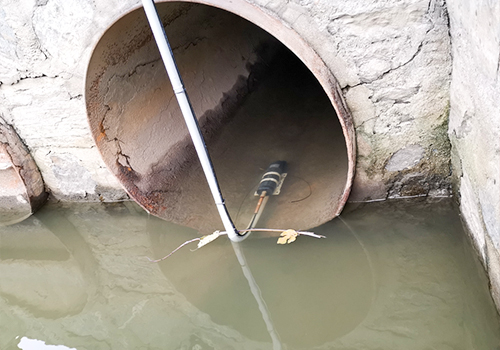
Overall, the application of the Doppler flowmeter in sewage well flow monitoring has broad prospects and important practical significance. By using this technology scientifically and reasonably, we can achieve accurate monitoring and effective management of sewage well flow, providing strong technical support for urban sewage treatment and environmental protection efforts.