
Accurate Even in Ice and Snow: Ultrasonic Level Gauge Measures Water Level with Precision [Dayu Electronics]
The ultrasonic level gauge can accurately measure water level in rivers even during winter dry season when ice and snow are present. This is because the working principle of the ultrasonic level gauge is not affected by freezing or snowfall.
The ultrasonic level gauge measures distance by emitting ultrasonic waves and receiving their echoes. When the ultrasonic wave hits the water surface, it is reflected back. The probe receives these echoes and measures their transmission time. The water level height is then calculated using the formula S=C×t/2 (where S is the measured distance, C is the speed of ultrasonic wave propagation, and t is the echo time).
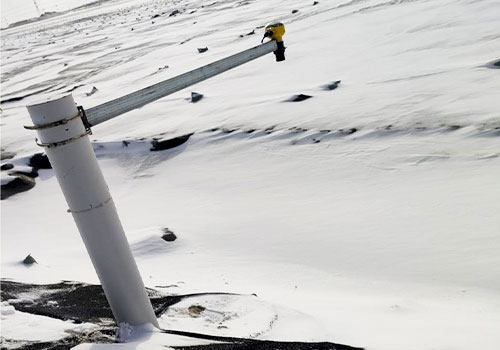
Under freezing and snowy conditions, even though the river surface may have ice or snow cover, the ultrasonic level gauge can still function properly. This is because ultrasonic waves can penetrate the ice or snow, reach the water surface, and be reflected back. As long as the ultrasonic waves can be transmitted and received normally, the level gauge can accurately measure the water level height.
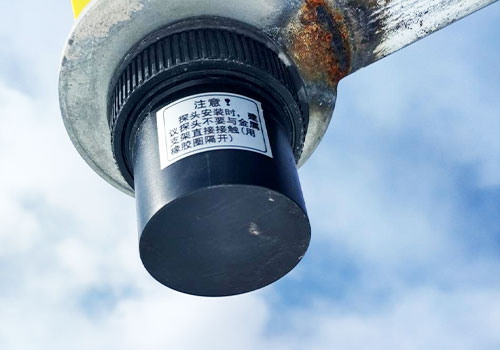
Of course, to ensure the accuracy and stability of the ultrasonic level gauge in harsh environments, some special maintenance and calibration work may be required. For example, regularly removing snow or ice residue from the probe to ensure that ultrasonic waves can be transmitted and received properly. Additionally, it is necessary to select the appropriate ultrasonic level gauge model and parameter settings based on the specific application scenario and environmental conditions.
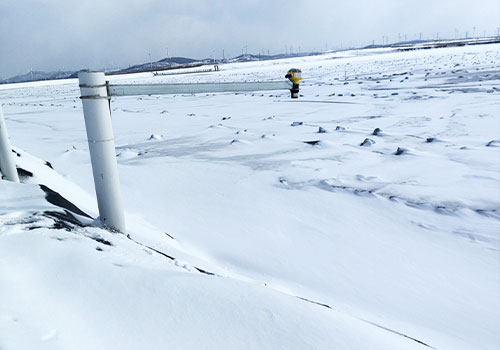
In summary, the ultrasonic level gauge can measure water level height in rivers normally even in winter during the dry season, under conditions of ice and snow. However, to ensure its accuracy and stability, appropriate maintenance and calibration are required.