
Ultrasonic Anemometer Core: Dayu Ultrasonic Transducer Selection Guide
An ultrasonic anemometer is a wind speed and direction measurement instrument developed based on ultrasonic principles. It achieves accurate measurement of wind speed and direction by measuring the time difference between transmission and reception. Its core component is the ultrasonic transducer.
Many customers are unsure how to select the appropriate transducer when first developing an ultrasonic anemometer.
First, without considering the circuit and software:
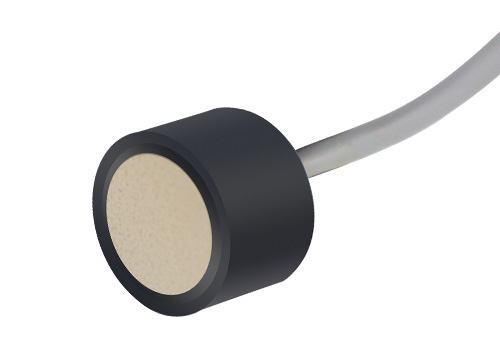
- For transducers of the same frequency, a larger diameter means higher sensitivity.
- Under the same transmit voltage, a larger diameter transducer receives a stronger signal.
In cases where the maximum wind speed to be measured reaches 60 m/s:
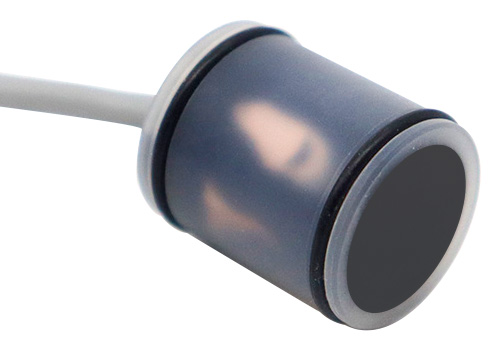
- If the circuit design is good, ultrasonic transducers in the 180 kHz to 225 kHz range can be selected.
- If the circuit design is average, ultrasonic transducers in the 100 kHz to 125 kHz range can be selected.
Second, if there is no size constraint, choose a transducer with a larger diameter, such as 16 mm or 14 mm, because a larger diameter transducer provides a relatively stronger signal and imposes lower requirements on the circuit design.
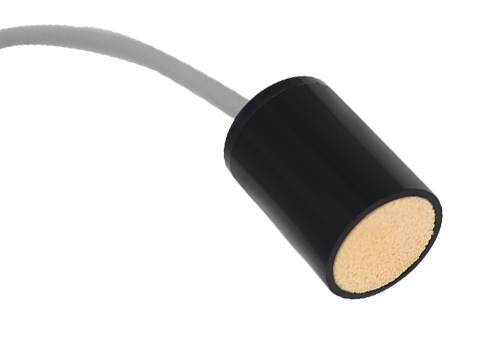
Finally, if the sensor will be used in seaside environments or environments with salt spray or corrosive gases, it is best to choose a transducer made of PVDF material to ensure corrosion resistance. Additionally, compared to a foam plate radiating surface, the PVDF radiating surface provides higher signal strength.