
Decoding Six-Beam Installation and Orientation Issues: A Helpful Guide [Dayu Electronics]
Case Analysis:
How to resolve installation and orientation issues when using the six-beam sensor?
A customer encountered difficulty in determining the front and rear direction of the sensor during the use of the six-beam sensor, and therefore had a detailed discussion with our technical staff.
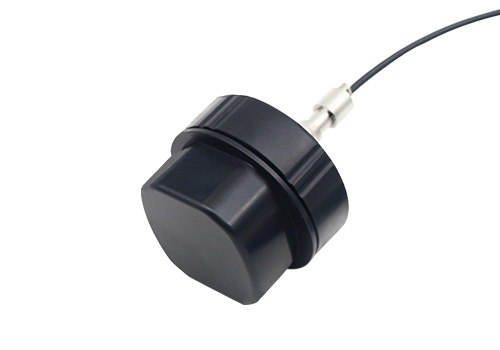
Our structural engineer, Mr. Pan, introduced the product structure to the customer in detail and provided recommendations for correct installation.
Technical engineer Mr. Dong then explained the product's orientation issues to the customer through schematic diagrams.
First, Mr. Dong elaborated on the working principle of the six-beam sensor:
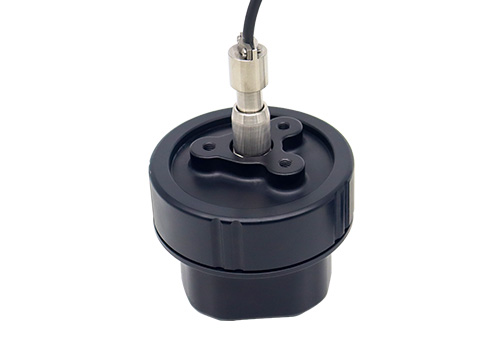
Dayu's six-beam underwater ultrasonic ranging sensor utilizes the principle of ultrasonic self-transmission and self-reception for distance measurement, enabling multi-beam ultrasonic ranging. Through a software-based round-robin testing method of multiple transmitters and one receiver, it can measure distances in multiple directions, thereby achieving underwater obstacle avoidance and ranging functions. The sensor can store detected data in its internal chip registers and communicate with the host computer via the Modbus protocol, allowing adjustment between passive and active upload modes.
Its product features are as follows:
- Multi-channel round-robin testing
- Fast response and high accuracy
- Transducer protection rating IP68, withstands water pressure up to 150m
- Equipped with TTL communication, data readable and writable
- Four-pin aviation plug connector for easy installation
- Wide voltage input, 10.8VDC to 26.4VDC
1.4 Product Applications
- Position detection and distance measurement
- Underwater robot obstacle avoidance and collision detection
- Underwater robot fixed-distance ranging
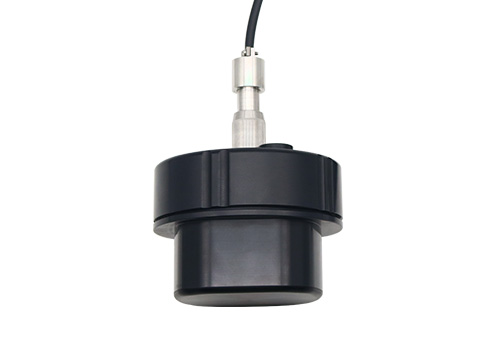
After the above introduction, the customer gained a clearer understanding of the product. Our technical staff personally hand-drew the beam angles and directionality of the product, explaining that the product transmits and receives through six directions, with the bottom center position representing the first sensor channel, while the other channels are arranged sequentially from right to left (channels 2, 3, 4, 5, and 6 outputs). These channels operate in a round-robin manner, and after testing, the detection results—i.e., field measurement data—are transmitted to the customer's backend. Additionally, the customer's question was addressed: why is there a 7th channel of data? That data actually represents the temperature value, not a distance value.
Through this detailed coordination, the customer experienced smooth operation in subsequent usage and was very satisfied with our after-sales service. Here, we hope that every customer who uses our products can purchase with confidence, use them comfortably, and enjoy worry-free after-sales support.