In-Depth Analysis of Ultrasonic Transducer Operating Principles and Power Calculation Methods![Dayu Electronics]
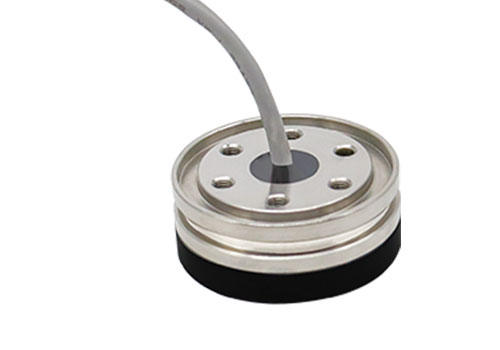
Have you ever wondered how an ultrasonic transducer actually works? In fact, it can operate in two modes: pulsed operation and continuous operation. Pulsed operation is like starting and stopping intermittently, while continuous operation runs steadily without interruption. So, what is the formula for calculating power? Actually, just like we normally use, the formula is "Voltage × Current = Power." For example, for a 105KHz air transducer with an operating voltage of 100V and a current of 0.5A, its power would be 100V × 0.5A = 50W!
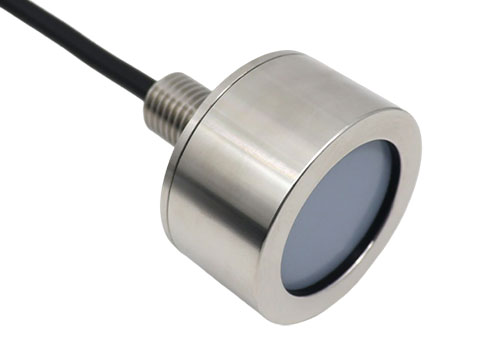
However, there is another case: if under pulsed operation conditions the pulse current cannot be measured directly, we can use the method of "Operating Voltage × Operating Voltage ÷ Transducer Resistance," and the transducer can easily calculate its power! For example, for a 1MHz underwater acoustic transducer with an operating voltage of 20V and a transducer resistance of 15 ohms, the power calculated using the formula would be 20V × 20V ÷ 15 ohms = 26.6W.
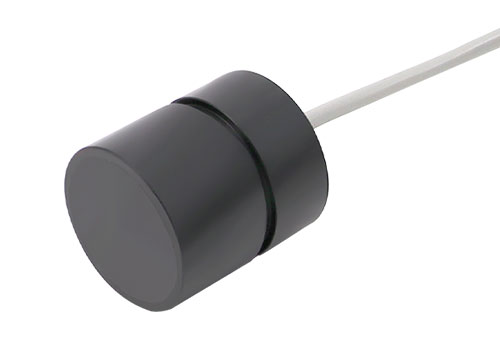
Did you know? For transducers operating underwater, the continuous operation power can almost approach the pulsed operation power! Continuous operation power can reach 70-90% of pulsed operation power! However, if the transducer operates in air, the difference between continuous operation power and pulsed operation power is significant! Continuous operation power is only 5-10% of pulsed operation power! Why is this? Because under continuous operation, the transducer generates heat. In water, the water can quickly carry away the heat, so the continuous operation power can be made very high. But in air, the transducer has difficulty dissipating heat and can be easily damaged, so the continuous operation power can only be one-tenth to one-twentieth of the pulsed operation power.