
How Partially Filled Pipes Affect Doppler Flowmeter Measurements | Dayu Electronics
A partially filled pipe is a challenge for ultrasonic Doppler flowmeter measurement. A Doppler flowmeter is an advanced instrument that uses ultrasound to measure fluid velocity and flow rate. Its greatest strengths are high accuracy, reliability, and ease of use! In industrial production, it is widely applied in liquid flow and mass measurement and plays an indispensable role.
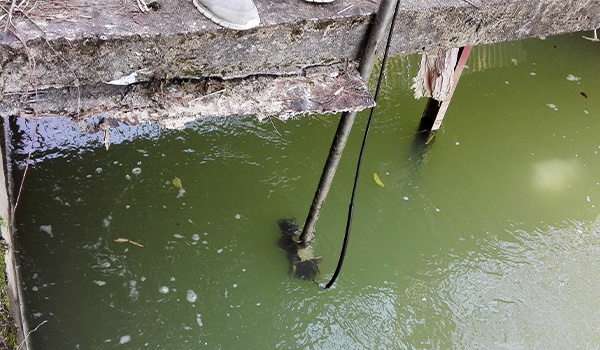
When the pipe is not completely filled with fluid, ultrasonic wave propagation can be affected by tiny bubbles, solid impurities, or bubble attachment, leading to signal distortion and ultimately inaccurate measurements. Just like a poor TV signal that prevents you from watching programs normally, a partially filled pipe is a major enemy of flowmeter accuracy.

Imagine on a production line, the flowmeter readings do not match the actual conditions, causing an unfavorable production process. Measurement errors lead to deviations in product quantities and make it impossible to precisely control raw material usage. These issues directly affect production efficiency and the economic benefits of an enterprise. Therefore, accuracy is the key to ensuring an effective flowmeter!
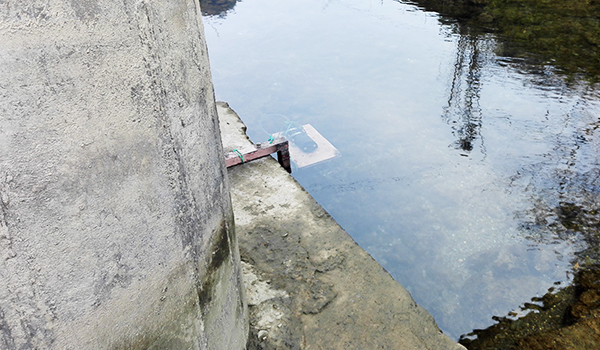
In fact, the influence of partially filled pipes on Doppler flowmeters is also a difficult problem in the industry. Although this issue is hard to completely solve, with continuous technological advancements and innovation, we are striving to overcome this challenge. As technology develops, perhaps more advanced solutions will be applied to flowmeters, bringing us higher accuracy and reliability!
Understanding the impact of partially filled pipes on Doppler flowmeters is also a reflection on the service industry. In the service sector, precision and accuracy are always our goals. Just as we treat Doppler flowmeters, we should always maintain sensitivity and accurate responses to user needs, putting users' interests first.