
Ultrasonic Open Channel Flow Meter for Industrial Wastewater Treatment [Dayu Electronics]
Ultrasonic open channel flow meter is a new type of flow instrument used to measure wastewater discharge from enterprise gravity pipes (channels), also known as the "wastewater flow meter." It is widely used in the measurement of wastewater discharge in the petroleum, chemical, textile, and pharmaceutical industries. It is one of the essential instruments for urban pollution prevention and environmental monitoring departments to monitor wastewater discharge, and it is also a standard instrument for the measurement of agricultural irrigation water discharge by water conservancy departments.
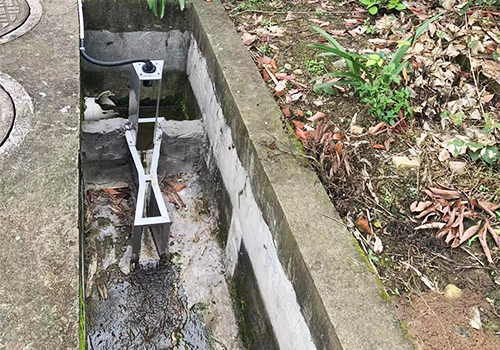
This flow meter utilizes technologies such as hydraulic flow measurement, ultrasonic level measurement, microcomputer processing, and digital display. It can be installed and automatically measure under harsh conditions, offering high reliability and strong anti-interference capability. It is easy to install and maintain, with simple and clear readings.
With an IP68 overall protection rating, the instrument is physically sealed for robust protection, being corrosion-resistant, explosion-proof, and dust-proof. The intelligent recall function allows one-click analysis of on-site fault causes. It can also be equipped with wireless remote transmission and backend software, providing a comprehensive view of backend data, fully replacing manual monitoring and solving most challenges. It can be said that the ultrasonic open channel flow meter has made significant contributions to environmental protection projects.
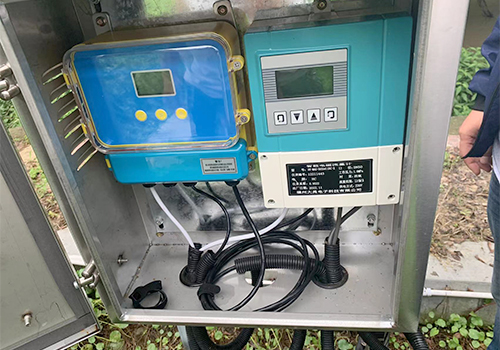
It is a flow instrument for measuring free-surface natural flow in non-full-pipe open channels. During measurement, a flume or weir is installed in the channel, converting the flow rate in the channel into a liquid level height. The measured liquid level signal is then used to back-calculate the flow rate within the flume or weir.
The larger the flow in the channel, the higher the liquid level in the flume or weir; conversely, the smaller the flow, the lower the level. Generally, there is no definitive corresponding relationship between the liquid level and flow in a channel, because the same water depth is related to flow rate, cross-sectional area, slope, and roughness (based on fluid mechanics).
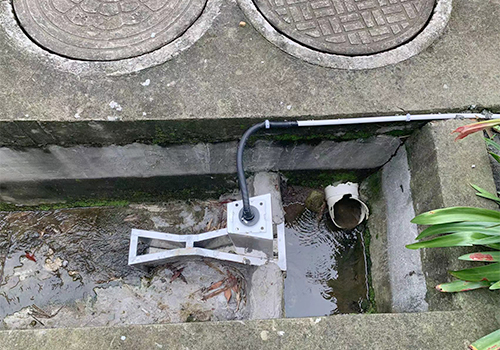
By installing a flume or weir in the channel, since the weir notch or flume constriction has a smaller cross-sectional area than the channel, the corresponding relationship between the upstream water level and the flow rate mainly depends on the geometric dimensions of the flume or weir.
Thus, when a flume or weir of fixed dimensions is placed in different channels, a definite mathematical relationship between flow and liquid level is established.