
Ultrasonic Transducer for Anemometer [Dayu Electronics]
Ultrasonic wind measurement is an application of ultrasonic detection technology in gaseous media, which measures wind speed by utilizing the effect of air flow (wind) on the propagation speed of ultrasonic waves in air.
When sound waves propagate through air, there is a speed difference between the downwind and upwind directions. When the ultrasonic propagation distance is fixed, this speed difference is reflected as a time difference in propagation duration, and there is a linear relationship between this time difference and the wind speed to be measured. Depending on the method used to measure and calculate the time difference, it is generally classified into the direct time-difference method, frequency-difference method, and phase-difference method. The direct time-difference method, also known as the pulse transit time method, directly measures the transmission and reception time of ultrasonic waves, thereby calculating the current wind speed and direction data from the time difference.
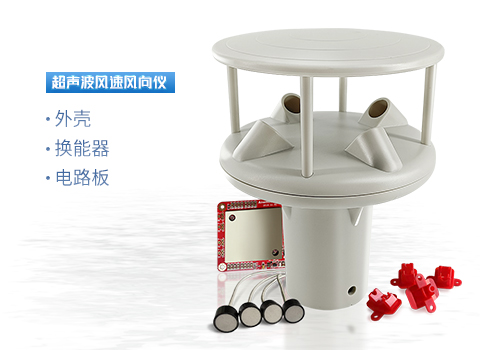
Compared with conventional cup or vane anemometers, the most notable feature of this measurement method is that the entire wind measurement system has no mechanical rotating parts, making it an inertia-free measurement, and therefore it can accurately measure the high-frequency components of gust pulsations in natural wind.
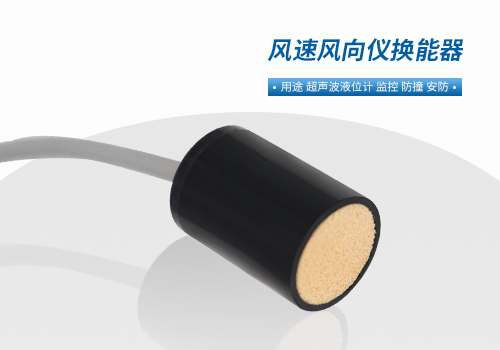
Ultrasonic Wind Speed and Direction Sensor uses four ultrasonic probes to cyclically transmit and receive ultrasonic waves in a two-dimensional plane, and measures wind speed and direction based on the time difference of ultrasonic wave propagation in air.
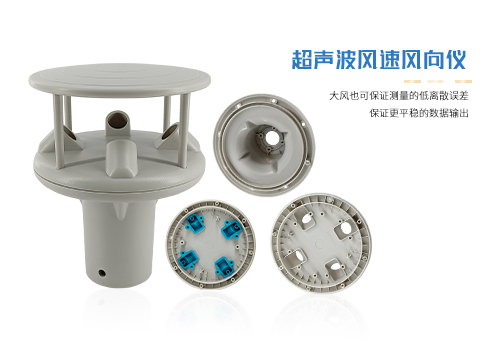
With years of research and development, the accuracy and reliability of ultrasonic anemometers have been continuously improved. Currently, research on ultrasonic anemometers, in terms of the drive circuit and signal receiving circuit implementation of ultrasonic transducers, has adopted methods such as using pulse transformers to boost voltage for generating drive signals and A/D sampling for receiving signals.