
Ultrasonic Transducer Frequency Requirements by Application [Dayu Electronics]
An ultrasonic transducer is an electronic device that converts energy from one form to another. The process of converting energy from one form to another is called transduction.
Ultrasonic transducers convert the electrical output from a power supply into a vibratory output. This electromechanical conversion can be accomplished through piezoelectric ceramics or magnetostrictive materials. Piezoelectric ceramics are the core of the transducer.
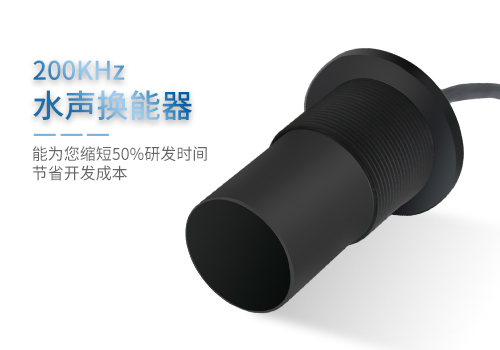
The requirements for a sensor will depend on the application. Many requirements will conflict with each other and will be given different priorities. Therefore, no single set of guidelines can cover all requirements, and there are many different approaches to achieve the same goal.
Analytically, transducer performance can only be predicted in a general way. This is because the characteristics of piezoelectric ceramics are typically highly dependent on operating conditions, including temperature, electric field strength, static compressive preload, dynamic stress, and the number and duration of load cycles. These operating conditions can influence each other, and the effects of these conditions are often nonlinear. In addition, many properties of piezoelectric ceramics are orthotropic and can vary from one ceramic to another and between batches. Furthermore, interactions at various interfaces between components (e.g., at threads) may be difficult to characterize, and the convective heat transfer coefficient for air cooling can only be approximated. Therefore, much of the design process involves experimental testing.
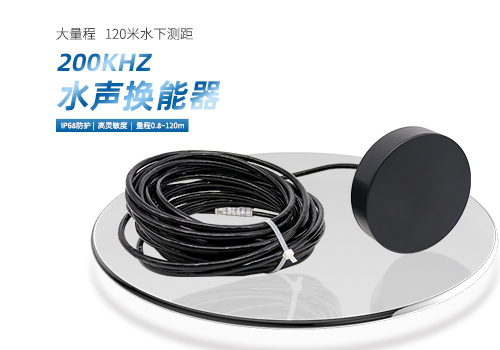
There are thousands of transducers on the market, with different models and different uses. Therefore, when selecting a transducer, we will choose the appropriate frequency range based on the application. This not only reduces the time spent in the middle of the selection process but also reduces the time spent choosing the wrong model and having to reselect. When using ultrasonic transducers, the frequency range requirement is particularly significant, so we need to determine the appropriate frequency for different applications;
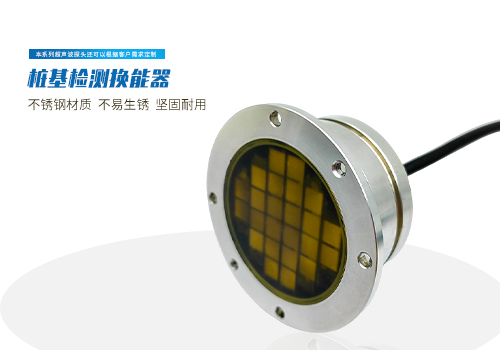
1. Distance measurement in air: This is determined by the range of the air transducer itself.
2. Positioning in air: Generally, these are horizontal omnidirectional air transducers; we currently have 28 kHz and 33 kHz models.
3. Gas flow measurement: Common frequencies are between 100-300 kHz, with pressure resistance requirements.
4. Wind speed and direction measurement: Common frequencies are between 100-300 kHz, without pressure resistance requirements.
5. Underwater distance measurement: This is determined by the range of the transducer in liquid.
6. Underwater positioning: Generally, these are horizontal omnidirectional liquid transducers, available in 80 kHz, 35 kHz, 28 kHz, 28 kHz, and 23 kHz models.
7. Liquid flow measurement: Common frequencies are 500 kHz, 1 MHz, and 2 MHz.
8. Underwater communication and underwater data transmission: Generally, these use horizontal omnidirectional liquid transducers, available in 80 kHz, 35 kHz, 28 kHz, 28 kHz, and 23 kHz models. Some also use unidirectional transmission, which encompasses a wide variety; all of our underwater acoustic transducers can be used for this purpose.