
Differences Between Rod-Type and Horn-Type High-Frequency Radar Level Meters [Dayu Electronics]
What are the differences between rod-type and horn-type high-frequency radar level meters?
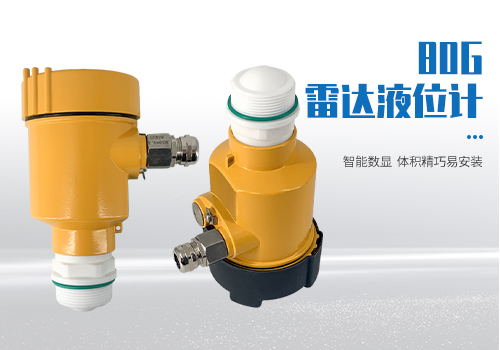
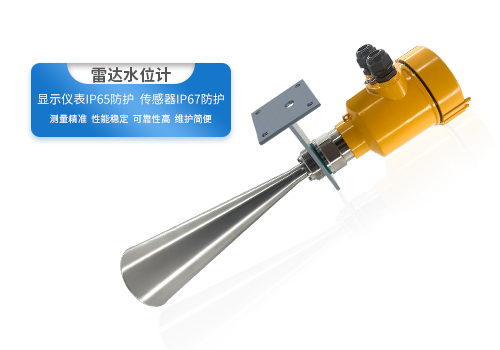
Some horn-type radar level meters incorporate a pluggable display module in local programming, primarily used for on-site data reading. If on-site data reading is not required, this module can be omitted to reduce costs accordingly. Furthermore, horn-type radar level meters are highly sensitive during operation, which relies on their adoption of non-contact transmitters, also contributing to their high measurement accuracy.
High-frequency radar level meters are installed at the top of the container being measured. The antenna emits electromagnetic waves, which are reflected back upon reaching the surface of the liquid or solid being measured and are received by the antenna. The main unit calculates the distance L from the material surface to the antenna by measuring the emission and reception time t and using the electromagnetic wave speed v. With the known distance from the flange or thread to the container bottom (installation height H), the material level height h within the container can be calculated.
Calculation formula: h=H-L L=V*t/2
Rod-type high-frequency radar level meters are used for measuring highly corrosive liquids such as strong acids and strong alkalis under conditions with a small amount of smoke and steam.
The standard measuring range is 5 meters, extendable up to 10 meters.
Antenna length: two types, 100mm and 200mm.
Temperature range: -30 to +130°C.
Horn-type high-frequency radar level meters are used for liquid measurement under mildly corrosive conditions, and can accommodate temperature and pressure.
The standard measuring range is within 20 meters, extendable up to 30 meters.
Horn length: two types, 227mm and 228mm.
Temperature: normal temperature type -30 to +130°C, medium temperature type -30 to +250°C, high temperature type -30 to +400°C.