
Ultrasonic Sludge Level Meter Installation [Dayu Electronics]
Ultrasonic sludge level meters are used for sludge level measurement in various sedimentation tanks. By utilizing ultrasonic echo processing and advanced algorithms, they lock onto the true sludge interface level while ignoring the effects of floating solid particles and rag layers. The ultrasonic sensor is installed below the water surface, pointing directly at the tank bottom.
Ultrasonic sludge level meter principle is to measure the water surface using ultrasonic echo technology. The sensor emits ultrasonic waves that reflect off the sludge layer. By measuring the time between the transmitted and reflected waves, the distance L1 from the sensor to the sludge layer can be determined. The distance from the sensor to the tank bottom is user-set as L. The sludge layer thickness is then calculated as d = L - L1.
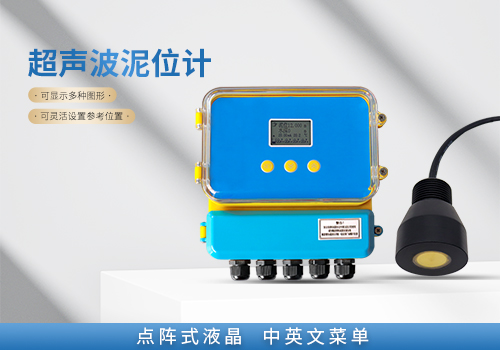
The ultrasonic sludge level meter can easily eliminate interference from noise and other abnormal signals due to its advanced ASF (Abnormal Signal Filtering) technology. It also features automated signal analysis and processing capabilities, allowing continuous display of the sludge interface and echo analysis graphics in both digital and graphical formats, making it easy for beginners to operate.
With its excellent measurement accuracy and stability, the ultrasonic sludge level meter is widely used in various sedimentation and thickening systems, such as primary clarifiers, secondary clarifiers, thickeners, and red mud settling tanks.
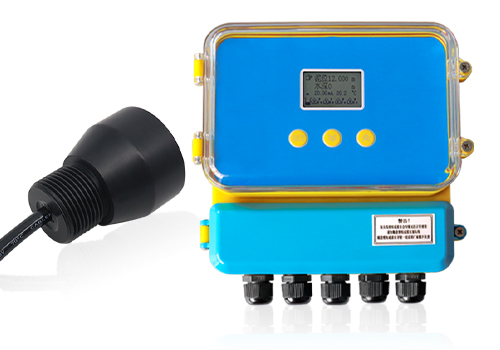
When selecting the sensor installation location, the following standards should generally be followed:
(1) The sensor should be kept perpendicular to the sludge surface and the tank bottom.
(2) There should be no obstacles within the emission area directly below the probe, to prevent ultrasonic signals from being blocked or reflected by obstacles.
(3) The probe should be installed away from gas bubbles and active floating solids caused by sudden flow velocity changes, to ensure accurate and stable measurement.
(4) The probe should be installed away from the water inlet and outlet.
(5) The sensor probe should be fully submerged in water. If the tank wall is vertical and the surface is smooth, determine the distance from the tank wall according to the specifications.