
What to Do When the Probe of an Ultrasonic Level Meter Condenses During On-Site Installation? [Dayu Electronics]
Ultrasonic level meters are widely used in industrial production and automation control fields. However, under certain special conditions, condensation may form on the probe surface, affecting measurement accuracy.
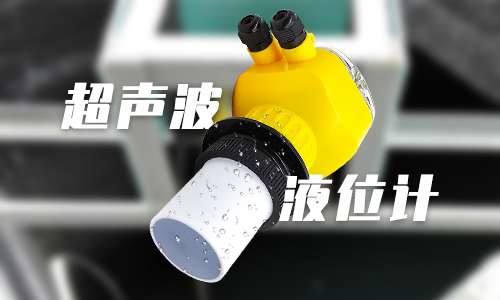
Generally, in humid, foggy, or condensation-prone areas, the air humidity is high, but this does not affect the measurement performance of ultrasonic level meters. However, in some cases, when absolute humidity reaches the saturated water vapor content of air and the air temperature falls below the dew point, condensation can occur on the probe surface of the ultrasonic level meter. If too many water droplets accumulate on the probe and are too large, they may cause refraction of the ultrasonic waves emitted by the probe. As a result, the ultrasonic waves emitted by the probe will pass through the water droplets and steam, causing primary attenuation, and then when reflected back from the liquid surface, they will experience secondary attenuation, resulting in a weak returning signal to the probe. This can lead to errors in the time difference between transmission and reception, causing the instrument to calculate an incorrect liquid level.
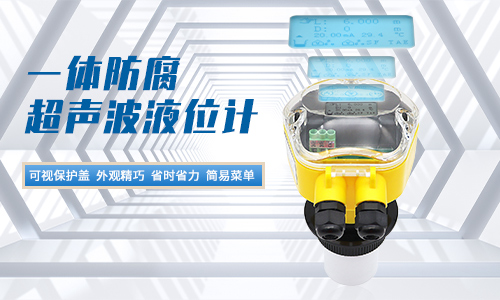
The first solution is to reduce water droplet condensation on the probe's emitting surface by selecting a probe made of polytetrafluoroethylene (PTFE). Because PTFE probes have the lowest adhesion to water, they can reduce droplet attachment.
The second solution is to use a four-wire ultrasonic level meter. For the same measurement range, the transmitting power of a four-wire system is higher than that of a two-wire system, and the probe vibration is more pronounced, which can shake off some of the water droplets.
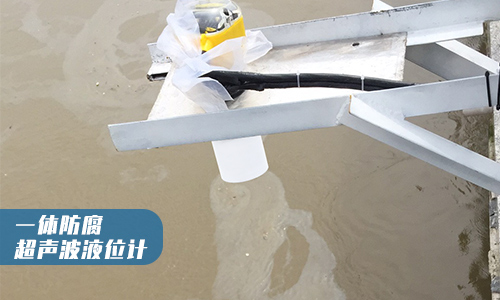
The third solution is for sites where water droplets tend to condense, which generally occur in areas with heavy steam or high humidity. In such cases, the measurement range can be doubled.