
How to Calculate Transducer Power? | Dayu Electronics
Among the users who purchase our transducers, many ask what the power of the ultrasonic transducer is.
When it comes to power, you first need to understand the operating modes of ultrasonic transducers:
1. The first is pulsed operation, where the transducer transmits once, pauses, transmits again, and pauses again.
2. The second is continuous operation, where the transducer transmits continuously unless stopped.
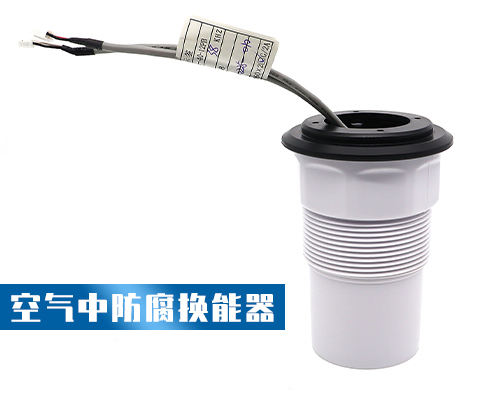
In fact, calculating power is the same as we usually do, using the formula "Voltage × Current = Power." For example: one 105 kHz air transducer with an operating voltage of 100V and a current of 0.5A has a power of 100V × 0.5A = 50W.
Since under pulsed operating conditions, the instantaneous pulse current is difficult to measure, if you don't know the exact current value, you can directly use "Operating Voltage × Operating Voltage ÷ Transducer Resistance."
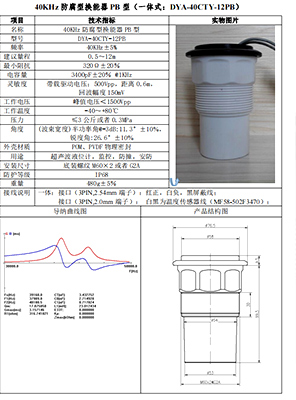
Take the following transducer for air from Fuzhou Dayu Electronics as an example:
Transducer frequency: 40 kHz, operating voltage: 24V, transducer resistance: 320 ohms, so the power is 24V × 24V ÷ 320 ohms = 1.8W.
For transducers operating in air, the continuous operating power differs greatly from the pulsed operating power; the continuous operating power is only 5-10% of the pulsed operating power.
For transducers operating underwater, the continuous operating power can approach the pulsed operating power, reaching 70-90% of the pulsed operating power.
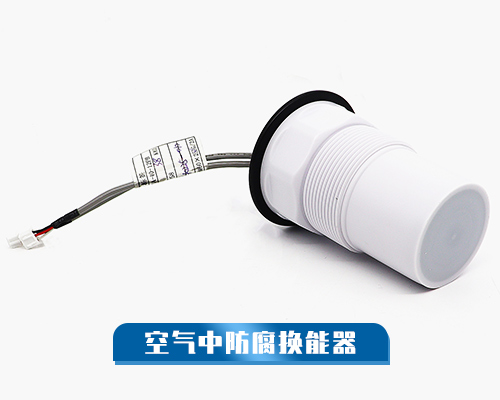
Because during continuous operation, the transducer generates heat. In water, since water is a good conductor of heat, it can quickly carry away the heat, so the continuous operating power can be made very high. However, in air, if the transducer generates too much heat and cannot dissipate it quickly, it is easy to burn out. Generally, it is only operated at one-tenth to one-twentieth of the pulsed operating power.