
How to Correctly Apply Ultrasonic Level Meters in Working Conditions [Dayu Electronics]
Product advantages: The ultrasonic level meter features an IP68-protected probe, an elegant appearance design, a service life of up to 5 years, a 0–60 range that can be freely selected, a complete range of models and specifications (if you can think of it, we can make it), and the instrument comes with a built-in echo curve.
Product differentiation: We provide server software for free with the ultrasonic level meter, and we offer Chinese-English translation for the convenience of international customers. It also supports NB-IoT data transmission.
Ease of use: You can view data anytime, anywhere—on your phone or computer. Maintenance is hassle-free, and remote troubleshooting and commissioning are supported.
Ultrasonic level meters come in integrated (one-piece) and split (separate) types.
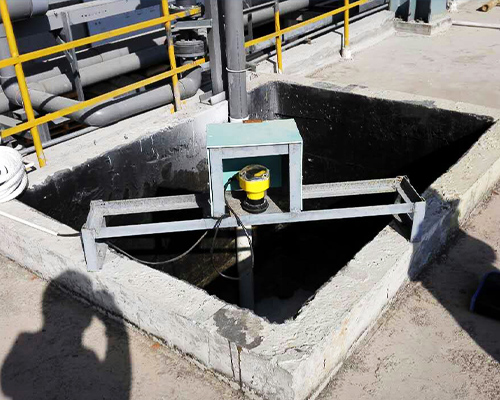
The integrated type is suitable for the following situations:
1. Sites where you need to view data on-site and do not require manual climbing to observe, such as ground-level water pools or underground tanks.
2. Equipment where on-site viewing is not required, and only the 4-20mA or 485 signal needs to be transmitted.
3. When the above two conditions are met, and the measured medium is not highly corrosive.
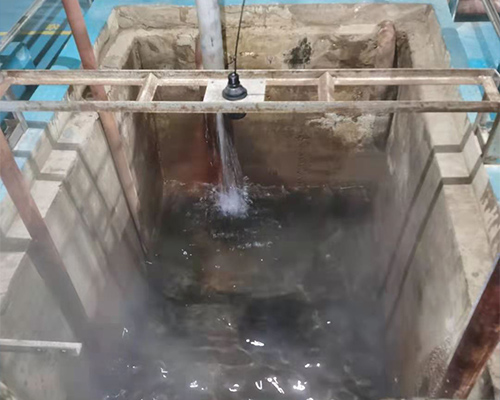
The split type is suitable for the following situations:
1. Equipment such as tanks or silos that require manual climbing for observation. The sensor of the ultrasonic level meter is placed on top of the tank, while the main unit is placed below for easy visual inspection.
2. Situations where manual climbing is not required, but the measurement point is not easily accessible for personnel, or where hazardous conditions exist.
3. When the measured medium is highly corrosive. Even if an integrated corrosion-resistant ultrasonic level meter is used and the probe can resist medium corrosion, corrosive vapors from the medium may evaporate and permeate into the transmitter section, causing circuit corrosion.