
Ultrasonic Doppler Flowmeter (Open Channel) Installation and Maintenance [Dayu Electronics]
Dayu-Ultrasonic Doppler Flowmeter measures water level, flow velocity, instantaneous flow, cumulative flow, and temperature in agricultural irrigation main and branch channels.
Based on the installation principle of the ultrasonic Doppler flowmeter, combined with field conditions, the following two open channel examples are provided:
1. Selection of installation point:
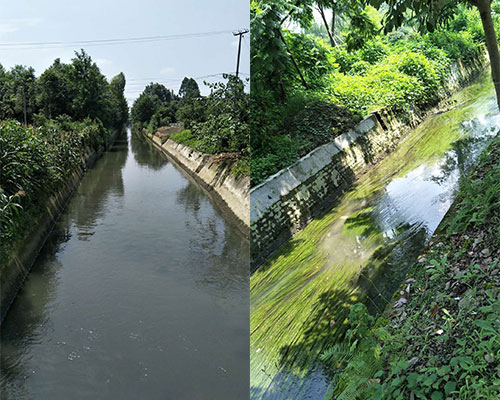
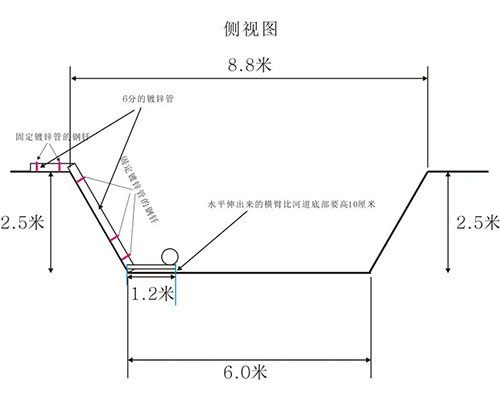
(Main channel: river surface width approx. 8.8m, riverbed width approx. 6m, height approx. 2.5m, measured water depth 1.15m. Since there is a sluice gate 800m downstream, the minimum water level is unknown.)
The main channel has sluice gates both upstream and downstream, with approximately 800m of straight channel in between. According to the installation principle of the ultrasonic Doppler flowmeter: upstream requires a straight channel 20 times the channel width, downstream requires a straight channel 5 times the channel width. Therefore, the installation point for the main channel is set 170m downstream of the sluice gate where the water flow is steady and free of turbulence.
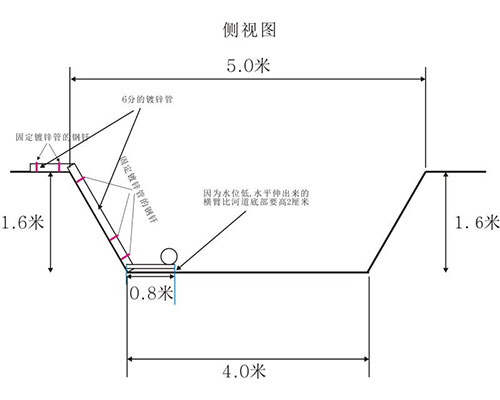
(Branch channel: river surface width approx. 5m, channel bottom width approx. 4m, height approx. 1.6m, measured water depth 0.25m)
The initial installation point for the branch channel is selected 100m downstream of the sluice gate where the water flow is steady and free of turbulence.
2. Sensor installation principle and installation schematic diagram:
1. Determine the installation height of the sensor:
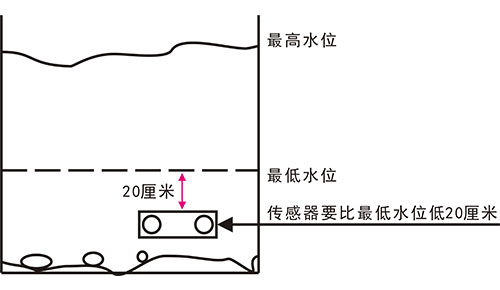
The ideal height of the probe from the channel bottom is 100mm-250mm. The sensor should be installed as close to the channel bottom as possible. If there is sediment, silt, aquatic plants, or rolling stones at the bottom, the installation position can be raised to avoid the probe being covered by sediment or aquatic plants, or damaged by stones impacting the probe.
The main channel meets the minimum water level requirement and can be installed 10cm above the sediment. For the branch channel, since the current water level is only 25cm, it only meets the height requirement for sensor installation. Therefore, the branch channel requires cleaning the silt and aquatic plants from the channel bottom 10 meters before and after the installation point to lower the sensor installation position.
2. Selection of horizontal installation position:
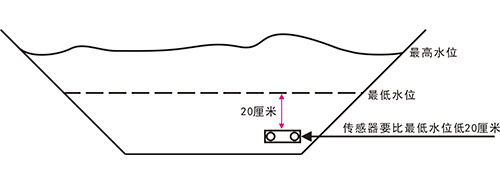
Trapezoidal channel installation: The sensor is installed at the junction of the slope and the bottom edge, also known as the "toe of the slope." At the same time, it must be satisfied that the sensor is installed 20cm below the minimum water level.
However, according to the actual channel conditions, the sensor should also be installed at a point 15-20% of the channel width from the side.
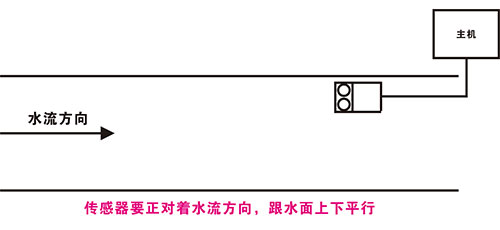
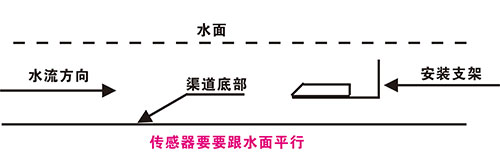
3. The sensor should face directly towards the water flow direction:
Avoid non-power-related issues with the sensor, such as debris or floating objects in the field blocking the sensor and preventing normal data acquisition. For upstream debris or floating objects, a grille can be installed on the upstream channel to filter them.
1,Main channel installation diagram:
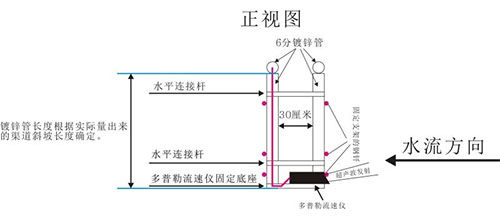
2, Branch channel installation diagram:
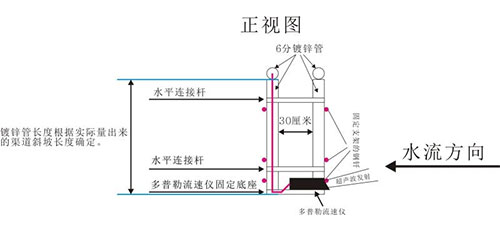
3, Sensor fixing diagram from similar cases:
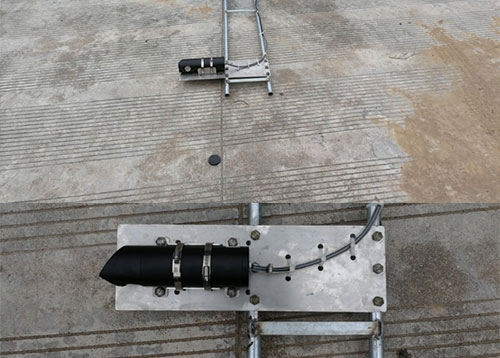
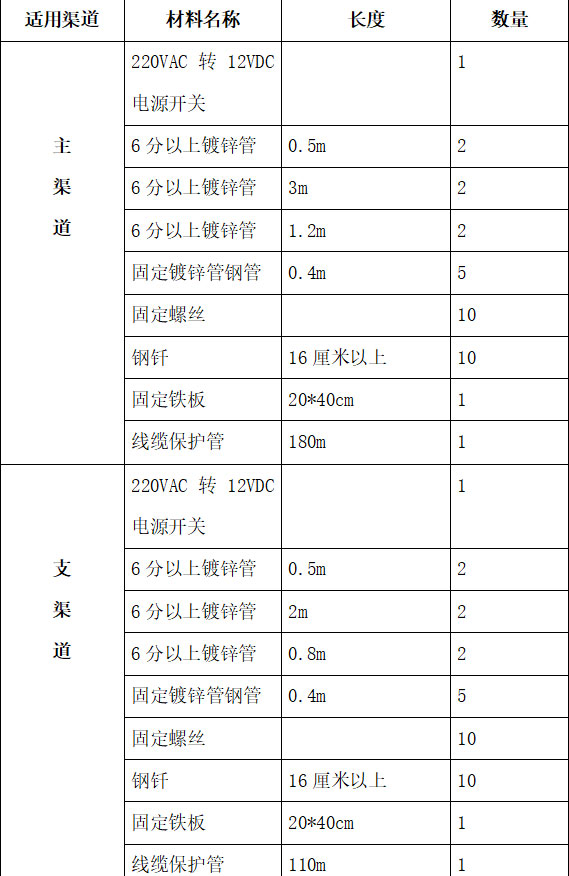
3. Detailed list of auxiliary installation materials:
4, Ultrasonic Doppler Flowmeter maintenance recommendations:
The measurement principle of the ultrasonic Doppler sensor is: the sensor has two transducers: one for transmitting and one for receiving. The two transducers of the Doppler flowmeter must be kept clean, and the transmission area of the transducer must be free from any blockage or attachments. Therefore, the user should check or clean the measurement point every two weeks or every month. Alternatively, wait until the background management system shows no data, then go to the measurement point to troubleshoot and clean the transmission part of the sensor.
The branch channel requires regular inspection and cleaning of sediment at the channel bottom to prevent silt from blocking the transducer and causing measurement failure.