
Difference Between Ultrasonic Sensors and Ultrasonic Transducers | Dayu Electronics
Ultrasonic waves can propagate through gases, liquids, and solids, with different propagation speeds. The waveform of ultrasonic waves propagating in a medium depends on the forces the medium can withstand and how the ultrasonic waves are excited in the medium. Ultrasonic sensors are sensors developed based on the characteristics of ultrasonic waves. Ultrasound is a mechanical wave with a vibration frequency higher than that of sound waves, generated by the vibration of a transducer chip under electrical voltage excitation. It features high frequency, short wavelength, minimal diffraction, and especially good directivity, allowing it to propagate directionally as a ray. Ultrasound has strong penetrating ability in liquids and solids, especially in opaque solids, where it can penetrate depths of tens of meters. When ultrasound encounters impurities or interfaces, it produces significant reflection, forming echoes, and can generate the Doppler effect when it encounters moving objects. Therefore, ultrasonic detection is widely used in industry, national defense, biomedicine, and other fields. To use ultrasound as a detection method, it is necessary to generate and receive ultrasonic waves. The device that performs this function is the ultrasonic sensor, commonly referred to as an ultrasonic transducer or ultrasonic probe.
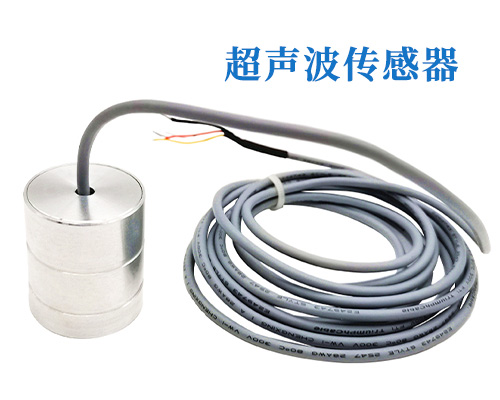
Ultrasonic sensors mainly consist of a dual piezoelectric crystal vibrator, a conical resonance plate, and electrodes. When a certain voltage is applied between the two electrodes, the piezoelectric crystal is compressed, causing mechanical deformation; when the voltage is removed, the piezoelectric crystal returns to its original shape. If a voltage is applied between the electrodes at a certain frequency, the piezoelectric crystal will vibrate at that frequency. Tests have shown that when the natural frequency of the piezoelectric crystal is 38.4 KHz, a square wave pulse signal with a frequency of 40 KHz is applied externally, causing the piezoelectric crystal to resonate and emit ultrasonic waves outward. Similarly, an ultrasonic sensor without an external pulse signal will resonate when the resonance plate receives ultrasonic waves, generating an electrical signal between the two electrodes.
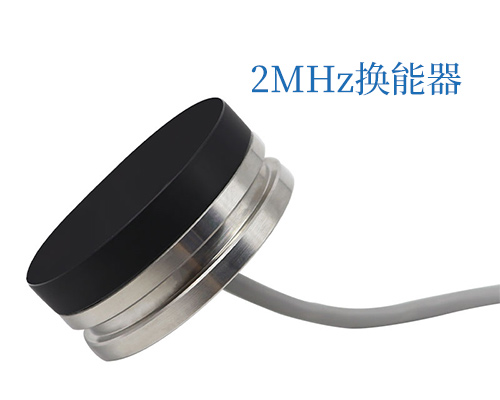
In simple terms, an ultrasonic sensor comes with circuitry, while an ultrasonic transducer does not. It is the front end of an ultrasonic sensor, used to transmit ultrasonic waves and receive the sound waves reflected from the object's surface. Specifically, it is a part of the ultrasonic sensor. In other words, an ultrasonic transducer generally refers to the transducer element within the sensor. It is an electro-acoustic conversion device that does not output standard signals. An ultrasonic transducer uses piezoelectric ceramic materials to convert electrical energy into mechanical energy. Typically, an ultrasonic generator produces ultrasonic waves, which are converted into mechanical vibration by the transducer, and then exported through an export device. A standalone ultrasonic transducer cannot operate on its own; it requires a drive circuit to provide a driving voltage to make it work.