
Underwater Distance Sensor: Can It Work in Turbid Water? [Dayu Electronics]
Customers often ask whether underwater distance meters or underwater distance sensors can be used in turbid water.
This actually needs to be determined based on the actual working conditions on site.
Water turbidity generally falls into the following 4 categories.
1. Turbidity caused by organisms such as algae in the water.
In this case, the underwater distance meter can still measure normally, but the measurement range is reduced.
Unless the situation is as severe as the green algae bloom in Taihu Lake, in most cases,
a depth sounder with an original maximum measurement range of 100m,
will have its maximum range reduced to only 30-40 meters in waters where algae growth causes turbidity.
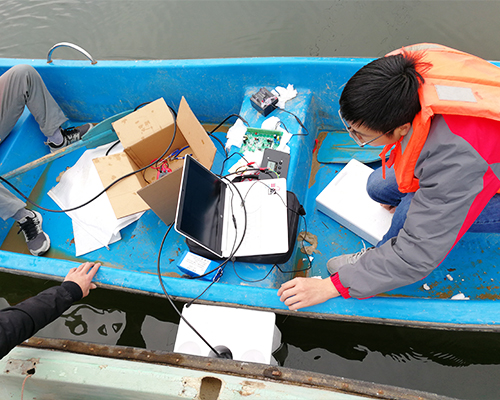
2. Turbidity caused by a large number of floating substances in the water.
For example, floating garbage and water hyacinths encountered in inland rivers. This situation is more complex.
Often, the depth sounder can actually measure up to its maximum range, but because it detects floating objects in the water, those objects are mistakenly treated as a reflection target, resulting in measurement errors.
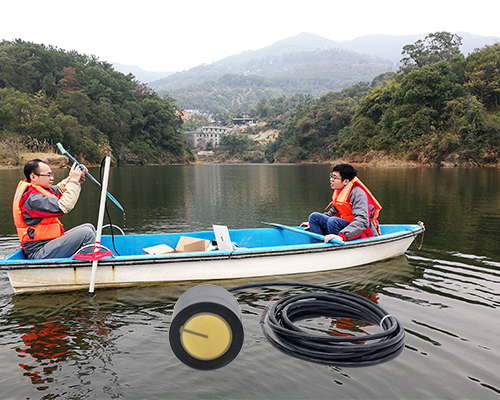
3. Turbidity caused by powdery solids in the water, as fine as flour.
This condition is often seen in the Yellow River. The underwater distance meter can still measure normally, but the measurement range is reduced.
Our standard depth sensor that can measure up to 100m can only achieve a maximum range of 20m in the Yellow River.
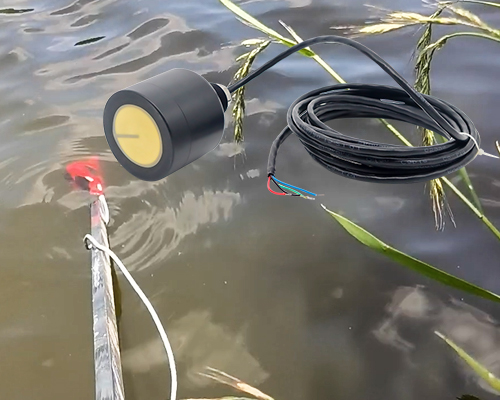
4. Solid particles in the water like yellow sand, not flour-like.
In this type of water, signal attenuation is very severe.
For every 1% solid particle content in the water,
ultrasonic signal attenuation exceeds 95% for every 1 meter it travels through the water.
Under such conditions,
an ultrasonic depth sounder with a maximum range of 100m may only be able to measure up to 5 meters.