
How to Make the Right Choice When Unsure About Dayu Open Channel Flowmeter Selection
Ultrasonic open channel flowmeter works with a weir or flume to measure water flow in open channels.
It is mainly used to measure flow at sewage outlets of wastewater treatment plants, enterprises, and institutions, as well as in agricultural irrigation channels.
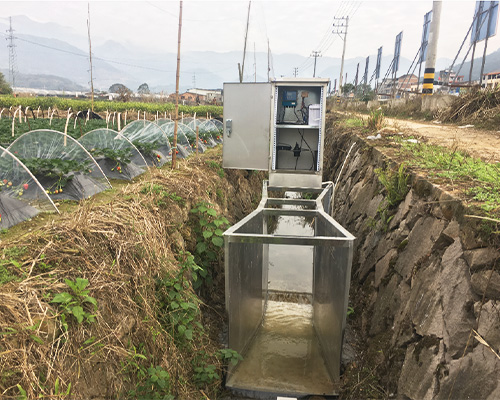
When conditions permit, the display unit of a split-type ultrasonic open channel flowmeter should be installed indoors. The room should be well-ventilated and free of corrosive gases. The instrument is wall-mounted. If indoor conditions are poor or outdoor installation is unavoidable, it should be placed in an instrument protection box to avoid direct sunlight and rain.
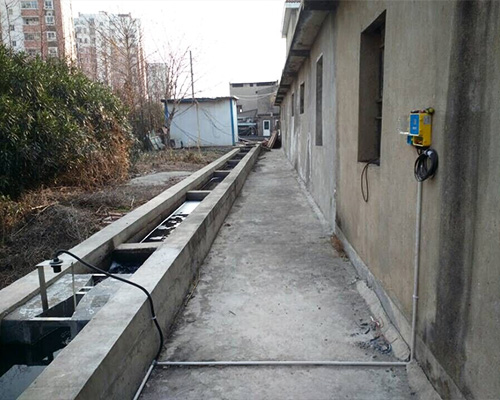
What parameters are needed for open channel flowmeter selection?
1. Split-type or integrated ultrasonic open channel flowmeter?
2. What type of weir or flume is used on site?
For example: V-notch weir, rectangular weir, Parshall flume, U-shaped flume, or open channel without a baffle.
If it is a Parshall flume, you need to know the flume number.
3. Does the probe need corrosion protection?
4. What is the power supply: AC 220V, DC 24V, or DC 12V?
5. What is the output: 4-20mA, 485, or 232?
6. Is relay output needed?
Note: Both integrated and split-type open channel flowmeters support up to 2 relay outputs.
7. For split-type open channel flowmeters, what is the cable length between the probe and the main unit? (Standard is 10 meters)
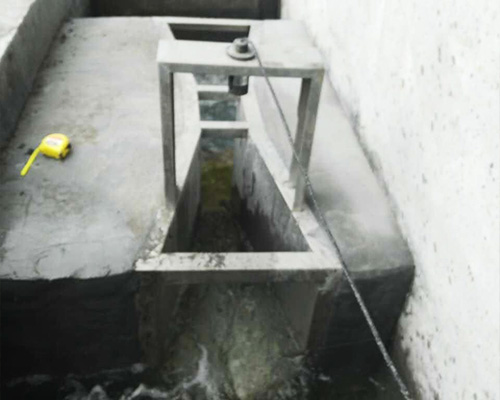
Specific installation requirements for open channel flowmeters:
Within a radius of 1/8 of the measuring range centered on the probe, there must be no obstacles, and the minimum radius is no less than 20 cm.
For example, if the measuring range is 1 meter, there must be no obstacles within a radius of 0.125 meters.
The probe must be perpendicular to the liquid surface being measured; measurements can be taken within a deviation of 2-3°.
If the water surface is highly turbulent or has excessive foam, install a perforated plate upstream of the flume to filter foam and stabilize the flow.
The cable between the probe and the main unit must be routed separately, not in the same conduit as AC power cables (380V, 220V, 110V). If they must be together, the probe cable should be run through a galvanized steel conduit to avoid signal interference from AC power.
The ground terminal of the main unit must be connected to a single copper wire of at least 0.3 square millimeters, and must be reliably grounded. Do not share a ground terminal with other equipment.
The power supply for the main unit must not be shared with devices such as frequency converters or motors.
Integrated ultrasonic open channel flowmeters can operate outdoors in rain.
For split-type ultrasonic open channel flowmeters, the probe can be exposed to rain, but the main unit must not be exposed to rain and should be installed indoors or in an instrument enclosure.