
Difference Between Doppler Flowmeter and Transit-Time Flowmeter [Dayu Electronics]
Ultrasonic Doppler Flowmeter is a type of flow instrument that has been in use since the 1970s. Like electromagnetic flowmeters, it is a non-obstructive flowmeter because no obstruction is set in the flow channel, making it suitable for measuring fluids in large-diameter pipes and fluids that are difficult to contact. Ultrasonic flow measurement is an indirect measurement method, mainly using two approaches: the Doppler method and the transit-time method. The Doppler ultrasonic flowmeter is widely used in sewage measurement.
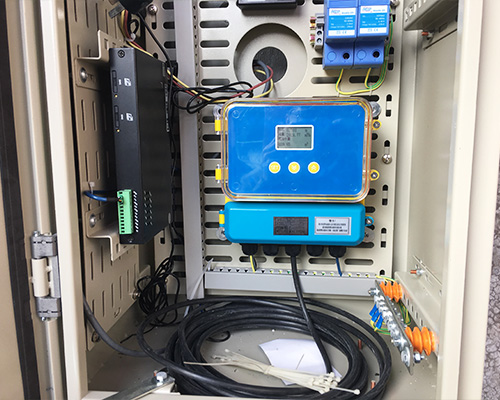
The Doppler method applies the acoustic Doppler principle, detecting the frequency shift between reflected and transmitted sound waves to determine the fluid flow velocity, and thereby calculate the fluid flow rate.
Doppler measurement requires the presence of bubbles or solid particles in the water to function, and is often used to measure man-made wide channels, natural streams, rivers, etc.
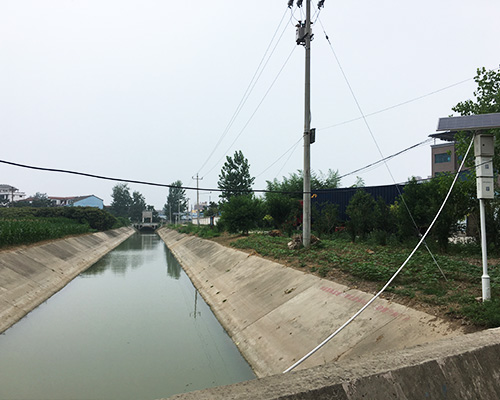
The river flow velocity meter based on the Doppler principle has the advantages of wide application range, accurate measurement, and easy installation. It is not affected by turbid water, bubbles, or impurities, making it suitable for measurement in most natural water bodies.
The principle of the transit-time ultrasonic flowmeter is based on the time difference between sound waves traveling downstream and upstream over the same distance in the fluid. This time difference is related to the flow velocity of the fluid being measured, so by measuring the time difference, the fluid velocity can be determined.
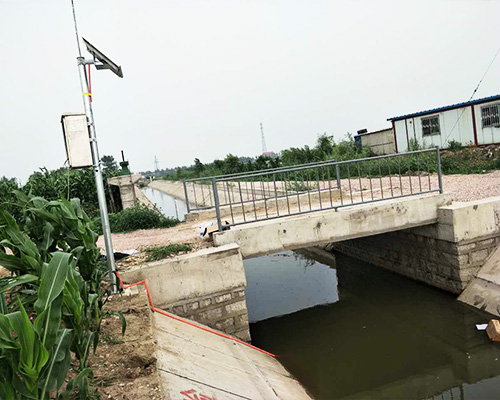
The transit-time flowmeter can only be used in channels or rivers where there are very few impurities, few bubbles, and no obstacles such as aquatic plants in the channel. It is suitable for measurement under clear water conditions.
Additionally:
1. The Doppler flowmeter is relatively simple to operate.
2. In principle, the transit-time flowmeter uses directional transmission and reception of sound waves, while the Doppler flowmeter uses scattering.
3. The Doppler flowmeter has less stringent requirements for the pipe section.
4. The Doppler flowmeter is not afraid of vibration, which has little impact on accuracy. The transit-time flowmeter cannot withstand significant vibration, which greatly affects accuracy.