
Things to Note When Choosing an Open Channel Flow Meter [Dayu Electronics]
More and more open channel flow monitoring projects are emerging, such as channel flow monitoring in irrigation district informatization, open channel flow monitoring in agricultural water pricing reform projects, discharge outlet flow monitoring for enterprise wastewater, and surface water flow monitoring in sponge cities. An essential component of these projects is the ultrasonic open channel flow meter. Based on various field installation conditions, we would like to share our experience.
1. Range and accuracy selection: For open channel flow meters used in tertiary irrigation channels and wastewater discharge channels, the water level range should be selected within 2-4 m, with a probe blind zone of 0.3-0.5 m. Accuracy should be chosen based on actual application needs to be cost-effective. For example, if agricultural irrigation water data is only used for statistical purposes or process control, and only requires checking the process flow without precise control or metering, lower accuracy classes such as 1.5, 2.5, or even 4.0 can be selected, allowing the use of a low-cost open channel flow meter. If agricultural irrigation water data is used as the basis for charging irrigation water fees, higher accuracy classes such as 1.0, 0.5, or better should be chosen. For open channel wastewater discharge metering in industrial park wastewater treatment plants or other enterprises, where discharge fees are calculated, an accuracy of 0.5 or higher is recommended.
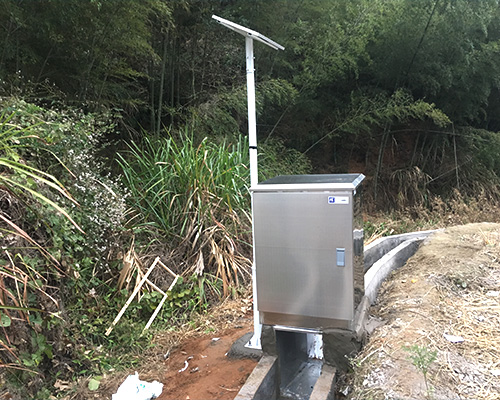
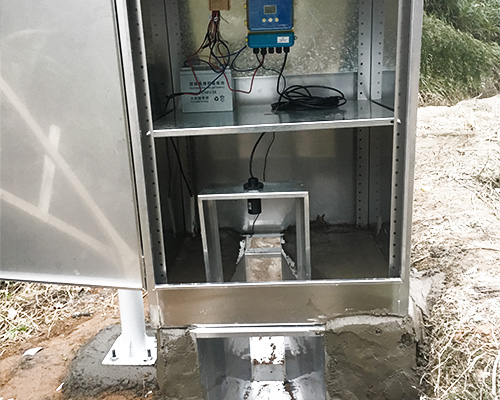
2. Selection and installation of flow measurement weirs and flumes: Common flow measurement weirs and flumes come in three types: V-notch weirs, rectangular weirs, and Parshall flumes. For agricultural irrigation and wastewater discharge, the Parshall flume is recommended. The water level-flow relationship of a Parshall flume is calibrated through experiments, and the data is relatively accurate. It is only necessary to ensure a water level difference downstream of the flume, proper discharge, and no water accumulation. The water level-flow relationships for V-notch and rectangular weirs are derived from theoretical calculations, which can introduce additional errors if certain operating conditions are overlooked, and they also have requirements for upstream and downstream head differences.
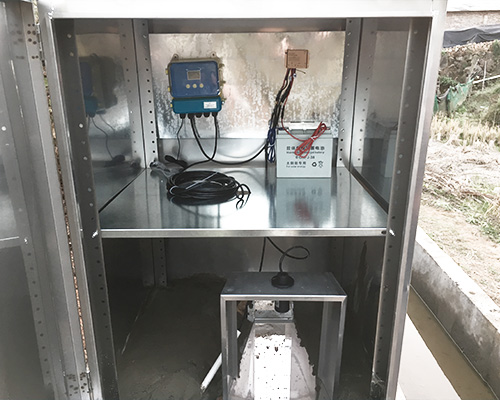
3. Power supply type selection: Available power supply types include 24V DC, 12V DC, 5V DC, and 220V AC. If a mains power supply is available on site, choose the 220V AC type. If no mains power is available, prioritize 12V DC, as the associated DTU/RTU devices also operate on 12V DC, ensuring consistent on-site power supply.
4. Signal transmission type selection.
1. Digital signals: For digital signals, the data interface and communication protocol must be determined. Data interfaces include RS485, RS232, etc. Protocols include HART, Modbus, Profibus, etc.
2. Analog signals: Analog signals include current (DC 4-20 mA), voltage, and resistance (resistance and voltage are rarely used).
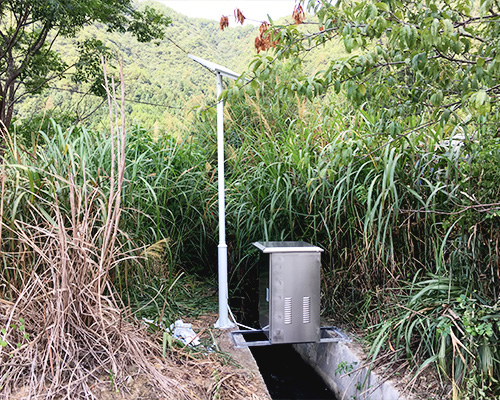
5. Ingress protection rating and enclosure material selection: In most of our solutions, the equipment is installed outdoors. The probe must have an IP68 rating, while the display unit should have an IP66 rating or higher, and all cable entry points must be sealed.