
Ultrasonic Level Meter Installation Precautions for Aeration Tanks in Wastewater Treatment Plants [Dayu Electronics]
Ultrasonic level meter is a non-contact, low-cost, and easy-to-install level instrument. However, improper installation can also affect its normal measurement. During installation, the transducer must be perpendicular to the measured liquid surface, and it must be secured firmly to prevent tilting or displacement.
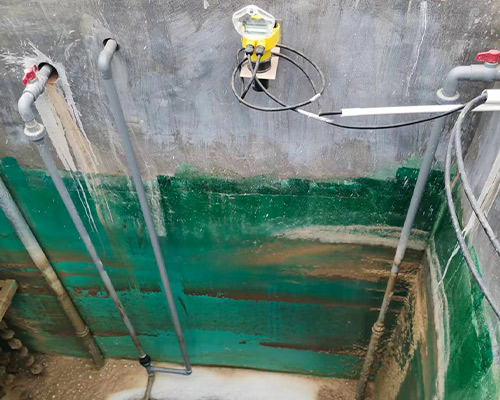
For example, when installing an ultrasonic level meter in the aeration tank of a wastewater treatment plant, the distance from the wall should not be too close—at least more than 50 cm from the wall. The installation position should preferably be where the liquid surface has no foam or only a small amount of foam; otherwise, as shown in the field situation, measurement errors will increase, and when foam accumulates heavily, signal loss may even occur.
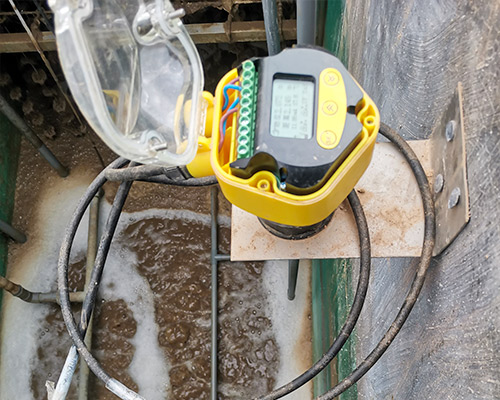
Five major factors affecting ultrasonic level meter measurement
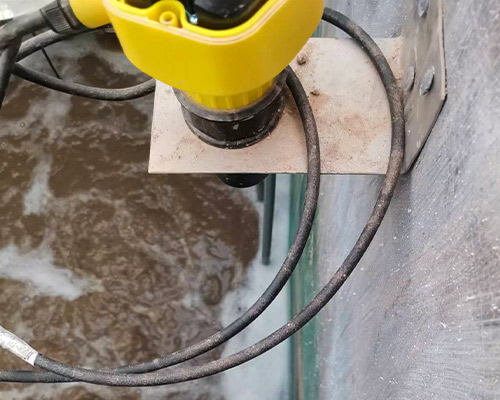
1. When there is a lot of foam on the liquid surface, the ultrasonic waves hitting the foam surface will be partially absorbed by the foam and partially reflected to other places, causing the probe to receive no signal or only a signal that is too weak.
2. With agitation, the fluctuation of the liquid surface can cause the measurement data to jump and become unstable.
3. With steam, water droplets condense on the probe's emitting surface, blocking part of the signal when it is sent out, and again blocking part of the signal when it is reflected back from the liquid surface, resulting in the signal not being received or being too weak.
4. Strongly volatile liquids can cause inaccurate measurements. For example: gasoline, toluene, xylene, acetone, and other strongly volatile liquids.
5. If there are other obstacles within the ultrasonic emission range besides the liquid surface, it can cause the measurement data to fluctuate.