Sludge Height Measurement for Sewage Wells, Stormwater Wells, and Horizontal Pipes | Dayu Electronics
Measurement Method 1: Ultrasonic Sludge Level Meter
Working Principle
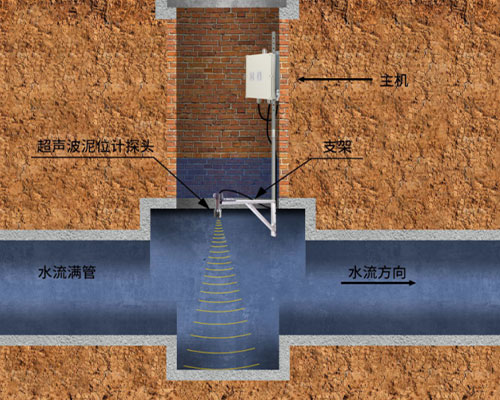
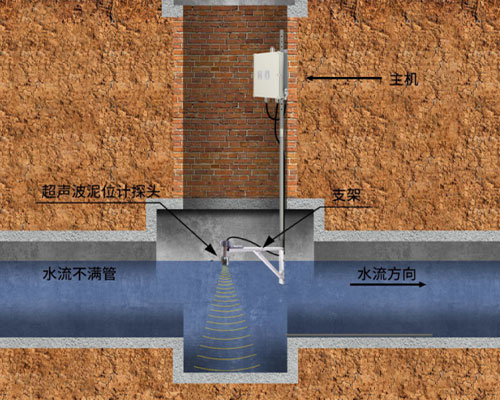
The ultrasonic transducer is immersed in water and emits a series of ultrasonic pulses toward the bottom of the well. The pulses are reflected when they encounter the interface between water and sludge. By subtracting the distance from the transducer to the interface from the installation height of the transducer to the well bottom, the sludge thickness can be determined.
Basic Parameters
Power Supply: DC 12V~20V
Current: ≤100mA Output: RS485 Communication Protocol: MODBUS
Installation Diagram:
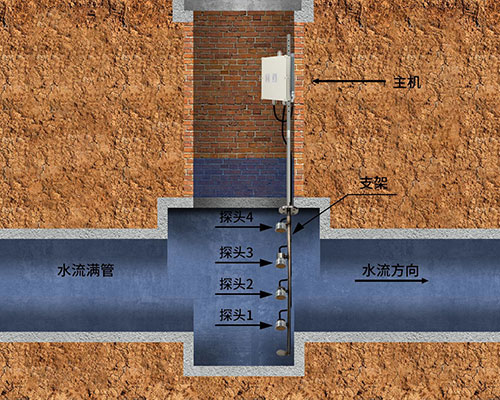
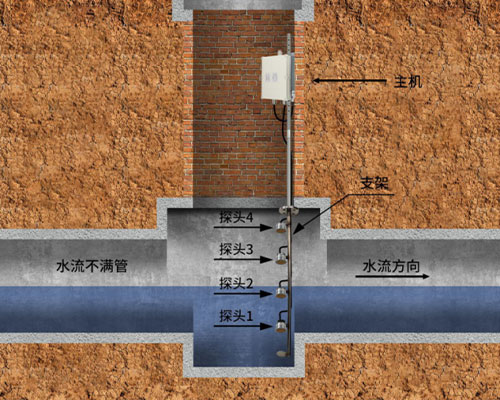
Measurement Method 2: Ultrasonic Sludge Sedimentation Meter
Working Principle
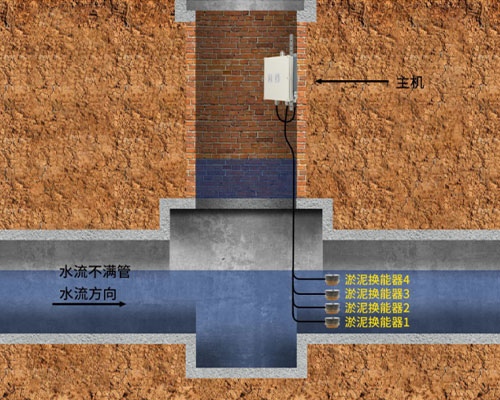
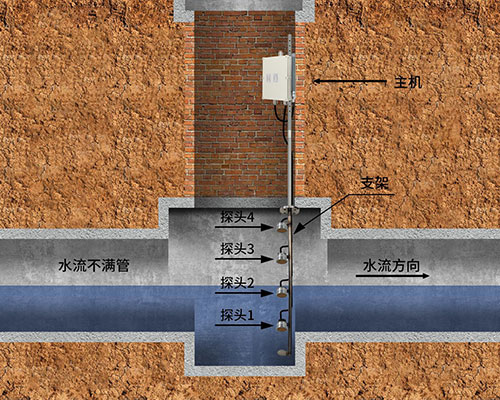
The ultrasonic transducers are immersed in water, with every 2 transducers forming a group—one transmitting and the other receiving. By analyzing the attenuation of the received signal, it can be determined whether the transducers are in sludge.
Basic Parameters
Power Supply: DC 12V~20V Current: ≤100mA Output: RS485 Communication Protocol: MODBUS
Installation Diagram:
Measurement Method 1: Electromagnetic Wave Sludge Sensor
Measurement Principle
The sensor contains an antenna that continuously emits electromagnetic waves. By using frequency sweeping, it determines the dielectric constant of external objects. After excluding the dielectric constants of air and water, any remaining value is considered sludge.
Basic Parameters
Power Supply: DC 12V~20V Current: ≤70mA Output: NPN Communication Protocol: None
Installation Diagram:
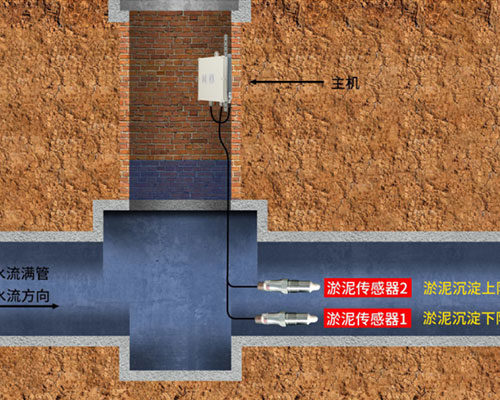
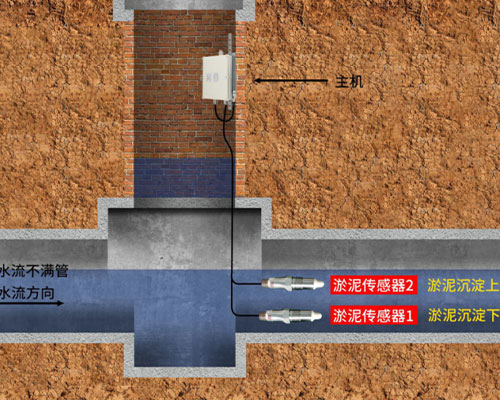
Measurement Method 2: Ultrasonic Sludge Sensor
Measurement Principle
The ultrasonic transducer sends a series of ultrasonic pulses. By analyzing the received signal, which differs for air, water, and sludge, the sensor determines whether sludge is present.
Basic Parameters
Power Supply: DC 12V~20V Current: ≤70mA Output: NPN Communication Protocol: None
Installation Diagram: