
Transducer Selection for Integrated Ultrasonic Level Meters in Corrosive Environments [Dayu Electronics]
This is an integrated ultrasonic level meter. The rubber sleeve at the connection between the transmitter and the probe below has turned to powder. What caused this?
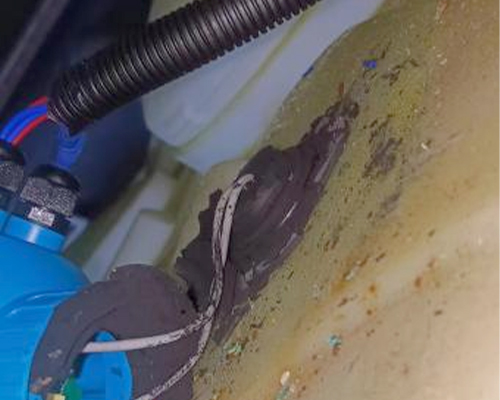
The probe used on site is made of PVDF, and the adapter is made of ABS. This was the probe at the time; if the black part is machined, it should be POM, i.e., polyoxymethylene.
For use in corrosive environments, a separate corrosion-resistant type should be selected, with the probe top cover made of PTFE, nuts made of PTFE, and O-rings made of fluoro rubber.
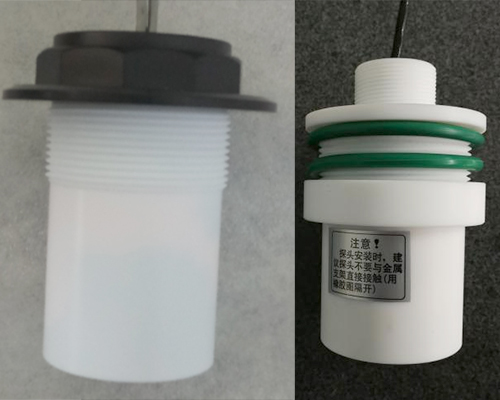
In the future, when encountering the following liquids, choose a probe like the one above: hydrochloric acid, hydrofluoric acid, sulfuric acid, ammonia water, or chemical liquids containing ammonia water.
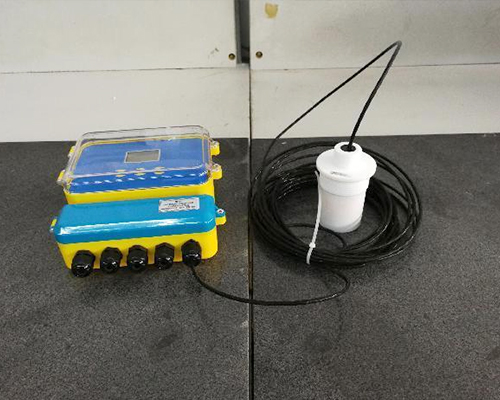
The probe is made of PTFE, the probe top cover is made of PTFE, the O-rings are made of fluoro rubber, and the cable is Teflon cable. Additionally, if you encounter ammonia water, ammonia gas, or chemical liquids containing ammonia water or ammonia gas, the same approach should be taken. Aqua regia is also highly corrosive, so this should also be done.
PVDF probes must not be used; only PTFE probes should be used.
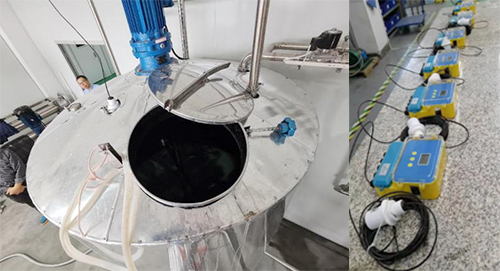
For a customer in a pharmaceutical factory, we configured the product parameters as follows: separate ultrasonic level meter: explosion-proof rating: EX d(ia)iaⅡBT4, response time 3 min, DC24V power supply, probe resistant to aqua regia acid gas corrosion, instrument protection rating IP65, probe IP68, range 0-10m, blind zone no greater than 0.5m, and the instrument is an explosion-proof probe.