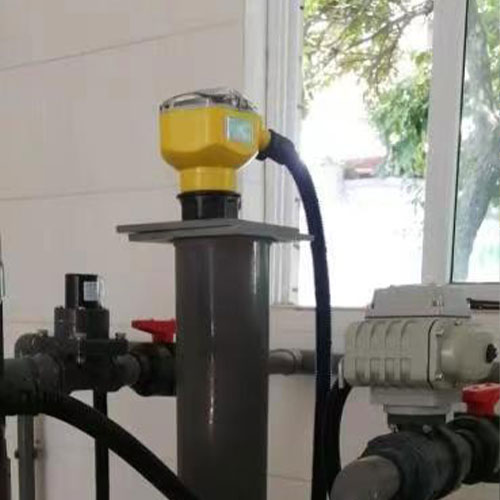
Dayu Ultrasonic Level Meter Testing at a Pharmaceutical Plant
The Dayu ultrasonic level meter was applied at a pharmaceutical plant. Due to unstable data caused by liquid surface fluctuations from stirring, an extended guide pipe was used for measurement to stabilize and smooth the output data. Dayu ultrasonic solutions address complex working condition measurement challenges.
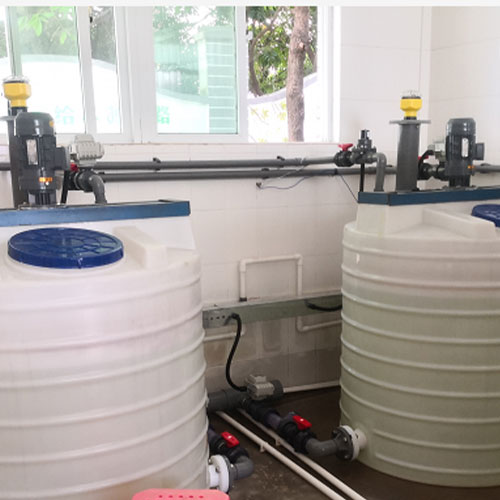
Ultrasonic level meters can measure liquid levels without contacting the medium and are widely used in automated water treatment plants. In many urban water supply companies, the chemical dosing system is automated. In such systems, the ultrasonic level meter serves as an online monitoring instrument for alum liquid level, feeding the alum tank level signal back to the PLC, which controls the inflow/outflow of alum liquid, water supply, air-stirring, or automatic switching between two alum tanks.
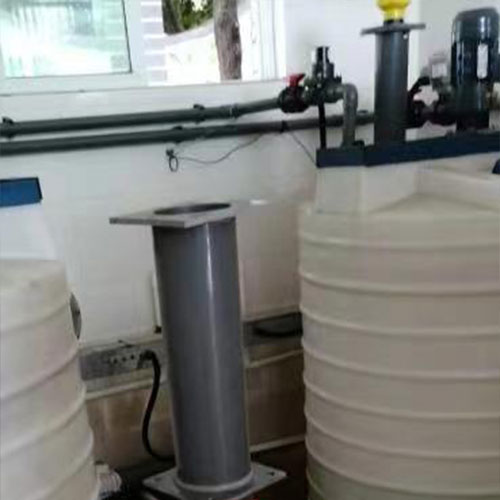
Ultrasonic level sensors can be installed in a standpipe (riser) to separate surface foam, dampen turbulence, or maximize the acoustic signal strength of the level sensor. Do not use a standpipe in applications with dirty, coated, or scaling liquids, as these can leave deposits on the inner wall of the pipe. The standpipe must be a continuous, smooth pipe section without any breaks or transitions. The inner diameter of the pipe must be equal to or larger than the beam width of the level sensor; larger diameter pipes are recommended. To install the level sensor, mount a low-profile threaded coupling at the top of the pipe. Below the coupling, within the dead zone of the level sensor, drill two quarter-inch vent holes on opposite sides of the pipe. The pipe should extend to the bottom of the tank, or at least below the measurement range of the level sensor. Cut a 45° angle at the bottom of the pipe. Finally, ensure the liquid level remains above the 45° cut, so there is always liquid inside the pipe.