
Dayu Ultrasonic Open Channel Flowmeter Measures Outlet Flow at a Wastewater Treatment Plant in Guangdong
In China, most wastewater treatment plants discharge effluent by gravity, and the sewage flows through channels or pipes in a partially filled state. This type of waterway, where the surface is free-flowing, is called an “open channel.” Some so-called “closed channels” also fall under open-channel flow because the liquid surface is free-flowing as well. For open-channel flow, conventional full-pipe flowmeters for pressurized pipes cannot be used; an open-channel flowmeter is required. This is why ultrasonic open-channel flowmeters are widely used in the wastewater treatment industry today.
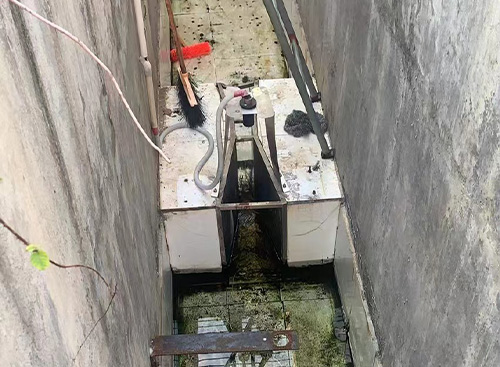
In addition, although the effluent from wastewater treatment plants has been treated, it still contains significant amounts of dirt and organic chemicals. Therefore, the flowmeter must be non-contact; direct-contact flowmeters are prone to corrosion and scaling, which can affect normal operation.
Environmental protection is a major national policy in China, and sewage discharge directly affects people’s living environment and quality of life. As the world’s second-largest economy, China inevitably generates large amounts of industrial wastewater and domestic sewage. Open-channel weir and flume flowmeters, due to their accurate measurement, ease of use, safety, and reliability, as well as their ability to perform real-time continuous measurement under non-contact conditions, are the most common choice for metering treated sewage discharge.
Ultrasonic open channel flowmeters are used in conjunction with weirs and flumes to measure the flow of water in open channels. They are mainly used to measure the flow at sewage discharge outlets of wastewater treatment plants, industrial and institutional liquid waste discharge points, and urban sewer systems. Because this instrument uses ultrasonic waves through air for non-contact measurement, it offers higher reliability than other types of instruments when dealing with viscous or corrosive liquids.