
What is the Difference Between Ultrasonic and Radar Level Meters?
When selecting a level meter, we often have various questions: what is the difference between a radar level meter and an ultrasonic level meter? Where exactly do the differences lie? What are the differences in their application conditions? What is the measurement principle behind each? How do their accuracies compare? What exactly are the measurement principles of these two types? Let us explore these two different level meters together.
Radar Level Meter
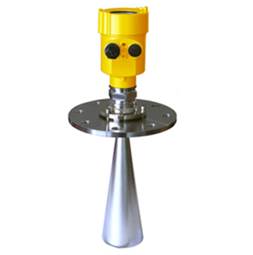
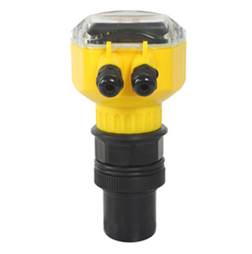
Ultrasonic Level Meter
The radar level meter operates in a transmit-reflect-receive mode. Its antenna emits electromagnetic waves, which are reflected off the surface of the measured object and then received by the antenna. The time from transmission to reception is directly proportional to the distance to the liquid surface, as expressed by the following formula:
D = CT/2
Where: D is the distance from the radar level meter to the liquid surface
C is the speed of light
T is the travel time of the electromagnetic wave
The radar level meter records the time taken by the pulse wave. Since the propagation speed of electromagnetic waves is constant, the distance from the liquid surface to the radar antenna can be calculated, thereby determining the liquid level.
As we often mention, the principle of the radar level meter is based on electromagnetic waves, while the ultrasonic level meter operates on sound waves. Ultrasonic level meters have much stronger penetration capabilities than radar. This is the most significant difference between the two types of level meters.
What are the differences in their usage?
1. The measuring range of an ultrasonic level meter is much smaller than that of a radar level meter.
2. Radar level meters can be applied in conditions such as vacuum, liquid surfaces with foam, or excessively high vapor content. Ultrasonic level meters cannot handle these conditions.
3. When using ultrasonic level meters, the dielectric constant of the medium does not need to be considered, whereas with radar level meters, it does.
4. Ultrasonic level meters are considerably cheaper than radar level meters.
5. The accuracy of ultrasonic level meters is far inferior to that of radar level meters.
6. Ultrasonic level meters can be used in more complex environments, whereas radar level meters cannot.
In summary, when choosing between a radar level meter and an ultrasonic level meter, we should base our decision on the specific industrial control environment at the site, selecting the most suitable level meter.
If you have any further questions, please visit our website: or call us at: 0591-28082552, Fuzhou Dayu Electronics will be ready to assist you at any time.