
Dayu Radar Level Meter Applied to Sewage Discharge Outlet for Wastewater Level Measurement
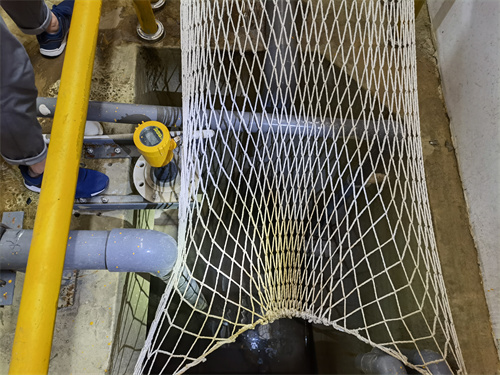
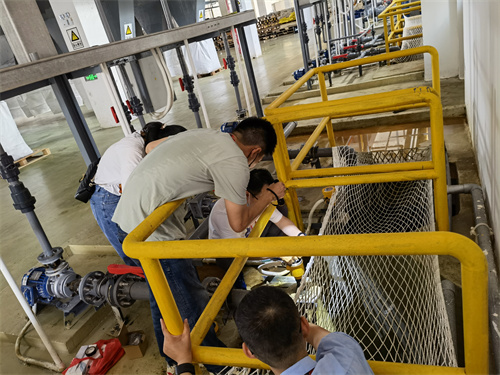
A circuit board manufacturer in Guangzhou Zhuhai purchased our radar level meter. Product parameters: 24V power supply, two-wire system, 4-20mA, 4m range, flat lens type, Model 902. It is applied to the wastewater discharge outlet to measure the liquid level of the sewage tank. Our Dayu engineers, undeterred by the scorching heat, went to the site to assist with equipment commissioning.
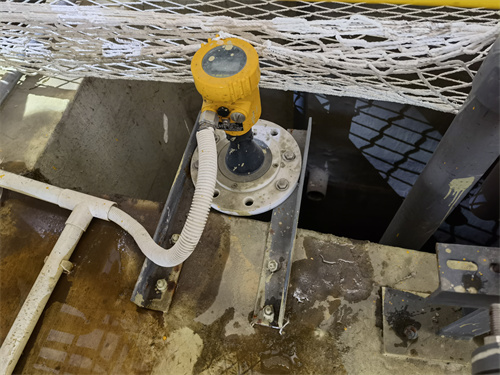
The customer in Guangzhou expressed great satisfaction with our after-sales service and professional technical support.
When measuring liquid level and material level, the commonly selected products are ultrasonic level meters and radar level meters. What are the advantages and disadvantages of the two in use? From the principle point of view, the ultrasonic level meter uses the ultrasonic principle, while the radar uses the electromagnetic wave principle, which is the most essential difference between the two.
The penetration ability and directivity of ultrasonic waves are much stronger than those of electromagnetic waves, which is why ultrasonic detection is currently popular. However, ultrasonic detection has limitations; for example, it cannot measure in conditions of excessive temperature or with foam.
From the application scenario perspective:
1. The measurement range of radar is much larger than that of ultrasonic.
2. Radar has horn-type, rod-type, and cable-type, which can be applied to more complex working conditions compared to ultrasonic.
3. The measurement accuracy of ultrasonic is not as good as that of radar.
4. Radar is relatively more expensive.
5. When using radar, the dielectric constant of the medium must be considered.
6. Ultrasonic cannot be used in working conditions such as vacuum, excessive steam content, or foam on the liquid surface.