
How to Maintain a Split-Type Ultrasonic Level Meter to Extend Its Service Life
Ultrasonic level meter is suitable for measuring media such as hydrochloric acid, sulfuric acid, wastewater, resin, paraffin, mud, alkali liquor, bleach, and hydroxides. It is widely used in industries such as petroleum, chemical engineering, electric power, metallurgy, water treatment, and semiconductors. The ultrasonic level meter adopts non-contact measurement, which imposes almost no restrictions on the measured medium, and can be widely used for measuring the height of liquid and solid materials.
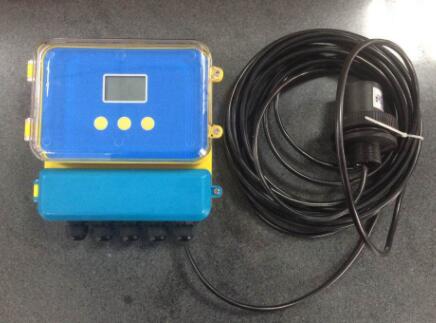
Ultrasonic level meter Professional maintenance is mainly analyzed based on the characteristics of the instrument and the operating conditions of installation and use:
1. If it is used to measure the water level in a tank in a power plant or other places, note that ultrasound is generally not used to measure the level in oil tanks. Consider whether there is steam. Ultrasound is generally not applied in conditions where the water temperature exceeds 60°C or 80°C. If the steam layer is thick, ultrasound cannot penetrate it (note that ultrasound is a mechanical wave, while radar level meters use electromagnetic waves. Mechanical waves reflect when they encounter media with different densities, thereby detecting the level).
2. Wastewater treatment plants generally use simple ultrasonic level meters to measure the level of sewage or the level difference of coarse screens. This kind of condition generally requires little maintenance. What needs attention is whether there is condensation water on the probe in summer, as condensation can easily cause the ultrasonic signal to be lost, meaning the echo cannot be detected, which triggers an alarm and outputs a fault current. This situation is relatively simple to handle: generally rinse with clean water, wipe dry, and aim at a wall or something to test. If the measurement value changes, it is fine.
3. Also, consider whether there is ice inside the storage tank or container in winter. In this case, the ultrasonic wave detects the height of the ice surface, not the water level. Of course, this situation is basically impossible to solve, and it is often encountered in Inner Mongolia and Northeast China.
In fact, for an ultrasonic level meter or other radar-type instruments, the most important thing is installation. If there are installation problems, the device will essentially be unusable afterward. If installed properly, the maintenance workload is actually very small.