
Fuzhou Dayu: Wireless Water Level Meter – Key Differences Between Manhole Measurement and Industrial Site Level Measurement
The wireless ultrasonic level meter (wireless water level gauge) consists of three main parts: the ultrasonic level sensor, the wireless transceiver system, and the level host unit.
It is composed of an ultrasonic level meter – electrical energy converter, encoder, modulation circuit, high-frequency amplifier circuit, variable frequency circuit, demodulation circuit, digital level display, and antenna.
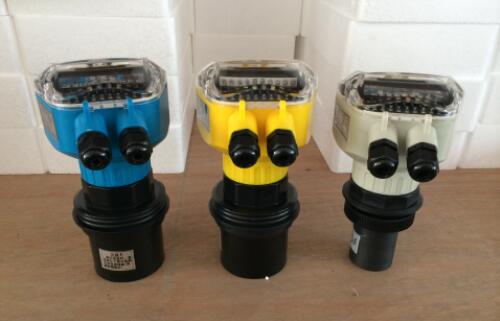
The level measurement signal is encoded and transmitted via radio waves, received, counted, and displayed as a digital level reading. Both transmission and reception use shortwave frequencies and coaxial ground-plane antennas. The transmitted signal can be reflected off the ionosphere and transmitted over long distances, enabling remote level measurement.
1. Signal Transmission of the Device
After reading “2. The device cannot use external power supply,” it becomes clear that under the current conditions of municipal engineering in China, wired transmission is not feasible. For wireless transmission, we use GPRS, which offers wide coverage and low cost. In practical testing, radio modems, Wi-Fi, shortwave communication, and longwave communication all failed verification – GPRS is currently the most reliable method.
2. Other Requirements for the Device
Size requirement: Since the device is installed inside a manhole, where space is very limited and the water level changes constantly, the device should ideally be installed at the manhole opening. At the opening, workers frequently remove the cover for maintenance, so the device must be compact and minimally intrusive to workers’ operations.
Waterproofing requirement: During heavy rain, water rushes into the manhole like a waterfall, impacting the equipment. The drainage capabilities of urban municipalities mean that a once-in-three-years downpour can completely submerge the manhole. In the event of a severe rainstorm, the entire municipal pipeline network can overflow. This requires the device to achieve at least IP68 protection, including the battery compartment.
3. Measurement Must Be Non-Contact
① Non-contact measurement is required for the manhole desilting process.
In municipal pipeline networks in China, manholes require periodic desilting. The common method involves using a long-handled sludge scoop to remove sediment from the bottom, and workers typically do not take care to protect underwater equipment. Even when using a suction truck’s rubber hose to extract sludge, submerged equipment can be drawn into the hose. Therefore, with contact-type measurement, any part coming into contact with sewage would be damaged.
② Non-contact measurement is required for municipal pipeline cleaning.
Over time, municipal pipelines accumulate sludge, sand, gravel, garbage, and other debris. The current cleaning methods are limited to high-pressure water flushing and mechanical cleaning. The former uses high-pressure water jets to flush sludge and debris into the manhole, while the latter uses a cable-pulled cleaning device roughly the size of the pipe to push debris into the manhole, from where it is eventually removed. Both methods can damage contact-type measurement equipment, leading to high failure rates.
4. Device Cannot Use External Power Supply
Municipal pipelines and manholes are mostly located on roads. If the device used mains power, it would require a cable connection running from the manhole to roadside power lines – the risk of damage to such cables is obvious.
Installing dedicated power cables inside the manhole is not only costly but also poses a safety hazard to personnel if the cables are damaged, especially considering the need for periodic desilting. Even solar power, commonly used in field applications, cannot be used in municipal pipeline networks for the reasons mentioned above. Thus, battery power remains the only viable option.