
Ultrasonic Distance Sensor User Manual
Ultrasonic Distance SensorProduct Introduction
Using sound wave media to perform non-contact and wear-free detection of the target object. Ultrasonic sensors can detect transparent objects, colored objects, metal or non-metal objects, as well as solids, liquids, or powdery substances. Ambient conditions such as smoke, dust, or rain have almost no effect on the detection performance of ultrasonic sensors.
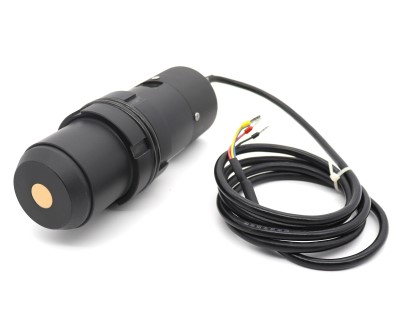
The ultrasonic pulse emitted by the transmitting transducer propagates through the medium to the measured object, is reflected, and then returns through the medium to the receiving transducer. The time from transmission to reception is measured. Based on the speed of sound in the medium, the distance from the transducer to the surface of the medium can be calculated, thereby determining the liquid level. Therefore, we can calculate the distance D from the probe to the reflecting surface as D = C*t/2 (divided by 2 because the sound wave travels back and forth; D is the distance, C is the speed of sound, and t is the time).
Ultrasonic Distance Sensor Manual Download:
Ultrasonic Distance Sensor (M56×2) V2.10 Manual - Neutral.pdf