
How to Solve Ultrasonic Level Gauge Applications in Environments with Heavy Steam and Dust
Ultrasonic level gauge is generally not suitable for high-temperature media. When the measured medium exceeds 80°C, the measurement data of the ultrasonic level gauge can become inaccurate. Below, we analyze why this deviation occurs and how to resolve it.

The more stable the propagation medium, the more conducive it is to transmission: Ultrasound is a mechanical wave. Mechanical waves are affected by the stability of the medium through which they propagate. For example, in a pond, when the water is calm, throwing a small stone creates visible ripples; when wind stirs up waves, even large stones thrown in make it hard to see ripples. Many factors cause air disturbance, such as dust, air currents, steam, and material flow, all of which can disrupt the air, reduce echo quality, and affect measurement performance. When dust or air currents are severe, it is recommended to use a low-frequency ultrasonic level meter for measurement.
When the liquid medium measured by the ultrasonic level gauge is below 30-40°C, steam or mist is generally not produced. Above this temperature, steam or mist can easily form. The ultrasonic waves emitted by the gauge attenuate once when passing through the steam and again when reflecting off the liquid surface, resulting in a very weak signal reaching the transducer, making measurement impossible. Moreover, in such environments, the transducer of the ultrasonic level gauge is prone to condensation forming water droplets, which hinder the transmission and reception of ultrasonic waves.
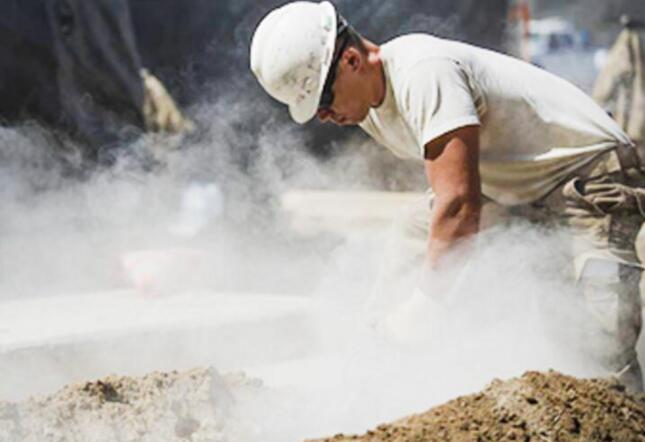
Fault symptoms: When the water surface is close to the transducer, measurement is possible, but when it is far away, measurement fails. When the water temperature is low, the ultrasonic level gauge works normally, but when the temperature rises, it fails to measure.
Solutions to the above problems: Increase the measuring range of the ultrasonic level gauge. For example, if the actual tank height is 3 meters, choose a 6-9 meter range ultrasonic level gauge. This reduces or weakens the impact of steam or mist on measurement. The transducer should be made of PTFE or PVDF, and be physically sealed, so that the emitting surface is less prone to condensation. With other materials, water droplets condense more easily.
Ultrasonic level gauges are widely used for level measurement in industries such as chemical, water treatment, water conservancy, food, and grain. The products feature safety, cleanliness, high accuracy, long service life, stability and reliability, easy installation and maintenance, and simple reading. The ultrasonic level gauge is a digital level instrument controlled by a microprocessor. During measurement, pulsed ultrasonic waves are emitted by the sensor (transducer), reflected off the surface of the object, and then received by the same sensor, which converts them into electrical signals. The distance from the sensor to the measured object is calculated based on the time between emission and reception of the sound wave. Since it uses non-contact measurement, the measured medium is almost unrestricted, making it widely applicable for measuring the height of various liquids and solid materials.