
Why Ultrasonic Liquid Level Meters and Ultrasonic Solid Level Meters Are Favored by Customers
Ultrasonic liquid level meter is a collective term for ultrasonic liquid level meters and ultrasonic solid level meters. When used to measure liquid level, it is usually called an ultrasonic liquid level meter; when used to measure solid level, it is usually called an ultrasonic solid level meter.
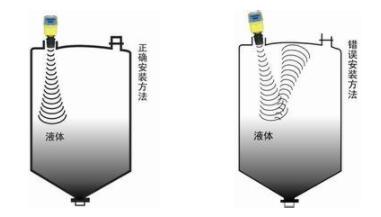
Ultrasonic liquid level meters and ultrasonic solid level meters are industrial instruments that utilize the good directionality of ultrasonic waves, strong penetration capability, relatively concentrated acoustic energy, and long-distance propagation in water to measure level. Ultrasonic liquid level meters have been widely used in various fields such as medicine, military, industry, and agriculture.
Ultrasonic liquid level meters calculate the distance from the sensor to the measured object based on the time between the transmission and reception of sound waves. They have no mechanical moving parts, high reliability, and are simple and convenient to install. They are non-contact measurements and are not affected by liquid viscosity or density, though the accuracy is relatively low. This is why many people choose them.
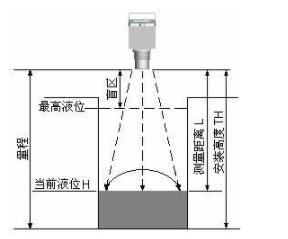
Liquid level and solid level measurement are common problems in the industry. Ultrasonic positioning technology has many advantages. It can not only provide point and continuous positioning, but also easily provide signals required for remote measurement or remote control. Compared with radioactive positioning technology, ultrasonic technology requires no protection. Compared with laser ranging technology, it has the advantages of simplicity and economy. At the same time, ultrasonic technology generally requires no moving parts, so installation and maintenance are relatively convenient.
Ultrasonic liquid level meters and solid level meters can be widely used in many industries such as petroleum, mining, power plants, chemical plants, water treatment plants, sewage treatment stations, agricultural water, environmental monitoring, food (brewing, beverage, additives, edible oil, dairy products), flood control, hydrological monitoring, open channels, spatial positioning, and many others.