
Four-Channel Transit-Time Ultrasonic Flowmeter Using Dayu Electronic Ultrasonic Transducers
Recently, a customer called to inform us that the DYA-650-01E ultrasonic transducer we produced, originally used for underwater distance measurement and flow velocity measurement, was utilized by them in a four-channel transit-time ultrasonic flowmeter. It has been installed on an open channel at the site for over a year with no issues whatsoever. This is great news!
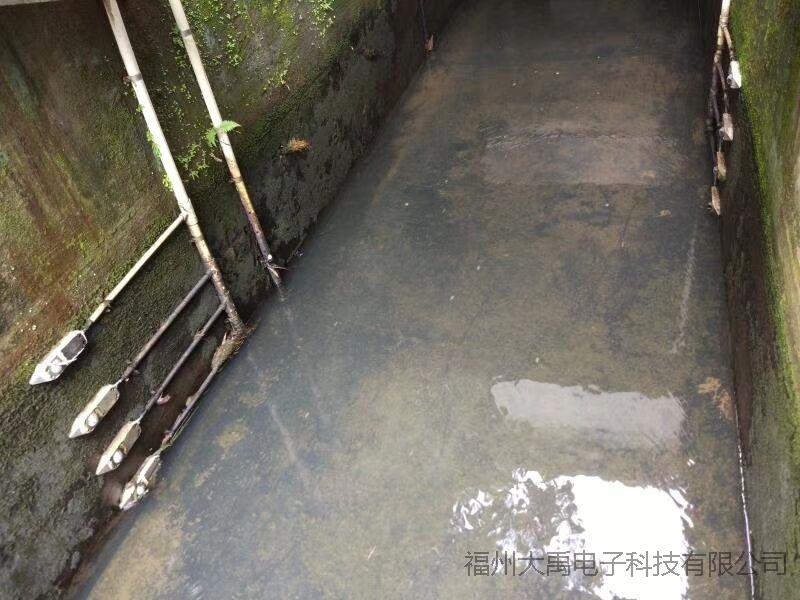
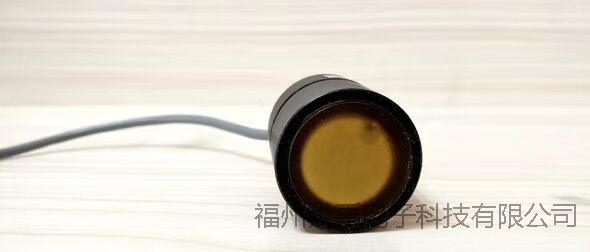
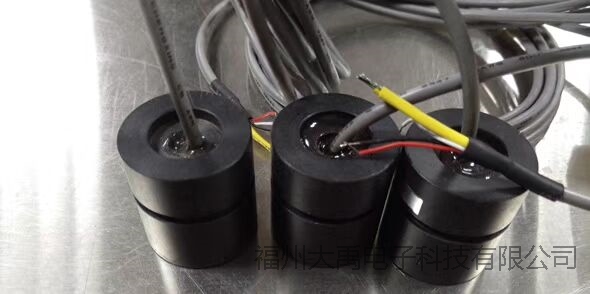
As is well known, a transit-time liquid ultrasonic flowmeter operates on the principle of measuring the propagation time of ultrasonic waves through a pipe. There is a linear relationship between the flow velocity of the medium (liquid) in the pipe and the time difference between the downstream and upstream propagation of the ultrasonic waves. By measuring the downstream and upstream transit times separately, the instantaneous average flow velocity along the pipe path can be derived from the linear relationship. The medium's flow rate can then be calculated using the velocity, pipe cross-sectional area, and Reynolds number.
When the ultrasonic beam propagates through the liquid, the flow of the liquid causes slight changes in transit time, and the change in transit time is proportional to the flow velocity. This allows the liquid flow velocity to be determined.
During the transit-time ultrasonic flow measurement process, several factors can introduce measurement errors, with the main ones being:
1. Errors caused by the installation position of the transducers; the measurement accuracy is closely related to the installation dimensions of the ultrasonic transducers. The installation cannot be absolutely precise, which introduces measurement errors.
2. Errors introduced by asymmetry in the measurement circuit; since transducer A and B simultaneously emit ultrasonic signals to each other in both downstream and upstream directions, theoretically the time difference between the two sets of signals is entirely caused by the fluid velocity. However, in practice, the control and acquisition circuits for transducer A and transducer B cannot be absolutely identical, so the delay caused by the hardware circuit when A sends a downstream signal to B is not exactly the same as when B sends an ultrasonic signal to A.
3. Errors caused by the difference between the average velocity along the path and the average velocity over the cross-section;
4. Errors caused by variations in liquid temperature;
5. Errors caused by noise;
6. Errors caused by the clarity of the liquid; deposits on the surfaces of transducers A and B (such as contaminated oil, condensate, etc.) may prevent the device from transmitting ultrasonic pulses through the liquid. This can lead to so-called "dropouts" of the ultrasonic path, which increase metering errors.
The above is a brief explanation and is not exhaustive.
Fuzhou Dayu Electronics – a manufacturer of ultrasonic flowmeters and ultrasonic transducers, and your dedicated product consultant.
For more detailed information, please call our hotline: 0591-28082552 or add our corporate QQ: 2187169532 Fuzhou Dayu Electronics Technology Co., Ltd. will serve you with dedication!