
On-Site Installation Guide for Ultrasonic Doppler Flowmeter and Ultrasonic Open Channel Flowmeter
In mid-November, engineers from Dayu Electronics arrived at a customer's farmland irrigation site in Shaodian Town, Xuzhou, as winter approached, to provide full guidance on the field measurement and installation of our ultrasonic Doppler flowmeter and open channel flowmeter.
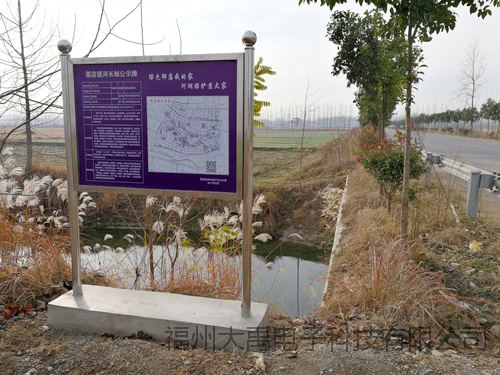
As is well known, most farmland irrigation channels are open channels, with rectangular or trapezoidal cross-sections, and a few are U-shaped.
Installation of the ultrasonic Doppler flowmeter
When installing the ultrasonic Doppler flowmeter, we have the following requirements for the upstream and downstream channel sections: Upstream of the sensor, there must be a straight channel length equal to 10 times the channel width; if there is a gate or pump upstream, the straight channel between the sensor and the gate/pump must be 30 times the channel width. Downstream of the sensor, a straight channel length equal to 5 times the channel width is required.
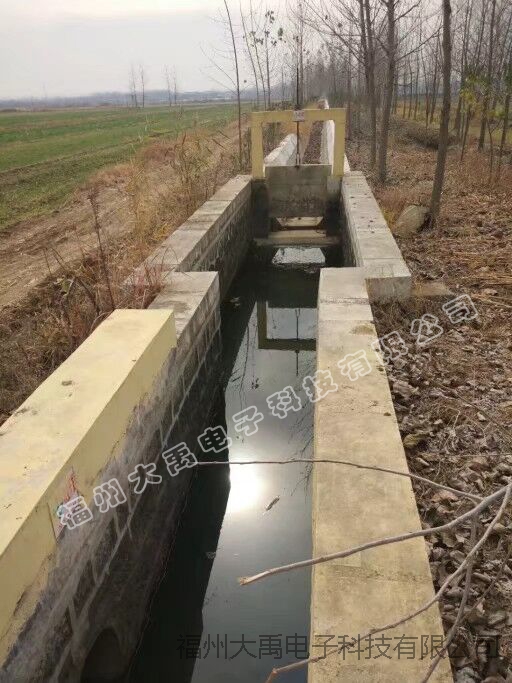
Typical open channel flowmeter installation channels commonly seen in Shaodian Town
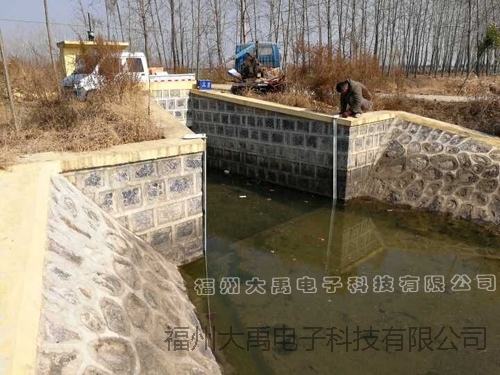
Installation channel for the ultrasonic Doppler flowmeter
Flush-mounted (buried) installation: Suitable for channels with little or no sediment. The sensor is secured to the channel using a mounting base. The sensor must be installed facing directly into the water flow.
In irrigation channels without sediment, we install the sensor at the center of the channel bottom, facing directly into the flow. This allows measurement of the flow velocity at the center, which is the ideal installation position.
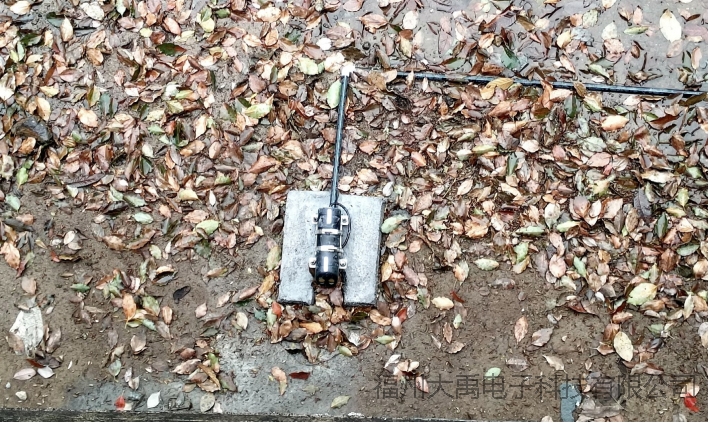
Actual installation of the sensor using the flush-mounted method in a rectangular channel
Adjustable bracket installation method – for channels up to 2 meters wide. If sediment is present (e.g., silt), the sensor should be installed beside or above the sediment layer. In this case, a mounting bracket is required. The bracket can be fabricated according to the diagram below. Since the height and width of brackets vary from site to site, they are typically custom-made by local fabricators near the installation site.
The sensor bracket and the shore-anchored fixing bracket are bolted together with screws. This allows easy removal of the sensor from the water for maintenance or repair by simply unscrewing the nuts on the shore bracket.
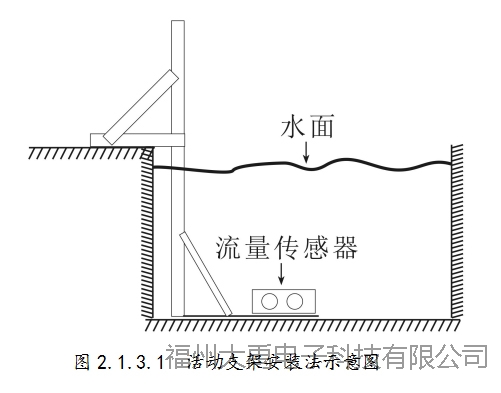
Basic requirements for bracket fabrication and installation:
1. For channels less than 1 meter wide, the bracket must position the sensor at the exact center of the channel. For channels 1 to 2 meters wide, the sensor must be installed at least 0.40 meters away from the channel wall.
2. After the sensor is mounted on the bracket, it must face directly into the water flow. Under the force of the current, it must remain rigid and free from vibration over the long term, and the sensor must be parallel to the water surface.
3. The sensor installation position must be above the silt layer at the channel bottom.
4. Within the 60° emission angle in front of the sensor, and within a distance of 1 meter, there must be no obstructions.
5. The bracket design should minimize the cross-sectional area blocking the water flow to avoid affecting the flow velocity. A larger blocking area also increases the risk of debris or aquatic weeds getting tangled.
Adjustable bracket installation method – for channels wider than 2 meters
For wider channels exceeding 2 meters, installing the sensor at the center of the channel bottom involves significant construction work. Typically, an adjustable bracket is used to install the sensor on one side of the channel. If the channel width exceeds 5 meters, it is recommended to install two sensors, one on each side (left and right), for measurement. The bracket should be designed so that it can be detached from the bank.
As shown in the figure below
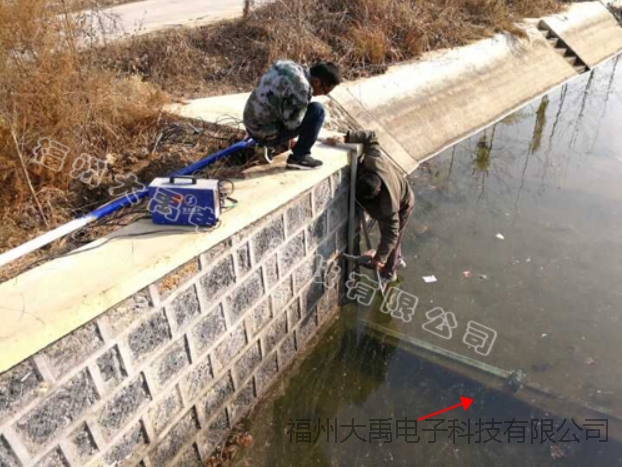
Installation position of the ultrasonic Doppler flowmeter
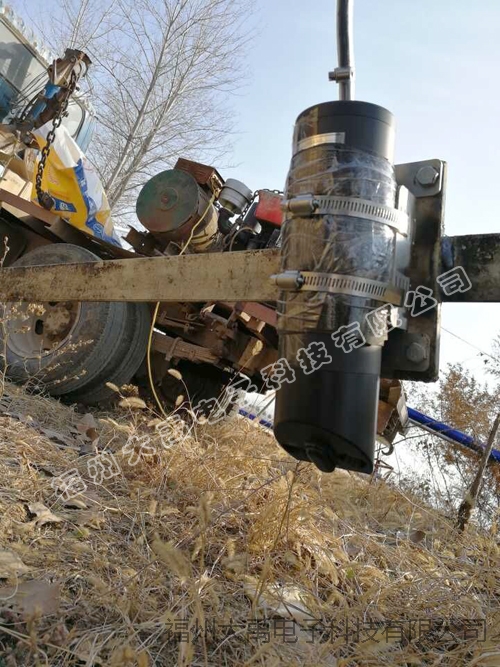
Ultrasonic Doppler flowmeter loaded on a truck
Since there was no power supply at the installation site, the local farmland department arranged for a technician who builds weir boxes to bring a small generator on a truck, and loaded the ultrasonic Doppler flowmeter and the open channel flowmeter onto the truck to transport them to the site.
Installation of the ultrasonic open channel flowmeter
In a freely flowing open channel, the higher the flow rate, the higher the liquid level; the lower the flow rate, the lower the liquid level. The flow rate can be calculated by measuring the water level. In ordinary open channels, the relationship between flow rate and water level is affected by the channel's slope ratio and surface roughness. By installing a water-measuring weir box in the channel, a throttling effect is created, establishing a fixed relationship between flow rate and liquid level. This relationship depends primarily on the structural dimensions of the weir box, minimizing the influence of the channel itself.
Commonly used weir boxes include the V-notch triangular weir, the rectangular weir, and the Parshall flume.
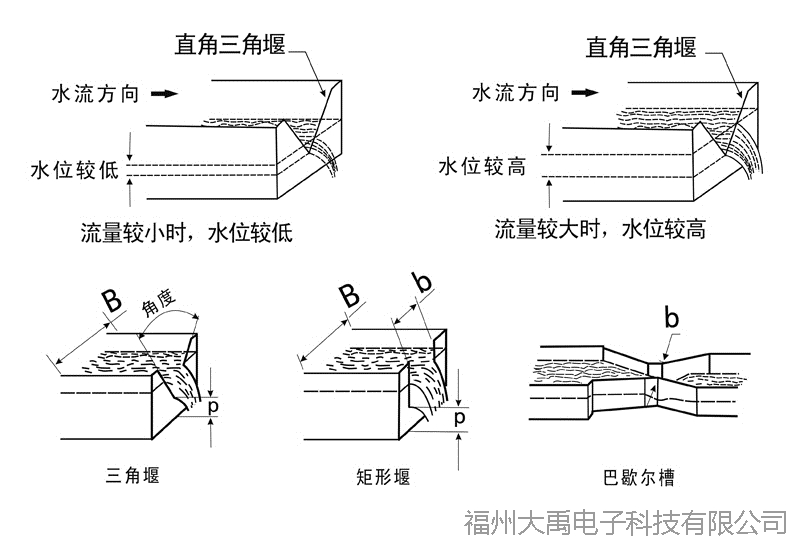
When using an ultrasonic open channel flowmeter, it is essential to know the water level-flow rate relationship of the matched weir box during installation.
The water level-flow rate relationship of the weir box can be found in the national metrological verification regulation "Open Channel Weir Flowmeter" (JJG711-90). This manual excerpts a portion (Section VI, Weir Boxes). For the Parshall flume, once the throat width (b) is known, the corresponding formula can be used to calculate the water level-flow rate relationship.
The V-notch triangular weir also uses a corresponding formula to calculate the water level-flow rate relationship.
The rectangular weir also has its corresponding formula. However, it also depends on the installation channel dimensions. When determining the water level-flow rate relationship, the rectangular weir is affected by the channel width (B), the opening width (b), and the height of the upstream weir crest (p).
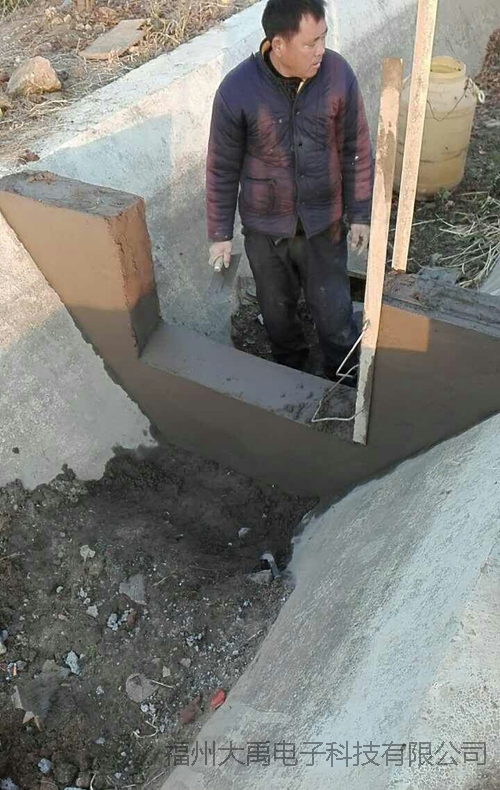
On-site technicians, under the guidance of our engineers, install a rectangular weir
The display unit of the split-type ultrasonic open channel flowmeter should be installed indoors. The indoor environment should be well-ventilated and free from corrosive gases. The instrument is designed for wall-mounted installation. If the indoor conditions are unsuitable or it must be installed outdoors, it should be placed in a protective enclosure to avoid direct sunlight and rain.
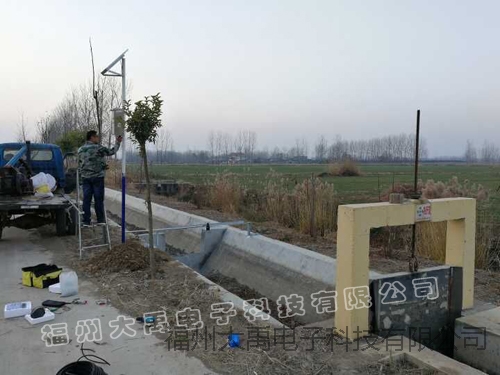
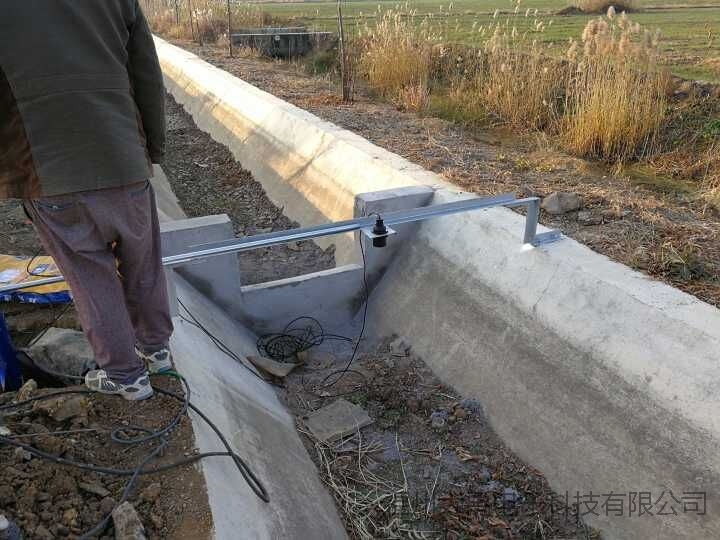
Installation site of the rectangular weir and ultrasonic open channel flowmeter
From the initial site survey to the completion of the first batch of installations, the entire process took about half a month. During this time, Dayu Electronics' engineers, the customer, and local external contractors became good friends.
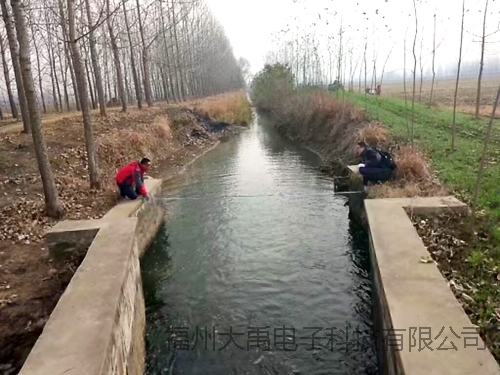
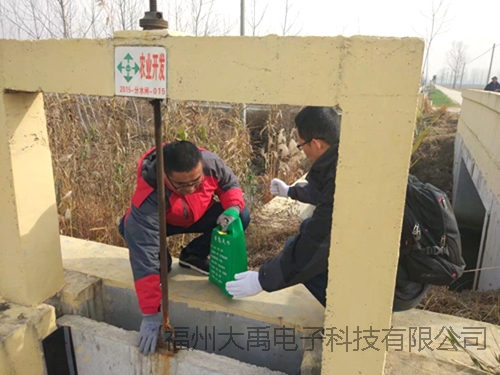
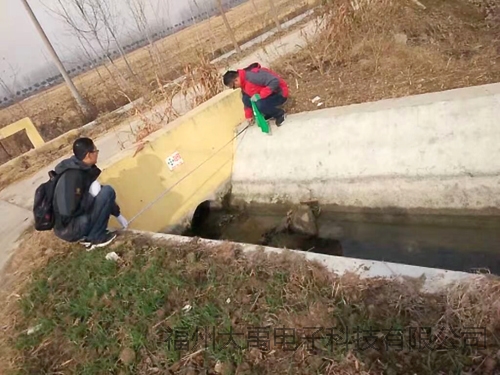
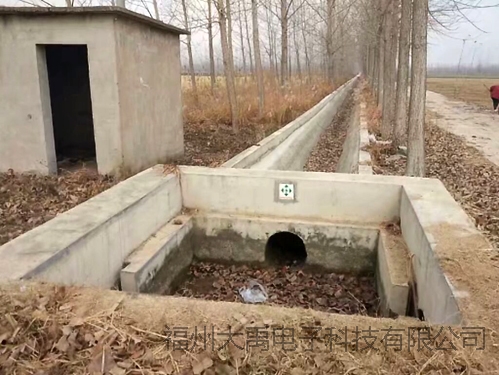
Below are photos from the initial survey phase showing site measurements:
Fuzhou Dayu Electronics — Manufacturer of ultrasonic Doppler flowmeters and wireless ultrasonic open channel flowmeters, your trusted product advisor!
For more detailed information, please call our hotline: 0591-28082552, or add our corporate QQ: 2187169532. Fuzhou Dayu Electronics Technology Co., Ltd. will be at your service!